Clinical Trial Looks at the Effect of Common Pain Cream on the Heart

CINCINNATIResearchers at UC are looking for patients to participate in a clinical trial that may determine whether or not a common, over-the-counter pain salve rubbed on the skin could be an effective treatment for heart disease.
UC Health cardiologists are studying the effects following the application of capsaicin cream to the abdomen of patients who experience chest pain during exertion, otherwise known as stable angina.
Capsaicin is the main component of chili peppers and produces a hot sensation. It is also the active ingredient in several topical medications used for temporary pain relief.
Capsaicin is approved for use by the U.S. Food and Drug Administration and is available over the counter.
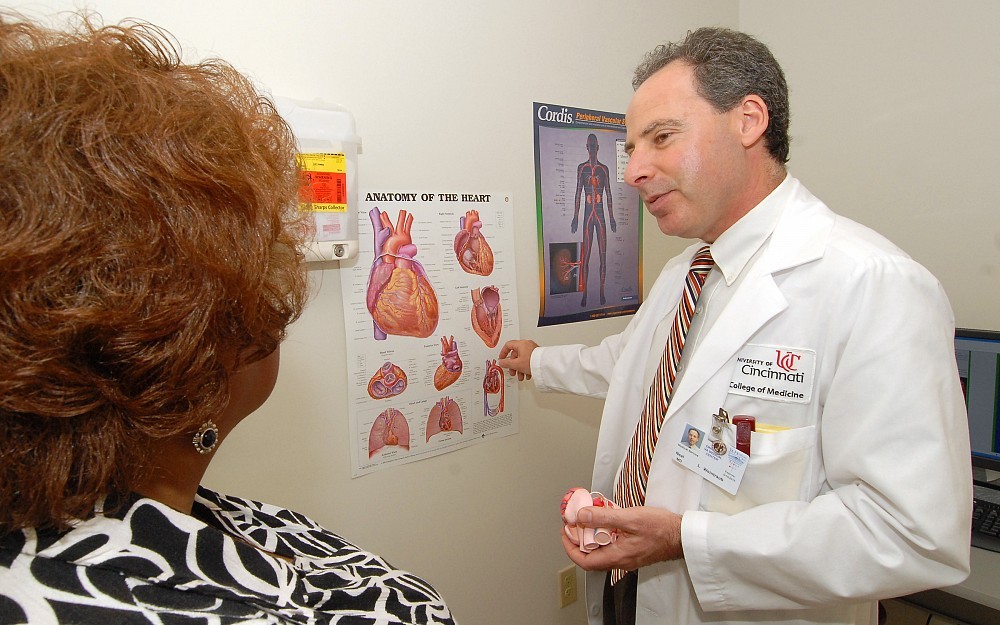
"This project follows an occurrence that was discovered in the lab of Dr. Keith Jones in 2009, says Neal Weintraub, MD, director of the division of cardiovascular diseases and Mable S. Stonehill chair of cardiology.
Jones, PhD, a researcher in the department of pharmacology and cell biophysics, discovered that applying capsaicin to the abdomen of mice activated sensory nerves in the skin which then sent signals to protect the heart muscle from damage during an experimentally induced heart attack.
"Patients with stable angina typically experience limitations in blood flow to the heart during exercise which impairs their functional capacity, he says. "In some patients, these symptoms do not respond satisfactorily to conventional treatments, such as medications, angioplasty or bypass surgery.
"We believe that capsaicin applied to the abdomen of these patients may lead to improvements in chest pain symptoms and exercise tolerance.
In this clinical trial, researchers led by Faisal Kahn, MD, will apply either a placebo or capsaicin cream to the abdomen of patients prior to conducting an exercise treadmill test.
Heart rate, blood pressure and electrocardiogram changes will be measured, and symptoms will be recorded.
Participants will undergo additional exercise tests at one-week intervals. The data will then be analyzed to determine whether or not capsaicin is effective.
"This study will help us determine possible clinical applications for capsaicin as it relates to angina, Weintraub continues. "This has tremendous potential and could eventually improve the quality of life for patients with heart disease.
This study is investigator-initiated. Weintraub is a founder of CardioCeption, LLC, formed in 2009 along with co-founders Jones and Clint Dederick, chairman and managing member, to license and commercialize the technology developed at UC.

Capsaicin, the main component of chili peppers, may help patients with a number of ailments.

Keith Jones, PhD, a researcher in UC's department of pharmacology and cell biophysics
Tags
Related Stories
UC radiation oncologist speaks with Local 12 news about clinical trial for head and neck cancer treatment
August 10, 2026

Dr. Sara Medek, a UC radiation oncology professor, speaks with Local 12 news about a new clinical trial aimed at reducing radiation in certain areas while still treating cancer effectively but with fewer painful side effects.
Cancer Center director charts future based on collaboration, AI
August 10, 2026

David Gius, MD, PhD, was featured in a Cincinnati Business Courier article and The Cancer Letter’s “The Directors" podcast discussing his priorities and goals as he recently took the helm as director of the University of Cincinnati Cancer Center.
Bidirectional link between oral, kidney health calls for patient education, access
August 4, 2026

Despite growing awareness of the connection between oral health and chronic health conditions, patient awareness and access to dental care remain limited, according to University of Cincinnati experts who recently spoke with Healio | Nephrology News & Issues.