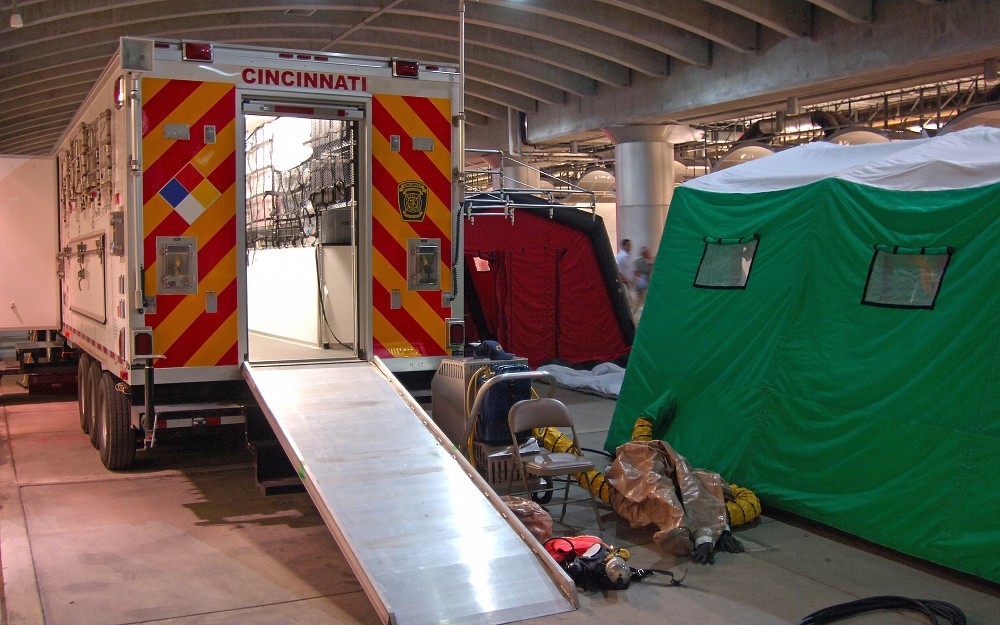
Environmental Health Receives $8 Million to Train Hazardous Waste Workers

CincinnatiThe University of Cincinnati (UC) environmental health department has received $8 million from the National Institutes of Environmental Health Sciences (NIEHS) to continue operating its hazardous waste worker training program through 2015.
Â
The money will support the UC-led Midwest Consortium for Hazardous Waste Worker Training, a collaboration among UCs environmental health department, Greater Cincinnati Occupational Health Center, Ohio Environmental Council, eight state universities and technical colleges and a group of organizations dedicated to improving environmental safety and health in the community. The program has been in operation since 1987.
Â
Led by Carol Rice, PhD, the consortium is responsible for developing and evaluating training and education programs for hazardous waste workers and emergency responders in nine statesOhio, Illinois, Indiana, Kentucky, Michigan, Tennessee, Wisconsin, Minnesota and North Dakota. This region is estimated to employ about 20 percent of all workers covered by the program in the
Â
"Our goal is to provide site workers and emergency responders with the knowledge and skills to minimize their risk for exposure to hazardous compounds during the course of their work day, explains Rice, professor of environmental health at UC and principal investigator of the Midwest Consortium grant.
Â
The UC-led consortium teaches emergency responders, waste site workers and medical response professionals proper handling and cleanup procedures for hazardous materials. Training sessions are tailored to address a specific audience, but include critical topics such as site decontamination, spill containment, on-site record keeping and emergency notification protocols.
Â
Since its inception, the Midwest Consortium has offered 11,470 programs to 202,297 participants who have completed more than 1.8 million hours of training. During the 2009-2010 training year, more than 1,000 programs were offered to 18,483 participants, resulting in 119,865 hours of interactive training.
Â
UC works with the Greater Cincinnati Occupational Health Center to administer training programs locally. One of the first labor-sponsored occupational health clinics in the nation, the
Â
"We have developed 28 training programs of varying length and a systematic way of evaluating the success of our efforts, says Rice. "About 85 percent of emergency responders and 60 percent of site workers who return for annual refresher training have reported changing their work practices to perform a task more safely following our training programs.
Â
"In addition, more than half of the trainees who participated in annual refresher training reported discussing safer work practices with co-workers and family members, extending the impact of training to outside the workplace.
Â
Members of the Midwest Consortium include: Greater Cincinnati Occupational Health Center, University of Illinois, University of Minnesota, Kentucky Community and Technical College, University of Tennessee, Environmental Management Institute, Michigan State University, Lakeshore Technical College, Ohio Environmental Council, Detroiters Working for Environmental Justice, Fisk University, Citizens Environmental Alliance and the Three Affiliated Tribes.

Disaster drill training

Kettering Laboratory
Tags
Related Stories
On-site training in Speech & Hearing Clinic sets UC’s programs apart
August 27, 2026
At the University of Cincinnati’s Speech & Hearing Clinic, Doctor of Audiology and Speech-Language Pathology graduate students gain real-world experience while providing free speech and hearing services to the community.
Funding expands UC research into weight gain side effects of bipolar medication
August 26, 2026
University of Cincinnati researchers have been approved for funding by the Patient-Centered Outcomes Research Institute (PCORI) to expand the implementation of healthy lifestyle interventions and metformin prescription to help manage weight gain in overweight or obese youth taking second-generation antipsychotic medications.
One in four NFL players had CTE at death
August 25, 2026

Forbes cites research on concussions and football helmets by the University of Cincinnati in a report that found one in four NFL players had brain damage at death.