Treating Mild Strokes With Clot-Busting Drug Could Save $200M Annually, Study Shows

CINCINNATITreating mild strokes with the clot-busting drug approved for severe stroke could reduce the number of patients left disabled and save $200 million a year in disability costs, according to new research from the University of Cincinnati (UC).
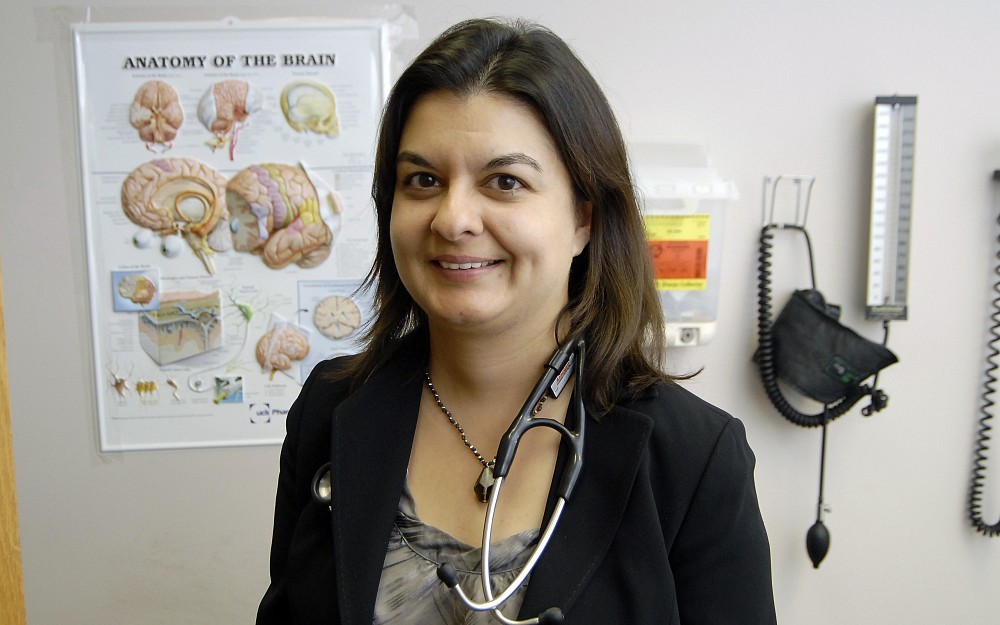
The study led by Pooja Khatri, MD, an associate professor in the department of neurology, examined the public health impact of treating mild strokes with the clot-busting drug intravenous tissue plasminogen activator (tPA). It is being presented Wednesday, Feb. 9, in Los Angeles at International Stroke Conference 2011, the annual meeting of the American Stroke Association.
The research is part of the Greater Cincinnati/Northern Kentucky Stroke Study, begun in 1993 at the UC College of Medicine, which is funded by the National Institutes of Health (NIH) and identifies all hospitalized and autopsied cases of stroke and transient ischemic attack (TIA) in a five-county region. The NIH also funded the study led by Khatri.
Researchers at UC analyzed hospital records from 437 patients at 16 sites in the Greater Cincinnati/Northern Kentucky Stroke Study region in 2005, the latest period for which complete records are available. The patients arrived at the hospital within 3.5 hours of experiencing symptoms, well within the 4.5-hour window for treatment with tPA. Of those 437 patients, 247 were diagnosed with mild ischemic stroke on a stroke severity scale.
Only four of the mild stroke patients (about 1.6 percent) received tPA, which is approved by the Food and Drug Administration for strokes caused by blood clots, known as ischemic strokes. Its the only acute stroke treatment proven to reduce disability, but remains untested for treating mild stroke because experts previously believed patients would recover with few lasting effects and tPA treatment carries a slight but significant risk of bleeding to the brain.
Of the remaining 243 mild stroke patients in the study, 150 (62 percent) were identified as likely candidates for the drug if the mildness of their stroke was disregarded as a reason to deny tPA treatment. Excluding patients with baseline disability (estimated at 37 percent), researchers assumed that 8 percent to 13 percent of the remaining patients would regain independence after their stroke if tPA was an effective treatment for this group.
Extrapolating to the U.S. population, the researchers said that if tPA proves effective for mild stroke, at least 2,000 fewer patients would be disabled from mild stroke each year. Assuming a moderate disability and conservatively estimating a lifetime cost of $100,000 per patient, at least $200 million in disability expenditures would be saved.
In the last five years, researchers conducting several studies have found that about one-third of patients who experienced mild strokes remained disabled three months after initial hospitalization.
"Currently, there is no standard of treatment for patients with the mildest strokes, says Khatri, a member of the UC Neuroscience Institute and division director of the acute stroke program at UC. "These findings raise the question of whether the mildest strokes should be treated with intravenous tPA.
For that answer, Khatri says, more study is needed with mild stroke patients included in future trials of the effectiveness of clot-busting drugs.
Related Stories
On-site training in Speech & Hearing Clinic sets UC’s programs apart
August 27, 2026
At the University of Cincinnati’s Speech & Hearing Clinic, Doctor of Audiology and Speech-Language Pathology graduate students gain real-world experience while providing free speech and hearing services to the community.
Designing with cancer patients' needs in focus
August 27, 2026
Kristina Shin is designing garments that prioritize the comfort, function and confidence of breast cancer patients, addressing a need often overlooked by traditional fashion.
UC, NKU renew longstanding partnership supporting Army ROTC cadets
August 26, 2026
The University of Cincinnati Army ROTC and Northern Kentucky University (NKU) have renewed a longstanding partnership that supports students preparing to become Army officers and leaders in their communities. The universities formalized the renewed agreement during a signing event Aug. 11 at NKU.