UC HEALTH LINE: Time, Team Approach Aid in Aphasia Recovery

CINCINNATIImagine knowing what you want to say, but not being able to say it.
Thats the dilemma for people who have aphasia, an impairment of the ability to use or comprehend words. About 1 million Americans have aphasia, according to the National Aphasia Association, with about 100,000 new cases per year. (The name comes from the Greek word aphatos, meaning speechless.)
National Aphasia Awareness Month, observed in June, offers an opportunity to educate the public and dispel myths about the disorder. Many people mistakenly believe that it affects intelligence, for example, or that it is restricted to older people.
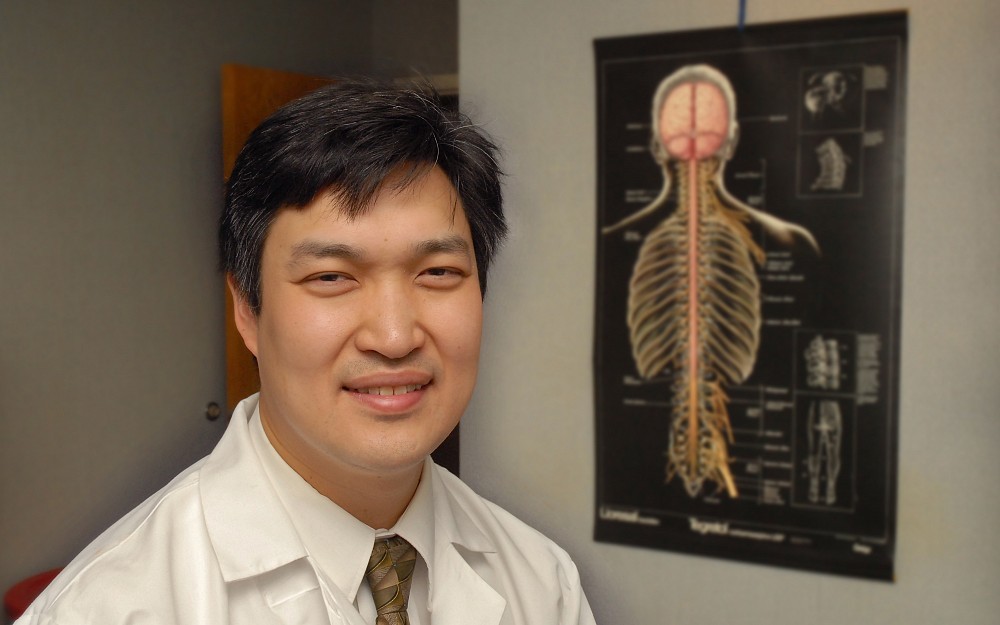
"The No. 1 cause of aphasia is stroke, which can occur in people of all ages, says Daniel Woo, MD, a professor in the University of Cincinnati (UC) Department of Neurology and UC Health neurologist specializing in stroke. "Stroke occurs when a blood vessel in the brain either gets blocked off by a clot or bursts, with the result that part of the brain is damaged.
"From that damage, patients may lose the function in that part of the brainincluding the ability to speak or understand speech.
Woo, who is also a member of the UC Neuroscience Institute, says patients who have had temporary aphasia tell him, "I knew what I wanted to say, but I just couldnt get my mouth to make the words.
About 20 percent of stroke survivors acquire aphasia, Woo says. It can also result from head injury, brain tumor or other neurological causes such as dementia.
Recovery from aphasia is possible, Woo says, but it usually occurs over an extended period of time.
"If someone loses the function in part of their brain, often other parts of the brain will then try and pick up the function of the injured parts, Woo says, adding that research by Jerzy Szaflarski, MD, PhD, an associate professor in UCs neurology department, has confirmed that phenomenon using functional MRI (magnetic resonance imaging).
"Its very rewarding when someone who has been in the hospital unable to speak or understand speech, over the course of months or even years, regains those abilities, Woo adds.
Treatment for aphasia often requires a team approach, Woo notes, including speech therapists and psychologists. Such an approach is taken at UC Healths Drake Center, where the Stroke Recovery Center at Drake offers the latest stroke recovery techniques.
Woo says its also important to remember that loss of the ability to speak is one of the key warning signs of stroke. If you find yourself having unexplained difficulty speaking, he says, you should seek emergency help immediately.
Tags
Related Stories
UC radiation oncologist speaks with Local 12 news about clinical trial for head and neck cancer treatment
August 10, 2026

Dr. Sara Medek, a UC radiation oncology professor, speaks with Local 12 news about a new clinical trial aimed at reducing radiation in certain areas while still treating cancer effectively but with fewer painful side effects.
Cancer Center director charts future based on collaboration, AI
August 10, 2026

David Gius, MD, PhD, was featured in a Cincinnati Business Courier article and The Cancer Letter’s “The Directors" podcast discussing his priorities and goals as he recently took the helm as director of the University of Cincinnati Cancer Center.
Bidirectional link between oral, kidney health calls for patient education, access
August 4, 2026

Despite growing awareness of the connection between oral health and chronic health conditions, patient awareness and access to dental care remain limited, according to University of Cincinnati experts who recently spoke with Healio | Nephrology News & Issues.