Use of Clot-Busting Drug for U.S. Stroke Patients Doubled From 2005 to 2009

CINCINNATIIn a review of nationwide hospital databases, University of Cincinnati (UC) emergency medicine and neurology researchers have found that the rate of treatment with the standard therapy for acute ischemic stroke patients has doubled since 2005.
Their paper, "Recombinant Tissue-Type Plasminogen Activator Use for Ischemic Stroke in the United States, is published online ahead of print in the journal Stroke. The study estimates between 23,800 and 36,000 U.S. patients received rtPA treatment in 2009up from between 10,800 to 12,600 in 2004.
Since its approval by the Food and Drug Administration in 1996, recombinant tissue-type plasminogen activator (rtPA) remains the only FDA-approved therapy for treatment of acute ischemic stroke (AIS), caused by blocked blood flow in the brain. The clot-busting drug can decrease the likelihood of disability in stroke patients, but only when administrated intravenously within hours of the stroke.
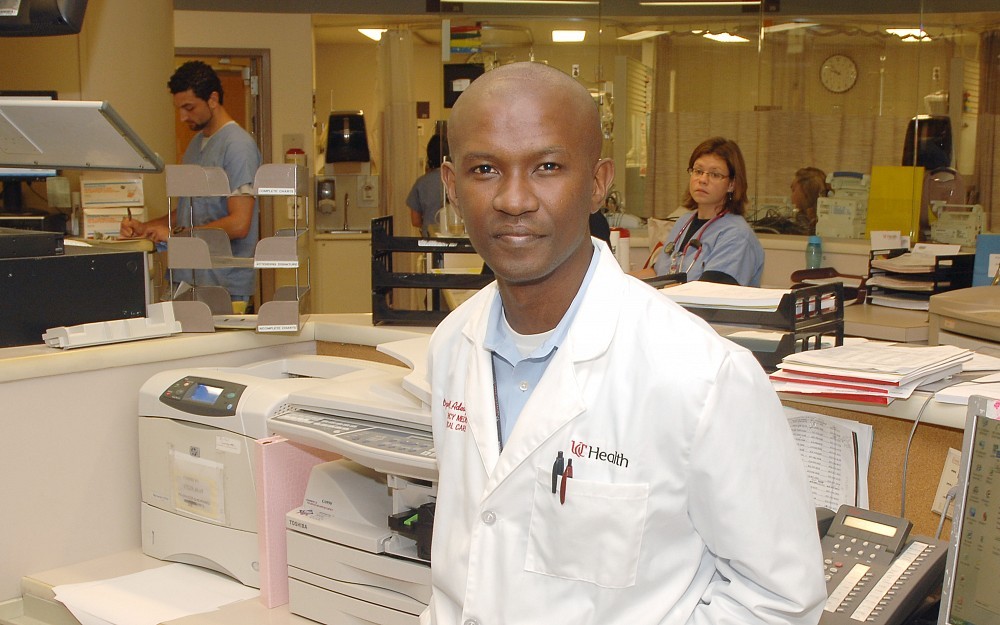
However, treatment rates of rtPA remain relatively low, says lead author and UC assistant professor of emergency medicine and neurosurgery Opeolu Adeoye, MD, mainly because many patients do not arrive to the hospital in time to receive the drug. There are also a number of exclusions for rtPA, based on bleeding risks, recent surgery and other factors.
Previous UC research using the Medicare Provider and Analysis Review and a privately maintained hospital database concluded that, from 2001-2004, between 1.8 percent and 2.1 percent of AIS patients received the thrombolytic drug. Using data from the same databases, Adeoye and colleagues sought to update those figures in this new study. Their results show a significant jumpin 2009, 3.4 percent to 5.2 percent of AIS patients in the U.S. received rtPA, approximately double the rate of treatment in 2005.
Adeoye writes that the jump is "strikingly different from the previous study, which documented essentially no rise in rtPA treatment rates between 2001 and 2004.
He suggests several factors may account for the increase, including formal certification of hospitals as stroke centers and aggressive public campaigns by the American Heart Association to educate both health care providers and patients on signs of a stroke and the latest clinical guidelines.
In the publication, Adeoye notes that the figures in the database are subject to billing error; however, no other practical means exist for obtaining nationwide estimates of rtPA use.
As far as what the results say about the state of stroke care in the U.S., Adeoye says its clear that providers are making progress, but they still have a long way to go.
"The biggest thing is making sure patients are at the hospital within the time frame required to receive the treatment, he says. "We need to help educate the public on rapid recognition of stroke symptoms and improve transportation rates to stroke-ready hospitals.
Co-authors include Richard Hornung, PhD, UC adjunct research professor of public health sciences; Pooja Khatri, MD, associate professor of neurology; and Dawn Kleindorfer, MD, professor of neurology.
The study was sponsored by a grant by the Association of American Medical Colleges.
Tags
Related Stories
UC radiation oncologist speaks with Local 12 news about clinical trial for head and neck cancer treatment
August 10, 2026

Dr. Sara Medek, a UC radiation oncology professor, speaks with Local 12 news about a new clinical trial aimed at reducing radiation in certain areas while still treating cancer effectively but with fewer painful side effects.
Cancer Center director charts future based on collaboration, AI
August 10, 2026

David Gius, MD, PhD, was featured in a Cincinnati Business Courier article and The Cancer Letter’s “The Directors" podcast discussing his priorities and goals as he recently took the helm as director of the University of Cincinnati Cancer Center.
Bidirectional link between oral, kidney health calls for patient education, access
August 4, 2026

Despite growing awareness of the connection between oral health and chronic health conditions, patient awareness and access to dental care remain limited, according to University of Cincinnati experts who recently spoke with Healio | Nephrology News & Issues.