UC HEALTH LINE: Researchers, Clinicians Seek Progress on Vasospasm

CINCINNATIThe commonly heard phrase "complications from stroke can cover a wide variety of medical issues, including seizures and swelling of the brain.
But one complication, known as vasospasm, is little known outside the medical community even though its a life-threatening occurrence that has no proven effective method of treatment. In fact, an international convocation of physicians, researchers and nurses in Cincinnati later this month will attempt to unravel some of the mysteries surrounding vasospasm.
Vasospasm 2011: The 11th International Conference on Neurovascular Events after Subarachnoid Hemorrhage will take place July 21-23 at the Hilton Cincinnati Netherland Plaza. It will be hosted by the University of Cincinnati (UC) Department of Neurosurgery, the UC Neuroscience Institute and Mayfield Clinic and is sponsored by the Mayfield Education and Research Foundation.
A subarachnoid hemorrhage (SAH) is a type of stroke that occurs when an aneurysm in a blood vessel near the brain ruptures, causing bleeding in the area surrounding the brain (the subarachnoid space). Vasospasm (pronounced VAY-zoh-spasm) occurs when a nearby blood vessel goes into spasm and constricts, closing down the vessel and possibly leading to permanent brain damage or death.
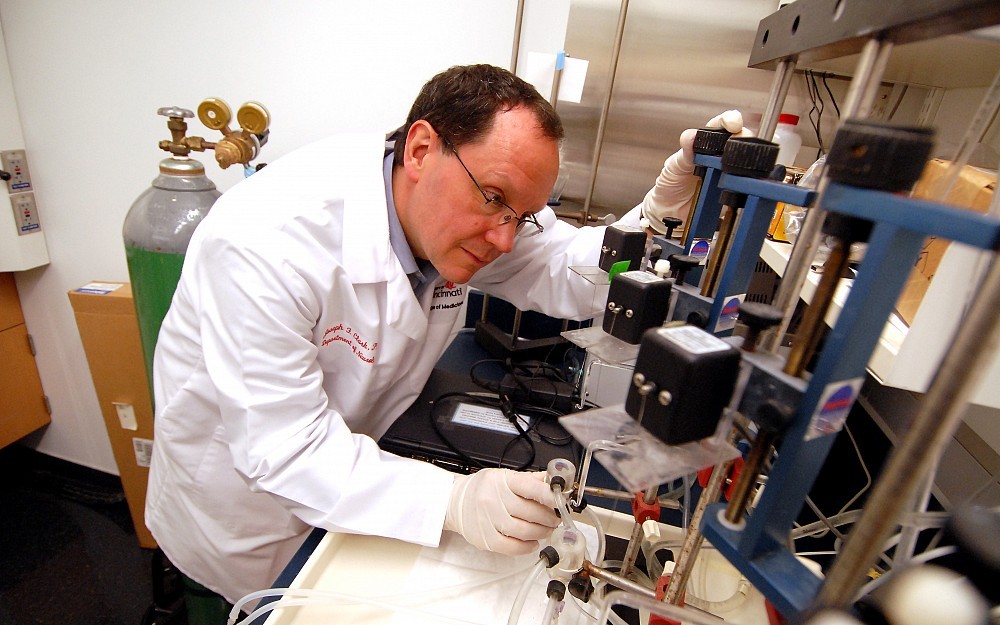
"Vasospasm in a certain way is analogous to a second stroke after the first stroke, says Joe Clark, PhD, a professor in UCs neurology department whose research interests include causes of cerebral vasospasm. Clark is co-chair of Vasospasm 2011 along with Mario Zuccarello, MD, Frank H. Mayfield Professor and Chair of neurosurgery.
"As the name impliesvaso meaning blood vessel and spasm meaning to contractthe blood vessels constrict and that constriction can cause a second strokeand that can be lethal.
Clark says his research indicates that the metabolism of the blood changes following bleeding in the brain, with those chemical changes producing toxins that can change the way the brain and surrounding tissue behave. Those changes can lead to a number of conditions, including vasospasm.
"Its a devastating scenario, Clark says. "Sometimes a stroke patient can look like he or she is getting better. But as caregivers warn the family, theres a complication risk that can occur days later. Its catastrophic and heartbreaking for the family members.
Although there has been some progress in the past few decades, a proven way to treat vasospasm remains elusivemaking this months conference all the more critical.
"We remain firmly committed to finding effective new treatments, says Zuccarello. "Vasospasm is a clear and obvious target because it is the leading, potentially treatable cause of death and disability following an aneurysm rupture.
Adds Clark, "If we can come up with a prophylactic treatment what could be given after the initial hemorrhage that is safe and could prevent the complications afterward, that would be wonderful. That does not exist, but its a huge component of what were trying to do.
Vasospasm 2011 will include a special white paper session aimed at formulating an international consensus document regarding the clinical management of SAH patients in a neurocritical care setting. In addition, novel research ideas from young investigators are being encouraged with a range of awards.
"One of the things that I like very much about this meeting is that its a wonderful mix of physicians, scientists and nurses, and all of us have different perspectives, says Clark. "There are relatively few conferences where you have such a broad mixture of those different disciplines.
For more information on the conference, visit
.

Vasospasm 2011 Flier
Tags
Related Stories
UC radiation oncologist speaks with Local 12 news about clinical trial for head and neck cancer treatment
August 10, 2026

Dr. Sara Medek, a UC radiation oncology professor, speaks with Local 12 news about a new clinical trial aimed at reducing radiation in certain areas while still treating cancer effectively but with fewer painful side effects.
Cancer Center director charts future based on collaboration, AI
August 10, 2026

David Gius, MD, PhD, was featured in a Cincinnati Business Courier article and The Cancer Letter’s “The Directors" podcast discussing his priorities and goals as he recently took the helm as director of the University of Cincinnati Cancer Center.
Bidirectional link between oral, kidney health calls for patient education, access
August 4, 2026

Despite growing awareness of the connection between oral health and chronic health conditions, patient awareness and access to dental care remain limited, according to University of Cincinnati experts who recently spoke with Healio | Nephrology News & Issues.