A Passion for Evidence

Research opportunities are everywhere on the University of Cincinnati campus, with students and faculty members engaged in investigations that have the potential to save millions of lives.
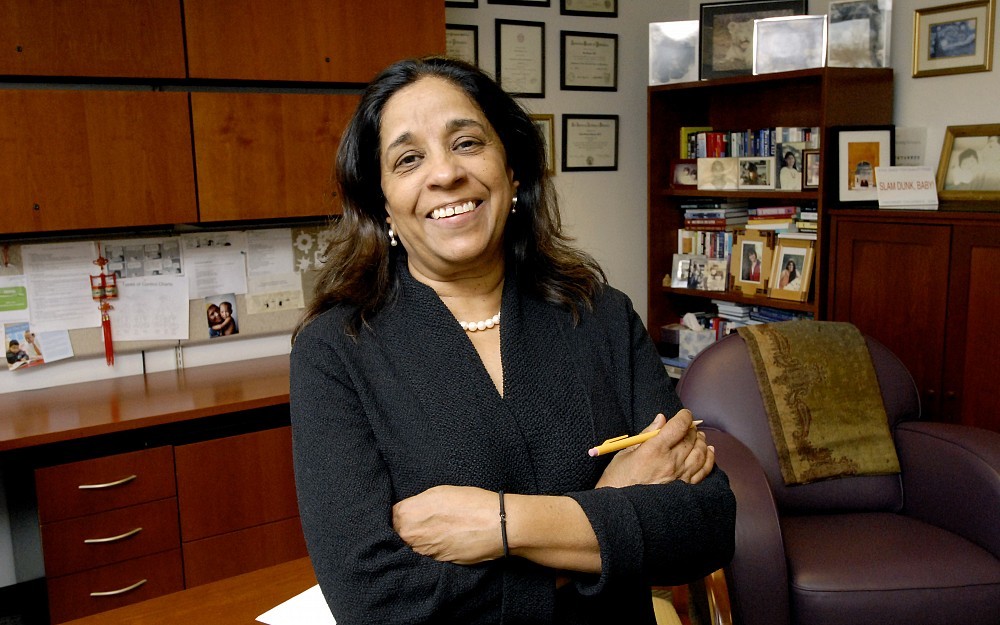
From her office just off Albert Sabin Waynamed for one of UCs most celebrated researchersUma Kotagal, MD, aims to make sure that one opportunity isnt overlooked: the opportunity to actually put all that research into practice.
"The public assumes that when they come to a physician, theyre getting evidence-based carein other words, care grounded in knowledge that has been generated from research, says Kotagal, a member of the senior management team at Cincinnati Childrens Hospital Medical Center and professor of pediatrics and obstetrics and gynecology at UC.
"They dont realize that there is often a wide gap between research and application. (A 2003 Rand Corporation study found that only about 55 percent of patients actually received recommended care.)
Kotagals titles at Cincinnati Childrenssenior vice president for quality and transformation and executive director, James M. Anderson Center for Health Systems Excellencegive a good indication of the commitment to closing that gap at the hospital.
Shes been an advocate of evidence-based care since receiving her medical degree from the University of Bombay in 1970.
But why does this gap between research and application even exist?
"When researchers are funded to discover new knowledge, theyre often not funded for the next phase of it, Kotagal says. "They may deliver the answer and give it to a drug company or publish the results, but funding the scalability of the application and the effectiveness studies are not often part of the research. Therefore, it lags.
"Also, it requires reliable systems to deliver the evidence, and our focus with health care in the United States has not been on reliable systemsits been on content and knowledge generation and not addressing unwarranted variation.
Kotagals passion for evidence-based care drove her to return to school after two decades as a neonatologist and earn a masters in epidemiology from the Harvard School of Public Health in 1996.
Since then, she has focused her research on delivery systems and quality improvement and health services research.
Building a Bundle of Interventions
For example, a 2009 study published in the Joint Commission Journal on Quality and Patient Safety focused on efforts at Cincinnati Childrens to reduce surgical site infections, a persistent problem in U.S. health care despite advances in infection control practices such as sterilization methods and improved operating room ventilation.
Led by Frederic Ryckman, MD, and other colleagues, the Cincinnati Childrens improvement team developed and implemented strategies to enhance the number of patients who received timely antibiotic administration, including a surgical site infection-prevention bundle that relied on a collection of evidence-based care processes.
Additionally, monthly reports and annotated control charts were shared with the improvement team and organizational leadership and also posted on the hospitals patient safety intranet site.
As a result, the surgical site infection rate decreased from 1.5 per 100 procedure days to 0.54, a 64 percent reduction. As the study authors said, it was a matter of making the right thing to dosharing and examining data, for instancethe easy thing to do.
In quality improvement research, Kotagal points out, the unit of experiment is the system, not the patient.
"Were interested in asking, If intervention A has been shown to work, how can we do what it takes using quality improvement to reliably apply the evidence? says Kotagal. "Thats a very big difference.
The surgical site infection initiative, for instance, was based on numerous evidence-based articles. "But each paper answered the question about one intervention, Kotagal says. "When you put all the interventions together in a bundle, you get the much greater reduction in infection.
Keep on Keeping On
So how do you keep the improvement going? In Kotagals view, its a matter of continuously raising the bar with the help of new knowledge.
"The key is to design a learning system that allows us to understand and keep continuously learning, she says. "If you achieve sizable improvement in a multi-site network with a large number of patients and then it plateaus, you have to say, This is how far we can get with the current knowledge. Now I have to go back to the bench or clinical research or comparative effectiveness research to see what works for whom and get segmentation to the next plateau.
"Each time, youre answering it for a smaller and smaller sector and getting closer to individual customization.
In other words, its all about matching the right patient to the right therapy. From there, Kotagal says, its a matter of making sure the patient adheres to the treatment.
"Thats what were trying to do, she says"link the medication and the evidence, and then were going to use scientific approachesagainto help patients apply the medication.
Institute of Medicine
Kotagal is one of nine UC faculty who are members of the Institute of Medicine of the National Academies:
Environmental Health (Medicine)
Pediatrics (Medicine)
Family Medicine (Medicine)
Internal Medicine (Medicine)
Pediatrics (Medicine)
Pediatrics (Medicine)
Pediatrics (Medicine)
Pediatrics (Medicine)
Pediatrics (Medicine)
This story was featured in the June 2011 edition of UC Research. Download the full edition (PDF).
Tags
Related Stories
UC radiation oncologist speaks with Local 12 news about clinical trial for head and neck cancer treatment
August 10, 2026

Dr. Sara Medek, a UC radiation oncology professor, speaks with Local 12 news about a new clinical trial aimed at reducing radiation in certain areas while still treating cancer effectively but with fewer painful side effects.
Cancer Center director charts future based on collaboration, AI
August 10, 2026

David Gius, MD, PhD, was featured in a Cincinnati Business Courier article and The Cancer Letter’s “The Directors" podcast discussing his priorities and goals as he recently took the helm as director of the University of Cincinnati Cancer Center.
Bidirectional link between oral, kidney health calls for patient education, access
August 4, 2026

Despite growing awareness of the connection between oral health and chronic health conditions, patient awareness and access to dental care remain limited, according to University of Cincinnati experts who recently spoke with Healio | Nephrology News & Issues.