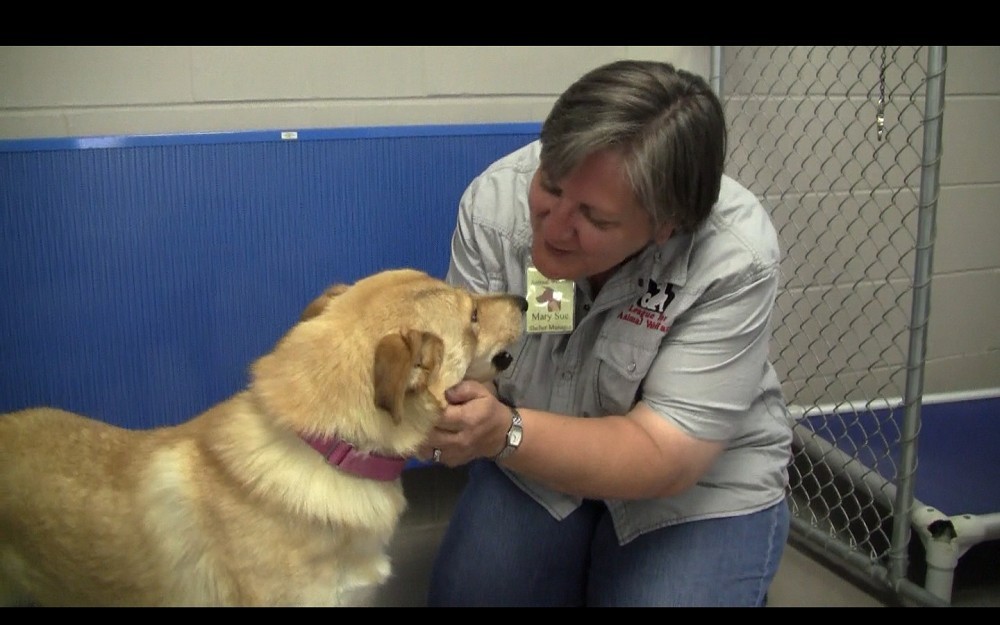
FETCH~LAB Helps Local Shelter Cut Kennel Noise

When Erin, a 2-year old collie mix, barks to visitors at the League for Animal Welfare, shell still be heard, just not as loudly.
This summer, faculty and students at UCs Facility for the Education and Testing of Canine Hearing and Lab Animal Bioacoustics (FETCH~LAB) worked with the shelter in Batavia, Ohio, to install new sound-absorbent panels in one of the dog kennel areas. Its one of only a few shelters using the panels to mitigate kennel noise in the Tristate.
The panels, filled with glass wool and plastic mesh encased in perforated aluminum, are designed to absorb the echo and noise common to dog kennels. Fifteen of the blue panels now hang between the pens and along the walls in one section of the shelters two dog housing areas.
The shelter typically houses 40 dogs, says director Mary Sue Bahr, and even with the dogs spread among four separate areas, it can get loud. Several volunteers have taken to wearing ear plugs during their shifts.
"As a no-kill shelter, some of our dogs are here for months or, unfortunately, years, says Bahr. "Because we knew that the loud noise was hard on them, we applied for a grant to install sound panels and reduce their stress levels. We want to provide as good of a shelter as we can for the life they have here.
Bahr received the grant$5,000 from the Marge Schott Foundationbut quickly realized she didnt know where to go from there.
So she contacted Pete Scheifele, PhD, FETCH~LABs director and assistant professor of communication sciences and disorders in the College of Allied Health Sciences. Scheifele, who had spoken at an LFAW event, offered to take sound readings of the space and help the shelter determine what it would need.
During their first visit, FETCH~LAB volunteers recorded peak sound levels of 100 dBA and higher in one of the shelters smaller dog areas. The overall noise level during the day was 94 dBA, levels that, according to the Occupational Safety and Health Administration, require hearing protection for humans and which have the potential to cause hearing loss in dogs over a long time period.
"This is typical of this type of kennel environment, says Scheifele. "Weve done a previous study at FETCH~LAB showing that dogs in similar kennel environment showed hearing loss after six months.
On Saturday, July 23, volunteers from FETCH~LAB and the LFAW installed the panels in one section of the dog area. Employees say they are already noticing that barks and conversation dont echo off the walls near the panels. Other volunteers asked Bahr if the dogs had been moved around to reduce the noise.
Next month, Scheifele will return to take new readings of the space. If the noise levels have dropped significantly, Bahr says she will look for funding to install panels in the remaining kennel areas.
"Our goal for all of the dogs in our care is to provide a clean, healthy, friendly, stress-free environment for them, even if its a temporary stay until they find their permanent homes, says Bahr. "Having these sound panels helps us to fulfill that goaland its also nice for our staff and volunteers. In reducing the sound levels, it helps them have a more enjoyable time here too.
Related Stories
UC radiation oncologist speaks with Local 12 news about clinical trial for head and neck cancer treatment
August 10, 2026

Dr. Sara Medek, a UC radiation oncology professor, speaks with Local 12 news about a new clinical trial aimed at reducing radiation in certain areas while still treating cancer effectively but with fewer painful side effects.
Cancer Center director charts future based on collaboration, AI
August 10, 2026

David Gius, MD, PhD, was featured in a Cincinnati Business Courier article and The Cancer Letter’s “The Directors" podcast discussing his priorities and goals as he recently took the helm as director of the University of Cincinnati Cancer Center.
UC graduates cross finish line at commencement
August 7, 2026
The University of Cincinnati recognized 2,125 graduates in two ceremonies at summer commencement Friday on campus at Fifth Third Arena.