Air Force Realignment Could Mean More Partnerships With UC

Researchers at UCs Institute for Military Medicine (IMM) will be physically closer to their collaborators now that the United States Air Forces Base Realignment and Closure (BRAC) process has been completed.
As part of the six-year plan to realign U.S. military bases, Wright-Patterson Air Force Base near Dayton, Ohio, gained about 1,200 employees and the Air Force School of Aerospace Medicineformerly at Brooks City Base in San Antonio.
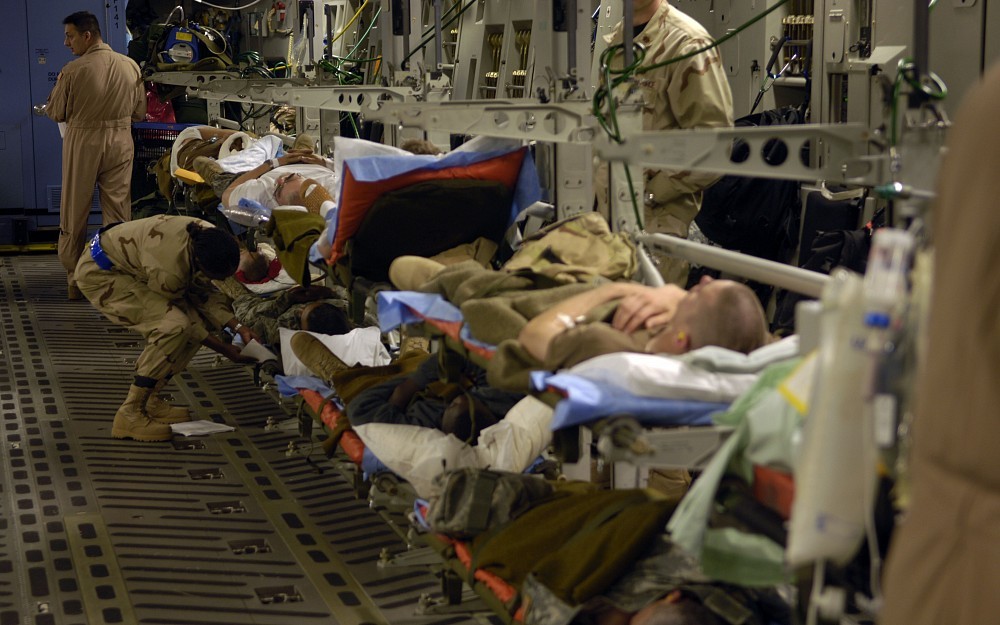
"Brooks City Base has been an integral partner in our research on aeromedical evacuation, says Alex Lentsch, PhD, director of the Institute for Military Medicine and vice chairman of research in the department of surgery. "With BRAC, the people we worked with in San Antonio are now going to be 60 miles up the road.
Last fall, UC finalized a $24 million cooperative agreement with the Air Force to fund research housed at the IMM. The award is currently funding several research tasks, including basic science research on how aeromedical evacuation affects the body and clinical studies on how much oxygen victims of traumatic injuries need.
"The move to Wright-Patterson makes it easier for us to facilitate our research work and hopefully allows the Air Force to visit us more often, says Lentsch. "Weve informally discussed plans to increase their research footprint at UC, to use us as tool to contribute to what the 711th Human Performance Wing is doing. We hope they will view us as their platform to build on.
The 711th Human Performance Wing also relocated to Wright-Patterson, where its members will conduct human performance and aerospace medicine research.
Current UC research being conducted at Wright-Patterson includes a project led by Richard Branson, MSc, a professor in the division of trauma and critical care, to study oxygen delivery at altitude. Researchers are testing a device combining an oxygen concentrator and inspired oxygen to determine the best method of delivering oxygen to patients being flown in air medical evacuation, either with a continuous flow of air or with a pulse of oxygen during inhalation.
The device, developed at UC, has been validated at sea level and is being tested in a large animal model at Wright-Pattersons altitude chamber.
Tags
Related Stories
UC radiation oncologist speaks with Local 12 news about clinical trial for head and neck cancer treatment
August 10, 2026

Dr. Sara Medek, a UC radiation oncology professor, speaks with Local 12 news about a new clinical trial aimed at reducing radiation in certain areas while still treating cancer effectively but with fewer painful side effects.
Cancer Center director charts future based on collaboration, AI
August 10, 2026

David Gius, MD, PhD, was featured in a Cincinnati Business Courier article and The Cancer Letter’s “The Directors" podcast discussing his priorities and goals as he recently took the helm as director of the University of Cincinnati Cancer Center.
Bidirectional link between oral, kidney health calls for patient education, access
August 4, 2026

Despite growing awareness of the connection between oral health and chronic health conditions, patient awareness and access to dental care remain limited, according to University of Cincinnati experts who recently spoke with Healio | Nephrology News & Issues.