UC HEALTH LINE: Nerve Stimulation Procedure Can Improve Bowel Control Problems

CINCINNATIAn estimated 18 million adults suffer silently with a life-altering condition, known as bowel incontinence, because they believe the problem cant be fixed.
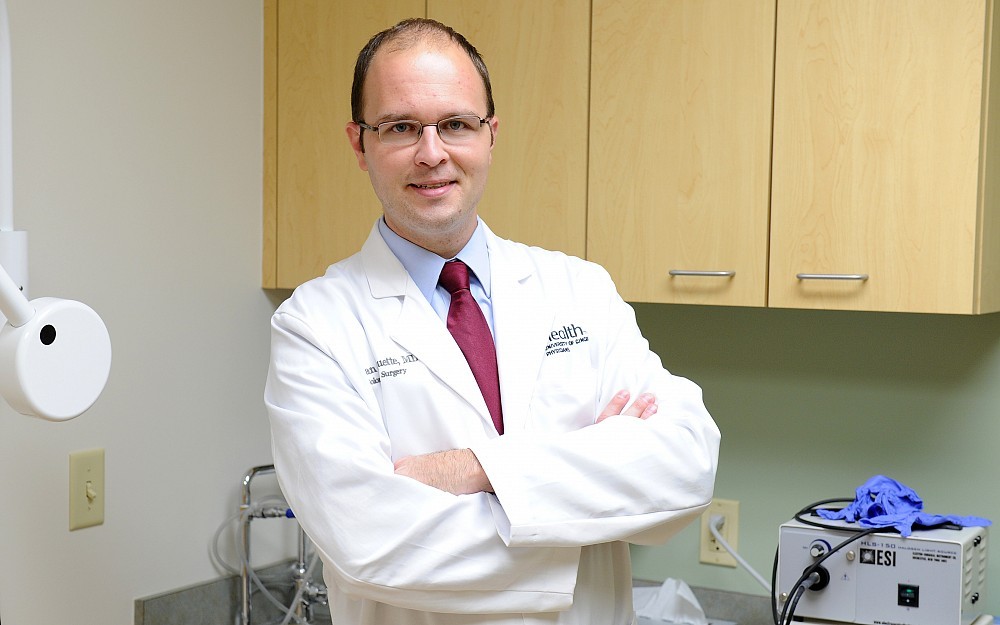
But problems with bowel incontinence are common, says Ian Paquette, MDespecially among women whove labored through multiple childbirths that resulted in obstetric injuries to the rectum.
The U.S. Food and Drug Administration recently approved a new procedure known as sacral nerve stimulation (marketed by Medtronic as InterStim Therapy) for the treatment of bowel incontinence. Paquette is the first colon and rectal surgeon in the Greater Cincinnati region to offer sacral nerve stimulation for bowel incontinence.
"Problems with bowel control most often occur in women whove had children because the physical stress of labor weakens the pelvic floor musclesparticularly if the sphincter muscle was injured, explains Paquette, a UC Health colon and rectal surgeon and assistant professor of surgery at the UC College of Medicine. "If that muscle tear doesnt fully heal, over time it becomes weaker and the patient experiences problems with bowel controlsometimes these symptoms may occur many years later.
Sacral nerve stimulation involves implantation of a small device next to the sacral nerve that acts as a type of pacemaker, helping to control the timing and frequency of bowel movements. The same device has been used in the United States for 10 years to treat overactive bladder and urinary incontinence.
A multicenter clinical trial sponsored by Medtronic showed that 47 percent of people who had sacral nerve stimulation achieved 100 percent bowel continence, which lasted at least three years. Additionally, 86 percent of the people improved at least 50 percent.
"The great thing about this procedure is that the patient has the opportunity to live with the device for two weeks during a test phase and see if it helps their bowel control before choosing to undergo the device implantation, adds Paquette.
During this test phase, a flexible wire is implanted near the patients tailbone and connected to a small external device worn on the patients waistband. The external device sends mild electric pulses through the wire to stimulate nerves near the tailbone and regularize bowel activities. If the device has positive results during the test phase, the patient can choose to have the device permanently implanted through minimally invasive surgery.
Before pursuing sacral nerve stimulation, Paquette completes a comprehensive patient evaluation to identify the underlying causes of bowel incontinence. This includes assessing nerve and voiding function as well as anal sphincter muscle strength and integrity. It is important for the patient to see a specialist who commonly deals with this disorder to determine the exact cause of the condition, and to discuss alternate surgical and nonsurgical approaches.
For more information on UC Health colon and rectal surgery services, visit ucphysicians.com or call 513-929-0104. Patient appointments are available at both the Christ Hospital Medical Office Building and UC Health Physicians Office in West Chester.
Paquette has no personal financial interest in Medtronic, manufacturer of the sacral nerve stimulation device used for InterStim Therapy.

Medtronic's Interstim device measures about two inches and is used to treat urinary voiding dysfunction as well as bowel incontinence.
Related Stories
UC radiation oncologist speaks with Local 12 news about clinical trial for head and neck cancer treatment
August 10, 2026

Dr. Sara Medek, a UC radiation oncology professor, speaks with Local 12 news about a new clinical trial aimed at reducing radiation in certain areas while still treating cancer effectively but with fewer painful side effects.
Cancer Center director charts future based on collaboration, AI
August 10, 2026

David Gius, MD, PhD, was featured in a Cincinnati Business Courier article and The Cancer Letter’s “The Directors" podcast discussing his priorities and goals as he recently took the helm as director of the University of Cincinnati Cancer Center.
UC graduates cross finish line at commencement
August 7, 2026
The University of Cincinnati recognized 2,125 graduates in two ceremonies at summer commencement Friday on campus at Fifth Third Arena.