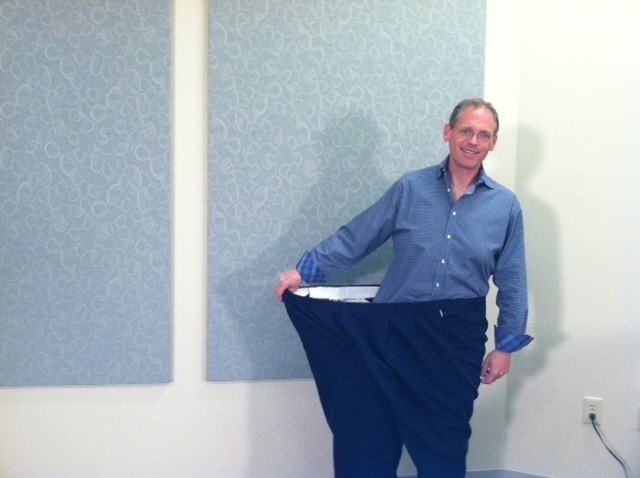
Patient Achieves Radical, Long-Term Weight Loss With Gastric Band

Steve Horstman knows firsthand about the challenges that come with being overweight. At his max, he weighed 571 pounds. Physical activities were virtually impossible and his self-esteem plummeted.
Through the years, he signed up for countless diet workshops, seesawing up and down the scale. When between 1999 and 2000 he lost 320 pounds on the Atkins diet and was lauded nationally on NBCs "Today show, Horstman thought hed "conquered the world. Eventually, though, he strayed and regained 120 pounds.
Horstman says he cant escape foodas a professional restaurateur, he works in a fast-paced environment filled with tempting, not-so-healthy foods at his fingertips.
At the age of 41, he decided it was time for a real change: No more fad diets. Hed heard of gastric bypass surgery, but the potential complications of such a radical approach left him fearful. Gastric banding seemed like a safer option.
"Im not sure if it was luck or help from above, but I found the UC Health Weight Loss Center through my then-teenage daughter. Her friend had lost a significant amount of weight and it came up one day in conversation. It turned out she had a gastric band, Horstman recalls.
He attended a free informational seminar at the center where patients shared their success stories and the physician team explained gastric banding surgery.
"After 10 minutes, I had no doubt it was the right path for me. I asked: Where do I sign up? he recalls.
Horstman chose the UC Health Weight Loss Center for its comprehensive follow-up care program.
"I knew the nurses, staff and physicians would all be there for me when I needed them, whether it was for a band adjustment or mental support to move beyond a specific challenge, he recalls. "They were there to lift me up if I was struggling and to push me when my commitment started to sway.
In the first year, Horstman lost 120 pounds and 16 months after his surgery he reached his goal weight of 195 pounds. He has maintained that weight since October 2009. As the weight came off, he ramped up his exerciseregularly running, walking and cycling.
"Im never going back to the person I was. When I see other people who are morbidly obese, I want to help them and tell them they can change their lives, too, he says.
"Ive been in the restaurant business all my life so I understand temptation. I still have those temptations, but Ive changed the way I think about food. I now have the mental willpower to overcome it. I eat in moderation and in an overall healthy way, but I dont deny myself. That isnt sustainable. What I do is recognize my food triggers and avoid them.
Horstman says he is happy with the person he is today and looking forward to marrying his fiancée, Melissa, in late September.
For more information on the UC Health Weight Loss Center, visit ucphysicians.com. The center offers free informational seminars every month. To register for a seminar, call 513-939-2263.

At his peak, Steve Horstman weighed nearly 500 pounds. He achieved his goal weight of 195 pounds after gastric banding surgery.

Brad Watkins, MD, discusses gastric banding with a patient.
Tags
Related Stories
UC radiation oncologist speaks with Local 12 news about clinical trial for head and neck cancer treatment
August 10, 2026

Dr. Sara Medek, a UC radiation oncology professor, speaks with Local 12 news about a new clinical trial aimed at reducing radiation in certain areas while still treating cancer effectively but with fewer painful side effects.
Cancer Center director charts future based on collaboration, AI
August 10, 2026

David Gius, MD, PhD, was featured in a Cincinnati Business Courier article and The Cancer Letter’s “The Directors" podcast discussing his priorities and goals as he recently took the helm as director of the University of Cincinnati Cancer Center.
Bidirectional link between oral, kidney health calls for patient education, access
August 4, 2026

Despite growing awareness of the connection between oral health and chronic health conditions, patient awareness and access to dental care remain limited, according to University of Cincinnati experts who recently spoke with Healio | Nephrology News & Issues.