For Better Allergy Treatment, Find Better Tests

Peanuts, shellfish, milk and soy: some people cant have a taste of these items without having severe allergic reactions. But its unknown why many patients react the way they do and how severe their reaction can be.
During National Food Allergy Awareness Week, UC volunteer assistant professor of clinical otolaryngology Steve Sutton, MD, says theres still much to learn about food allergies and why they affect some people more than others.
Though food allergy testing can carry the risk of false positives, and should be interpreted by an allergist, research has demonstrated an overall increase in the prevalence of food allergies in recent decades. Self-reported survey data in the U.S. suggests an 18 percent increase in food or digestive allergies from 1997 to 2007. Other surveys found notable increases in pediatric allergies to tree nuts and peanut allergies.
With this increase, Sutton says the field needs testing that can determine the exact nature of a patients allergy.
"Our most available testing, a skin test or blood test, isnt able to tell patients whether they have a life-threatening reaction or a mild reaction to the food, he says. "Only exposure can tell you that, but that can be dangerous when not done in the right setting.
To test with exposure, Sutton recommends an "oral challenge, in which patients, supervised by a trained physician, are given increasing amounts of a suspected allergen until they have a reaction or tolerate a normal serving.
"Youd be surprised at the number of people you expect to pass the challenge and dontor vice versa, he says.
That unknown factor in food allergies is what Sutton believes should be the focus of future research into allergies and immunology.
"Our biggest issue is the need to have some sort of testing or biomarker that would track, not only what the individual is truly allergic to, but to what extent, he says.
He says there are now blood tests for peanut and a few other allergens that can identify what protein leads to the individuals allergic reaction. These tests may be useful in predicting whether a patient is allergic to a protein that tracks with a more severe type of reaction or whether the patient is allergic to a protein that is less problematic. However, more research is necessary to understand how to make full use of these newer studies.
"As food allergies become more prevalent, patients are rightly insisting on adequate safety, better testing and research results that lead toward curing this problem or at least making it less burdensome, says Sutton.
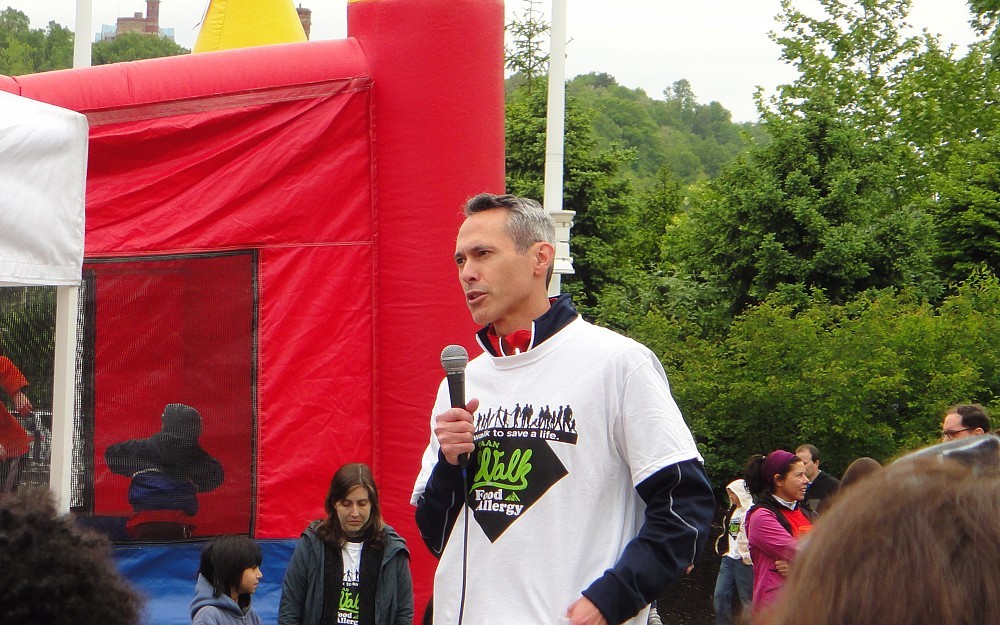
Until those goals are met, Sutton is working with the patient community to advance awareness. On April 28, he served as honorary medical chair of the Food Allergy & Anaphylaxis Networks Walk for Food Allergy in Cincinnati, held at the Theodore M. Berry International Friendship Park.
The groups fundraising goal for the event was $25,000it raised more than $54,000.
"We have a long way to go, Sutton adds, "but we will get the answers we want because of the drive of the food allergy community.
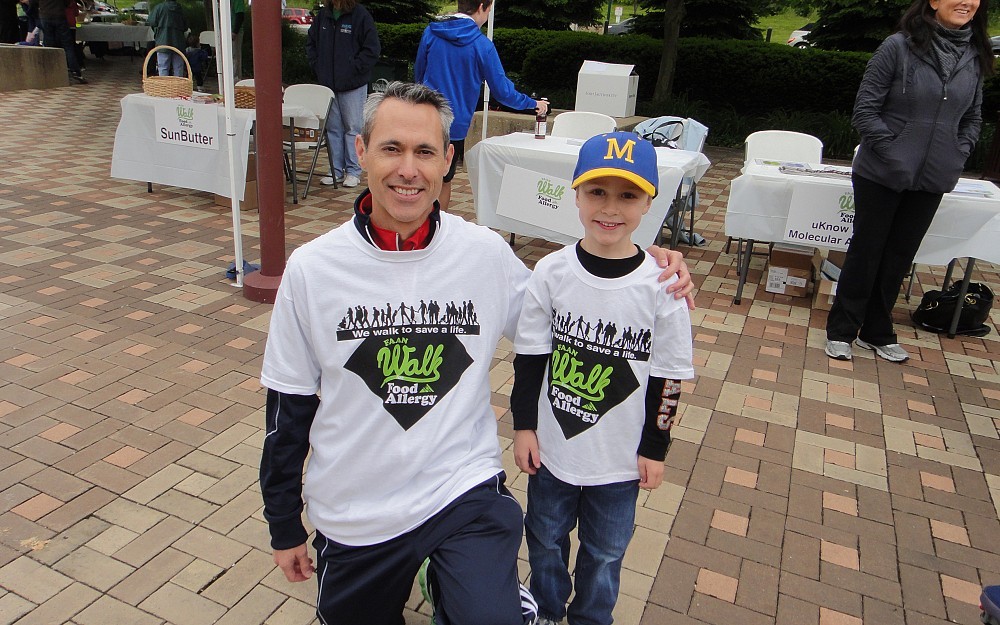
Steve Sutton, MD, with a FAAN walk participant
Tags
Related Stories
UC radiation oncologist speaks with Local 12 news about clinical trial for head and neck cancer treatment
August 10, 2026

Dr. Sara Medek, a UC radiation oncology professor, speaks with Local 12 news about a new clinical trial aimed at reducing radiation in certain areas while still treating cancer effectively but with fewer painful side effects.
Cancer Center director charts future based on collaboration, AI
August 10, 2026

David Gius, MD, PhD, was featured in a Cincinnati Business Courier article and The Cancer Letter’s “The Directors" podcast discussing his priorities and goals as he recently took the helm as director of the University of Cincinnati Cancer Center.
Bidirectional link between oral, kidney health calls for patient education, access
August 4, 2026

Despite growing awareness of the connection between oral health and chronic health conditions, patient awareness and access to dental care remain limited, according to University of Cincinnati experts who recently spoke with Healio | Nephrology News & Issues.