Genetic Variant Increases Risk of Heart Rhythm Dysfunction, Sudden Death

CINCINNATICardiovascular researchers at the University of Cincinnati have identified a genetic variant in a cardiac protein that can be linked to heart rhythm dysfunction.
This is the first genetic variant in a calcium-binding protein (histidine-rich calcium binding protein) found to be associated with ventricular arrhythmias and sudden cardiac death in dilated cardiomyopathy patients, opening up new possibilities for treatment.
Dilated cardiomyopathy is a condition in which the heart becomes weakened and enlarged and cannot pump blood efficiently.
These findings are being presented for the first time at the International Society of Heart Researchs Pathology and Treatment of Heart Failure meeting in Banff, Alberta, held May 27 through May 31, 2012.
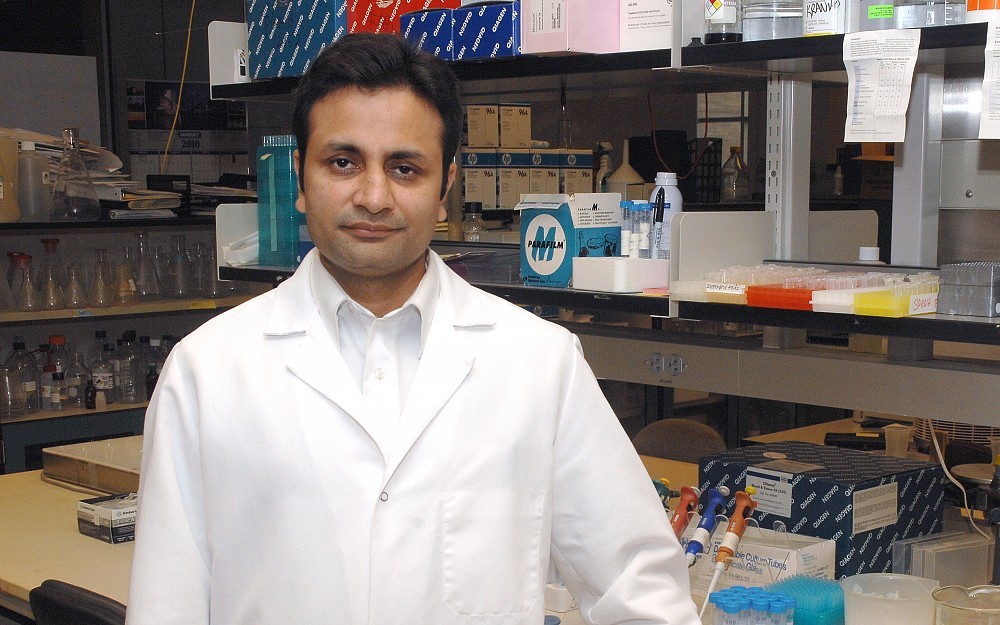
The team led by Vivek Singh, PhD, a research scientist under the direction of Litsa Kranias, PhD, in the department of pharmacology and cell biophysics at UC, says that sudden cardiac death is a risk for patients with heart failure who are carriers of this variant in the histidine-rich calcium-binding protein because the calcium inside their heart cells is not properly controlled, possibly leading to the development of arrhythmias.
"The histidine-rich calcium-binding protein (HRC) is a regulator of calcium uptake and release in the sarcoplasmic reticulum, a network of tubes and sacs in heart muscle fibers that plays an important role in heart contraction and relaxation by releasing and storing calcium ions, Singh says.
"Recently, our group at UC and Athens, Greece, identified a genetic variant in HRC, named Ser96Ala, which showed a significant association with worsening ventricular arrhythmias and sudden cardiac death in a group of patients with idiopathic dilated cardiomyopathy. In this study, our team characterized the mechanisms and pathways that link the HRC variant with arrhythmias causing sudden death.
Researchers first generated animal models with cardiac-specific expression of the human normal (S96S) or altered (A96A) HRC.
"Unexpectedly, we found that contractility of heart cells significantly decreased with disturbed calcium regulation in A96A hearts when compared with S96S hearts, Singh says. "In addition, A96A heart cells showed more arrhythmic behavior under stress conditions.
Singh says this data could eventually provide new insights into pathways that control calcium regulation, leading to the development of new clinical interventions.
"Our results showed that the human HRC mutant model displayed altered intracellular calcium (Ca2+) handling, associated with slowed Ca2+ uptake and increased Ca2+ leak, which may promote arrhythmias under stress, Singh says. "These new findings are important because we can use this information to help develop new methods of screening human patients and preventing arrhythmia development in the carriers.
This study was funded by an American Heart Association Fellowship Award and the National Heart, Lung, and Blood Institute (NHLBI) of the National Institutes of Health.
Tags
Related Stories
UC radiation oncologist speaks with Local 12 news about clinical trial for head and neck cancer treatment
August 10, 2026

Dr. Sara Medek, a UC radiation oncology professor, speaks with Local 12 news about a new clinical trial aimed at reducing radiation in certain areas while still treating cancer effectively but with fewer painful side effects.
Cancer Center director charts future based on collaboration, AI
August 10, 2026

David Gius, MD, PhD, was featured in a Cincinnati Business Courier article and The Cancer Letter’s “The Directors" podcast discussing his priorities and goals as he recently took the helm as director of the University of Cincinnati Cancer Center.
Bidirectional link between oral, kidney health calls for patient education, access
August 4, 2026

Despite growing awareness of the connection between oral health and chronic health conditions, patient awareness and access to dental care remain limited, according to University of Cincinnati experts who recently spoke with Healio | Nephrology News & Issues.