First-Year Medical Students Complete Class Project to Gain Skills in Patient Interaction

At the end of May, first-year medical students presented service-learning projectsorganized and conducted as part of their Physician and Society 102 courseto their classmates and to some of the community partners they worked with over the quarter.
The course covers four main themesphysician identity: professionalism, cultural competency and ethics; community and population health; the business and law of medicine; and medical humanities.
"The service-learning project with the community was a method for the students to apply what they were learning in the classroom while at the same time learning directly from the community of patients they will be serving as future physicians," says Joseph Kiesler, MD, associate professor in the department of family and community medicine who taught the course. "Their projects were chosen in conjunction with the community partners and will hopefully be sustained by these communities for continued benefit."
One group, known as Learning Community (LC) 10, was chosen as having the winning project, based on votes from peers in the class. As the reward, its community organization, the Urban League of Cincinnati, received $500 to help sustain the project instituted by the students.
Below are their descriptions of and reflections about the project, the agency with which they worked and their future goals as care providers.
Could you give me an overview of the project? How did you select it? Explain how you facilitated it and what you hoped to learn from it.
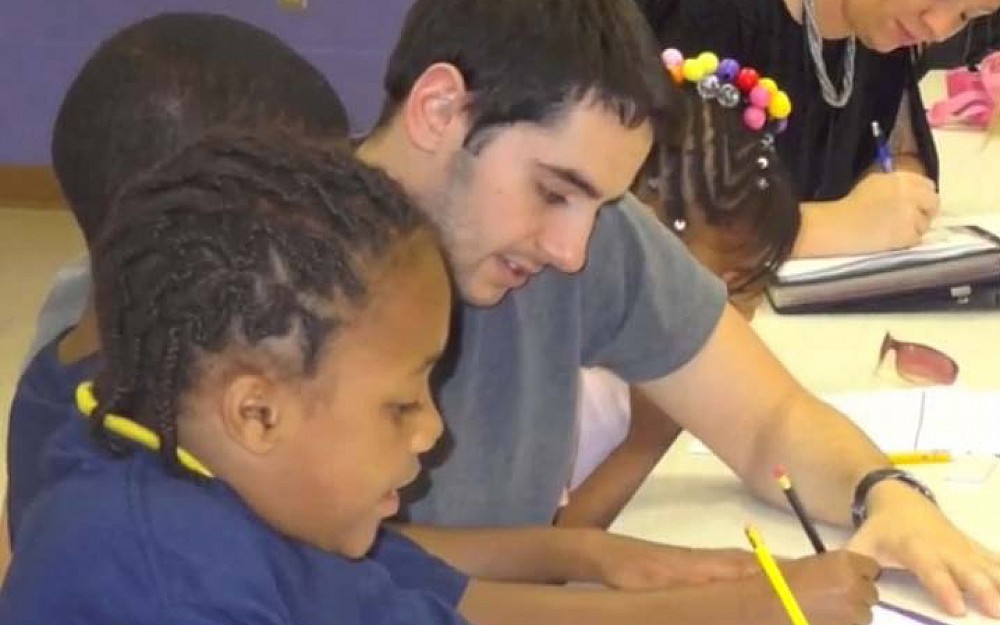
Robert Kim: "The Urban League of Cincinnati, our community partner, had an after-school program for elementary students that was understaffed. We thought our time could be best spent helping teach these students important lessons in communication, friendship and anti-bullying that would be relevant for the rest of their lives. Our learning community got in contact with South Avondale Elementary and set up a two-week schedule with one visit each week. We wanted this to be a fun activity in addition to educational, so we brainstormed and researched game ideas online and came up with a handful of games that would focus on teamwork and getting students who normally dont interact to get to know each other. One of the more intensive games was called Mission Impossible, where an obstacle course was set up inside the school gym and students separated into teams had to navigate through without touching the floor, which was lava. The team that succeeded in crossing the course without any team members touching the lava won. I didnt go into the project with a hope to learn any specific lesson. What I did learn was how even a mere day spent volunteering could impact lives so much in addition to giving these students something to remember for the rest of their lives."
Andrew Wong: "'Mission Possible: The Teamwork Project' is an initiative derived from our project in the fall quarter, a collaboration with the Urban League of Cincinnati studying access to mental health services in the Avondale area. We found the pervasiveness of mental health problems to be inextricably linked to the poverty and violence throughout the community, situated not two miles from our medical school fortress. For our spring quarter project, we tried to focus on the issue of violence; by educating the children of Avondale on bullying and by teaching them the value of nonviolent conflict resolution, we hoped to make a substantive impact."
Did your expectations from the class and what you actually learned align or differ?
Grigoryan Konstantin: "I think the class helped prepare us for the various differences and disparities that we come across with when working with patients from different backgrounds."
Megan Lisy: "I expected to complete a project that reinforced some lessons about teamwork and allowed the students to have an afternoon of fun. What I didnt realize was how much we would impact the students with not only our activities but also our presence. It quickly became clear that the students craved mentors and wanted to be pushed. The members of LC 10 saw concepts, such as socioeconomic factors affecting everyday life, presented in Physician and Society firsthand."
Modi: "I think our experiences in the Avondale community were really eye opening and reminded us how important it is to volunteer your time to the less fortunateeven if it is non-medically related."
What was your favorite part of the project/class?
Andrew Wong: "Our 'Mission Impossible' obstacle course activity proved to be my highlight of the project, but my voice was hoarse halfway through the game."
Kim: "Just seeing how much fun the elementary students were having. They are so young, open and ready to interact. Many of them grabbed our hands or linked our arms as soon as we got there and it was great to see them all smile and have a good time while learning some important interpersonal skills and lessons."
Gao Xu: "My favorite part of the project was definitely playing with the kids. They were so excited to see us and participate in the games. It was wonderful to be a part of their lives and make an impact."
How would you advise or what would you tell a student who is beginning the class?
Xu: "I would tell them to really do a project that they care about and not just to fulfill a requirement. It makes a huge difference when you actually care about what youre doing."
Konstantin: "For anyone starting the class, just be open minded and willing to engage with the community partners to really understand the challenges that certain communities face to be able to do something that can have an impact."
Wong: " Its lessons will be essential in the day-to-day routine of (being a) practicing physician."
How will what you learned in this class and from your project help in your future careers as physicians?
Lisy: "Working so closely with a demographic that was unfamiliar to us reinforced the importance of taking a good history. We realized how the socioeconomic situation a person is in affects all aspects of the persons life. Subsequently, their lifestyles, reflecting their current situations, affect their health. Even though we were taught this is class, seeing it in person really drove the point home."
Konstantin: "What I learned in the class will hopefully allow me to be a physician that is more humanistic and is aware of the patients as a whole rather than just what ails them."
To watch the video presented by LC 10 that details the project, click here.
Tags
Related Stories
UC radiation oncologist speaks with Local 12 news about clinical trial for head and neck cancer treatment
August 10, 2026

Dr. Sara Medek, a UC radiation oncology professor, speaks with Local 12 news about a new clinical trial aimed at reducing radiation in certain areas while still treating cancer effectively but with fewer painful side effects.
Cancer Center director charts future based on collaboration, AI
August 10, 2026

David Gius, MD, PhD, was featured in a Cincinnati Business Courier article and The Cancer Letter’s “The Directors" podcast discussing his priorities and goals as he recently took the helm as director of the University of Cincinnati Cancer Center.
Bidirectional link between oral, kidney health calls for patient education, access
August 4, 2026

Despite growing awareness of the connection between oral health and chronic health conditions, patient awareness and access to dental care remain limited, according to University of Cincinnati experts who recently spoke with Healio | Nephrology News & Issues.