Focus on Research with Jason McMullan, MD

Jason McMullan, MD, is an assistant professor of emergency medicine at UC and an emergency medicine physician at the UC Health University Hospital emergency department. Originally from South Carolina, he earned his medical degree at the Medical University of South Carolina at Charleston before moving to Cincinnati.
Within UCs Department of Emergency Medicine, he serves as the associate director of research in the division of EMS and holds leadership roles with partnering EMS agencies. McMullan is on the medical direction team for the Cincinnati Fire Department and fire/EMS departments in Colerain Township, Forest Park, Green Hills and UCs Paramedic Program.
He is also a member of the medical team for the Hamilton County Urban Search and Rescue Team and the Ohio Task Force 1 Urban Search and Rescue.
How did you come to UC?
"I was matched to UC for my residency in emergency medicine and this place has really stuck on me. Cincinnati turned out to be a great place to raise my family and UC was a great professional opportunity for me. Its a perfect place for us to be.
"Weve been here for eight years now its actually eight years exactly since the day my wife took our first born and our oldest dog and drove up from South Carolina to meet the movers.
What is your research focus?
"My research covers pre-hospital care within emergency medicine. There are so many critical aspects to the care thats given to patients during an emergency situationnot only in the ED, but before they make it to the hospitalbut these critical actions are frequently not very evidence-based.
"My goal is to establish the best, evidence-based care for patients even before they make it to the hospital in these time-critical emergencies.
"Thus far, our division has evaluated how best to get patients suffering from STEMI heart attacks to a catheterization lab for their reperfusions, the care of cardiac arrest patients at home by EMS and the best method to treat status epilepticus, or seizures lasting longer than 5 minutes.
"We also have a growing body of work in our collaboration with the division of trauma and critical care, including a current project studying the oxygen and ventilation needs for trauma patients in pre-hospital care.
"One of the backbones of our department is to push forward independent research in emergency medicine, focused on emergency medicine by emergency medicineto have ownership just as other specialties do. My mission within the department is to do the same for our paramedics and our pre-hospital care.
How does studying EMS and pre-hospital care differ from hospital-based research?
"There are certainly challenges to focusing on research outside the hospital. Outside, you dont have the research nurses and associates, its not a controlled environment and relatively simple things like data collection can be difficult.
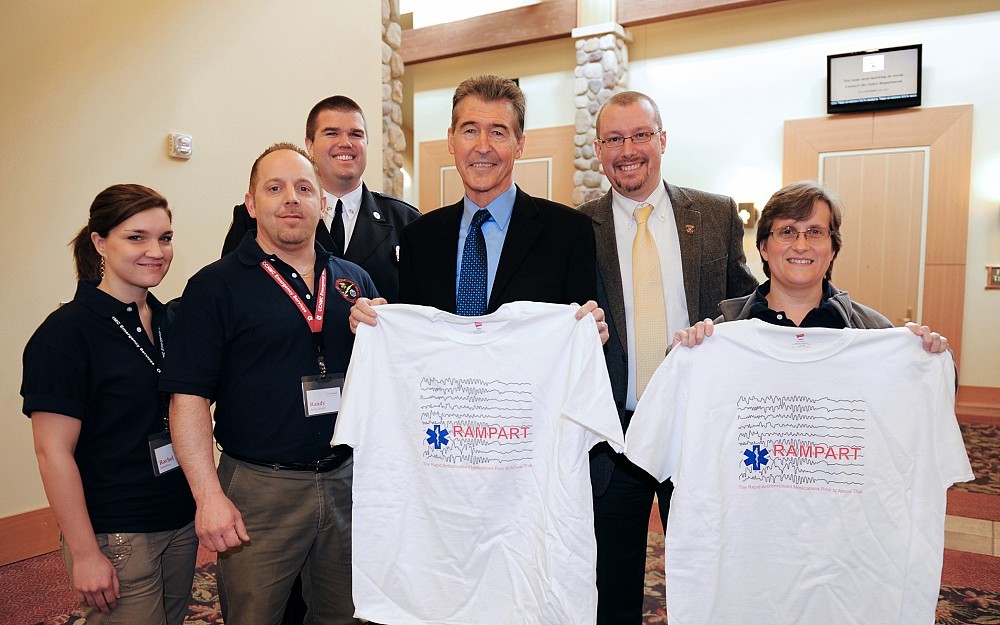
"Consent issues are also completely different in pre-hospital care. Exception from informed consent trials, like the recent RAMPART study, are crucial to filling the gaps in emergency care research both in and out of the hospital.
"With any research theres always a delay in knowledge translationfrom developing sound research results to actually changing direct patient care. But Ive found that our EMS community is very open to participating in research and our community is very open to adopting best practices as early as possible.
"For example, the RAMPART results were published early this year. Once we brought the results to our regional EMS protocol committee in Cincinnati, they agreed to change the protocols for treating patients with status epilepticus. The new standards will go into effect in January 2013.
What do you do outside UC?
"My biggest hobbies right now are whatever is interesting to my kids at the moment. I have a 6-year-old son and a 9-year-old daughter, so right now Im spending a lot of time playing catch and going to the pool. Its the start of swim meets and T-ball games for the summer.
"We live in St. Bernard. Our neighborhood is probably the biggest thing that contributes to my productivityits so supportive and its certainly a perk to living here.
Tags
Related Stories
UC radiation oncologist speaks with Local 12 news about clinical trial for head and neck cancer treatment
August 10, 2026

Dr. Sara Medek, a UC radiation oncology professor, speaks with Local 12 news about a new clinical trial aimed at reducing radiation in certain areas while still treating cancer effectively but with fewer painful side effects.
Cancer Center director charts future based on collaboration, AI
August 10, 2026

David Gius, MD, PhD, was featured in a Cincinnati Business Courier article and The Cancer Letter’s “The Directors" podcast discussing his priorities and goals as he recently took the helm as director of the University of Cincinnati Cancer Center.
Bidirectional link between oral, kidney health calls for patient education, access
August 4, 2026

Despite growing awareness of the connection between oral health and chronic health conditions, patient awareness and access to dental care remain limited, according to University of Cincinnati experts who recently spoke with Healio | Nephrology News & Issues.