Researchers Test Medications That Could Reduce Cognitive Problems After Concussion

CINCINNATIA concussion is not always here today and gone tomorrow. Its effects may extend far beyond the initial impact and the visit to the emergency room doctor or battlefield medic. For some individuals, problems with thinking, remembering and problem-solving can persist for months or even years after a concussion.
Research led by the University of Cincinnati (UC) Department of Neurosurgery is evaluating whether two medications can help reduce problems with memory, concentration, reaction time, or other thinking processes in people who have experienced a concussion or mild head injury more than three months ago. The study is open to people who have been diagnosed with a concussion (mild traumatic brain injury), post-traumatic stress disorder (PTSD), or both.
The two drugs, which are being studied separately, are methylphenidate (Ritalin) and galantamine (Razadyne). Participants in the study will be randomized to one of the two drugs or to a placebo (a sugar pill). The study, the Cognitive REmediation after Traumatic Exposure Trial, also known as CREATE, is funded by the U.S. Army Medical Research and Materiel Command.
"So many rehabilitation efforts are focused on helping patients regain their motor skills, said Norberto Andaluz, MD, associate professor of neurosurgery at UC and a Mayfield Clinic neurosurgeon. "They typically focus on helping patients regain physical strength and movement. There arent many that focus on regaining cognitive skills. This study is about your smarts, your mental functioning. The purpose is to focus on ways to improve cognition after concussion.
Andaluz and Sheital Bavishi, DO, assistant professor of physical medicine and rehabilitation at UC and director of brain injury at HealthSouth Rehabilitation Hospital at Drake Center, are co-investigators of the UC portion of the study.
"The study will help us understand how to get people back to being fully functional after a mild traumatic brain injury or concussion, Andaluz said.
"We hope to learn what medicines we can use to assist them and improve their quality of life, added Bavishi.
The CREATE study, which will be administered at Drake Center, is open to men and women, ages 18 to 55, who have suffered a concussion or traumatic brain injury at least three months ago and have problems with memory or paying attention. Participants may receive up to $425 for their participation in the study.
Because previous studies have focused on either concussion or PTSD, the CREATE study is unique in that it can include a subset of individuals who have experienced both. Study leaders speculate that "co-occurring PTSD and traumatic brain injury may result in "syndromes of increased severity in these individuals and that "treatments that specifically target cognitive symptoms could be especially useful.
The CREATE study is one of several important new studies that are part of a federal effort known as INTRuST, the Injury and Traumatic Stress Consortium Repository, which is headquartered at the University of California, San Diego.
INTRuST was formed to further medical sciences understanding of PTSD and traumatic brain injury and to expedite treatments for a generation of soldiers who have survived debilitating head injuries during Operation Enduring Freedom, Operation Iraqi Freedom and Operation New Dawn. A recent government report found that nearly 5 percent of soldiers returning from year-long deployments had suffered an injury that included loss of consciousness; 17.2 percent had experienced an injury that included mind-altered status.
Also under way at UC are two ancillary INTRuST clinical studies that seek to enroll healthy volunteers who will donate blood samples and undergo brain imaging. Blood samples and brain images from people volunteering as "healthy controls will be stored for future research, treatment and prevention of diseases and disorders such as PTSD or traumatic brain injury.
Lead investigators in the CREATE study are Thomas McAllister, MD, of Dartmouth Medical School and Ross Zafonte, DO, of Spaulding Rehabilitation Hospital in Boston.
For more information about the CREATE study or the INTRuST ancillary studies, please contact Carolyn Koenig at 513-558-3518 or
.

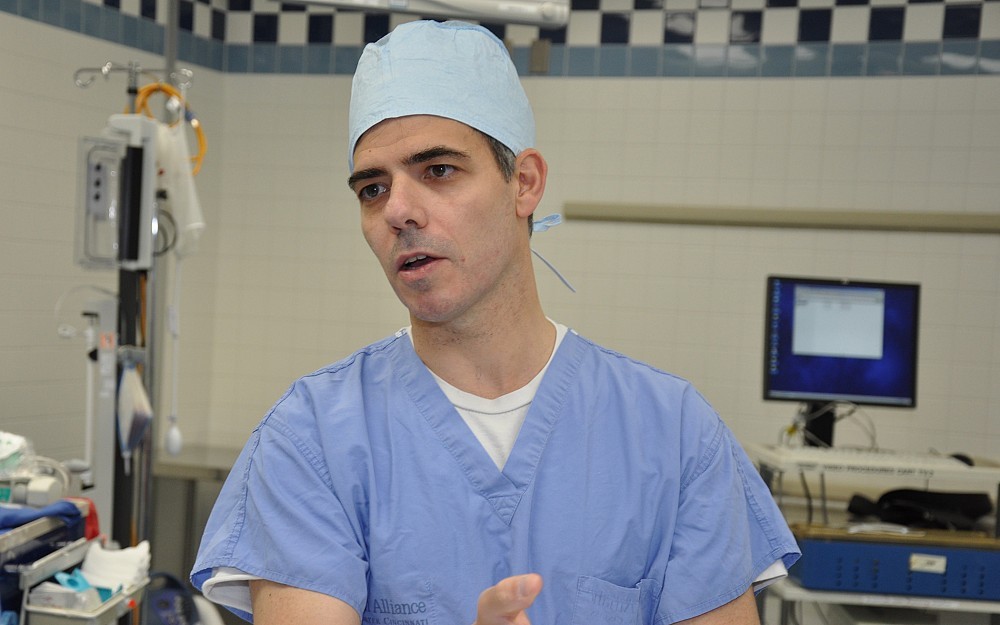
Norberto Andaluz, MD
Tags
Related Stories
UC radiation oncologist speaks with Local 12 news about clinical trial for head and neck cancer treatment
August 10, 2026

Dr. Sara Medek, a UC radiation oncology professor, speaks with Local 12 news about a new clinical trial aimed at reducing radiation in certain areas while still treating cancer effectively but with fewer painful side effects.
Cancer Center director charts future based on collaboration, AI
August 10, 2026

David Gius, MD, PhD, was featured in a Cincinnati Business Courier article and The Cancer Letter’s “The Directors" podcast discussing his priorities and goals as he recently took the helm as director of the University of Cincinnati Cancer Center.
Bidirectional link between oral, kidney health calls for patient education, access
August 4, 2026

Despite growing awareness of the connection between oral health and chronic health conditions, patient awareness and access to dental care remain limited, according to University of Cincinnati experts who recently spoke with Healio | Nephrology News & Issues.