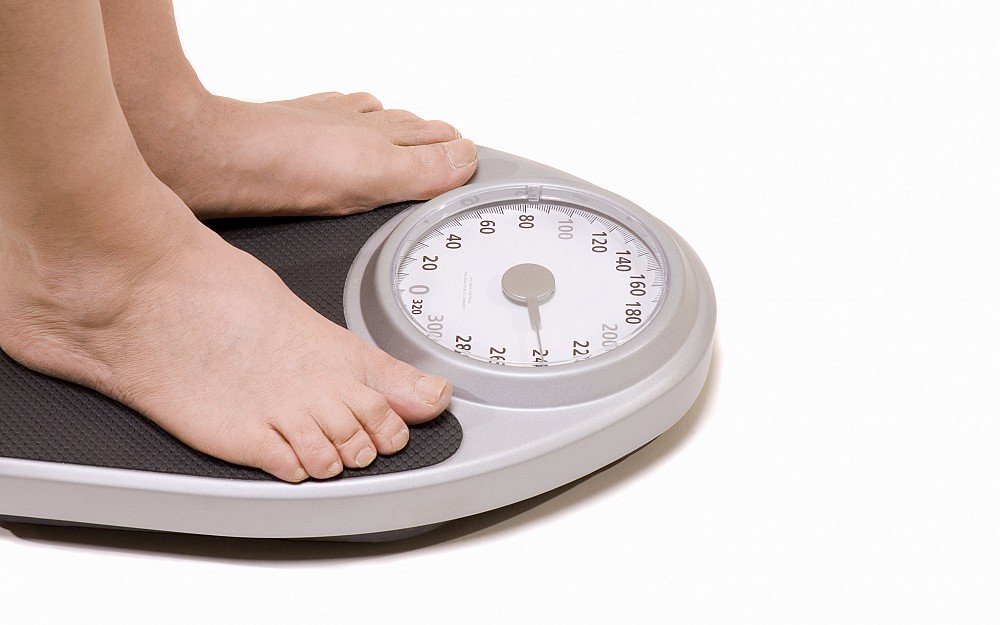
UC HEALTH LINE: Calorie Counting Effective Tool in Losing Weight

CINCINNATIIts the season for backyard parties and grilling out, but while fruits and veggies are plentiful this time of year, some of what is found in the picnic basket isnt the best for helping you stay slim and trim.
UC Healths Lauren Ashbrook, MD, warns that in order to lose weight, its important to carefully watch whatand how muchgoes into your body.
"Everyone says that diet and exercise are the healthiest ways to lose weight, which is true, as long as you are expending more calories than you take in, says the primary care doctor who just finished her residency at UC and will see patients at the Clifton UC Health Physicians Office in August. "When you construct a weight loss plan, you have to take that into account.
Ashbrook says that exercise is important for staying healthy and should not be omitted from your daily routine but that it doesnt typically burn a lot of calories, unless youre doing lengthy, high- intensity exercise like running a marathon.
"An average-sized woman will burn 200 to 400 calories during a 30-minute workout, which isnt a whole lot, as it cannot account for significant dietary indiscretions, she says.
Ashbrook says weight has always been a struggle for her, but the method that has helped her lose 30 pounds recentlyand what has worked throughout the decadesis calorie counting.
"Now, its even easier because there are many free phone applications that will instantly look up calories for what youre eating and keep track of it for you, she says. "These applications also calculate basal metabolic rate, which is the amount of calories you are burning at rest, even while sleeping. This is done by entering your height, weight, age and sex.
She says the goal is to take in fewer calories than what you are burning to lose weight: To lose one pound, you must burn 3,500 excess calories; for one pound of weight loss a week, this equates to 500 calories per day.
"This simple math works well, and Im able to keep track, right down to the piece of gum Im chewing, of how many calories I can have per day and still lose weight, she says. "When it comes down to it, its just keeping a close eye on what youre putting into your body.
Ashbrook also urges measuring food with a scale, to make sure portion sizes are correct, and to only eat half of what is on the plate at a restaurant, after picking an option from the menu that looks healthy. Many restaurants give calorie counts for these healthier options.
"Most of all, dont give up if you have a bad day, she says. "Just do better the next day; it all averages out as long as you cut calories from another part of the week.
And, she adds, dont completely deprive yourself of the "bad foods you love.
"You can have small amounts of the things that you like, as long as its sporadic, she says. "Its important to stay balanced. Recently, there was a professor who used a Twinkie-based diet to lose 27 pounds, which isnt necessarily the healthiest way to lose weight, but does demonstrate the benefits of calorie counting. Losing 10 percent of your weight, in general, will help your cardiovascular and endocrine health. It is important to get excess weight off, and there are lots of ways to do it, but just be reasonable about it. Everything in moderation.
Ashbrook says if you dont have a smartphone or a gym membership, just keeping track of calories with a pen and paper combined with simple exercise like walking can do the trick.
"Sometimes, just writing down what you are about to eat can deter you from making high-calorie decisions, she says. "Both counting calories and reaching for healthier food choices while cutting down on portion sizes can help you lose weight. The key is to stick to it, dont get discouraged and dont think that exercise alone will help you lose pounds.

Lauren Ashbrook, MD, an adjunct instructor in the department of internal medicine and a UC Health primary care physician
Tags
Related Stories
UC expert weighs in on current MASH treatment approaches
June 5, 2026

As MedCentral recently reported, pending broader pharmacologic approvals for metabolic dysfunction-associated steatohepatitis (MASH), lifestyle modifications remain the go-to intervention.
At least two weather patterns increase headaches, UC study suggests
June 4, 2026
University of Cincinnati physicians and collaborators identified two specific weather patterns that increase headache and migraine risk and found the preventive medication fremanezumab (Ajovy) can reduce weather‑associated headaches. The findings will be presented at the American Headache Society Annual Scientific Meeting in Orlando.
UC researcher secures $3.3M grant to study microplastics’ impact on heart
June 2, 2026
The National Institute of Environmental Health Sciences awarded a $3.3M grant to University of Cincinnati researcher Hong‑Sheng Wang, PhD, to study how microplastics and nanoplastics affect cardiovascular health.