UC HEALTH LINE: Reduce Esophageal Cancer Danger by Knowing Risk Factors

CINCINNATIAs the American obesity epidemic has increased the past two decades, so has the rate of esophageal cancers. Clinician-scientists affiliated with the University of Cincinnati (UC) Cancer Institute say enhanced public awareness about how the disease develops and what can be done to prevent it might help reduce this trend.
The esophagus is a muscular tube that carries food and liquid from the mouth to the stomach. Among all cancer diagnoses, esophageal cancer is relatively rarethe American Cancer Society estimates that there will be 17,500 new cases diagnosed in the United States in 2012, and more than 15,000 deaths from the disease.
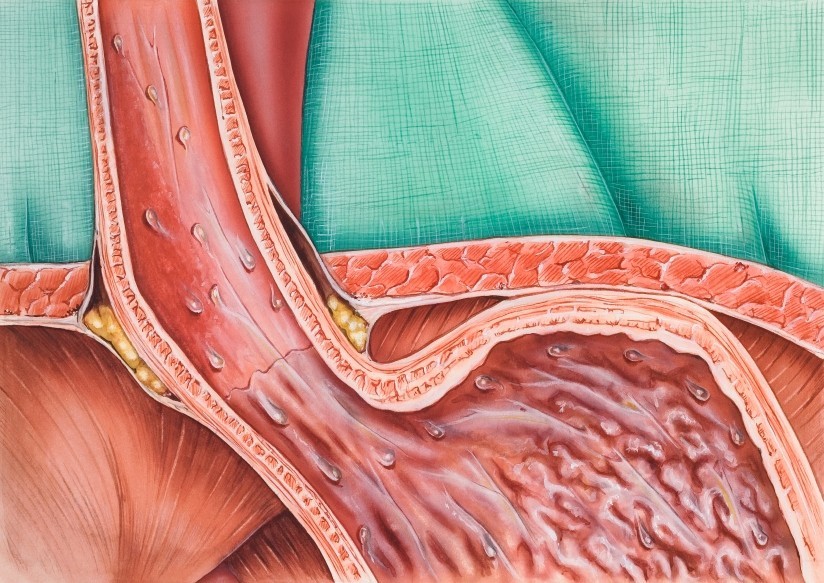
"Esophageal cancer has a precancerous state (Barretts esophagus) that can be identified in advance through endoscopy and addressed to help reduce the risk that cancer will develop, says Sandra Starnes, MD, a UC Healththoracic surgeon and chief of the thoracic surgery division at the UC College of Medicine.
Barretts esophagus occurs when the lining of the tube is damaged by stomach acid and changes to be more similar to that of the stomachmost often as the result of gastroesophageal reflux, or GERD.
According to the National Institute of Diabetes and Digestive and Kidney Diseases (NIDDK), include obesity, pregnancy, smoking and hiatal hernias are primary risk factors linked to the GERD.
"Left untreated, GERD can cause stomach acid to repeatedly wash up into the esophagus, causing the changes that lead to Barretts esophagus. People with Barretts esophagus are up to 40 times more likely to develop esophageal cancer, adds Starnes.
Starnes says heartburn should never be considered "normal. Although over-the-counter medications to treat heartburn are available, she stresses that chronic heartburn should always be evaluated by a physician to rule out more serious underlying diseases causing the symptoms. Difficulty swallowing should also be evaluated immediately.
"Our main concern is people who self-medicate for a long time you want to make sure heartburn is truly reflux versus something else. Having a physician involved to assess the symptoms and help guide decisions about medication is important, says Starnes. "Some people have self-medicated for 20 years, but never had an endoscopy to gauge whether there were signs of underlying disease, like Barretts, which can result in esophageal cancers being diagnosed at later, less treatable stages.
The UC Health Esophageal Disease Center, an affiliate of the UC Cancer Institute, offers patients the convenience of coordinated patient appointments with all their physiciansin one location, the Barrett CenterWednesdays from 2 to 5 p.m. The treatment team includes three dedicated thoracic surgeons, two surgical oncologists, three radiation oncologists, a general surgeon and medical oncologist as well as dedicated thoracic anesthesiologists, critical care nurses, pulmonologists and gastroenterologists.
To learn more about the UC Health Esophageal Diseases Center, visit ucphysicians.comor call 513-584-3502.

Sandra Starnes, MD, is chief of the thoracic surgery division for the UC College of Medicine Department of Surgery.
Related Stories
Cancer Center plays key role in lab research, clinical trials for new pancreatic cancer drug
September 1, 2026

WLWT and WCPO highlighted the contributions of University of Cincinnati Cancer Center researchers that helped lead to the recent FDA approval of daraxonrasib, a new treatment for pancreatic cancer.
Cancer Center physician receives $150,000 New Investigator Research Grant to study treatment-resistant leukemia
September 1, 2026
The University of Cincinnati Cancer Center’s Sarah Skuli, MD, PhD, received a two‑year, $150,000 Leukemia Research Foundation New Investigator Grant to study TP53‑mutated leukemia, a treatment‑resistant subtype with very poor outcomes.
Heavy social media use linked to depression
August 31, 2026

U.S. News and World Report, Yahoo! News, MSN, USA Today and other national media highlight a new study by the University of Cincinnati and Northwestern University that found a correlation between heavy social media use and depression in adults.