Advanced Imaging Pinpoints Prostate Cancer Faster, More Accurately

It took Wayne Wentzel 14 years, multiple tissue biopsies and travel to four hospitals across multiple states to identify the underlying source of his rising prostate specific antigen (PSA) level. He finally found answers at the University of Cincinnati Cancer Institute.
PSA is calculated based by blood test and used to identify potential signs of prostate cancer. Other issues can contribute to rising PSAsuch as enlarged prostate and infectionbut the test is the medical communitys No. 1 tool for prostate cancer screening.
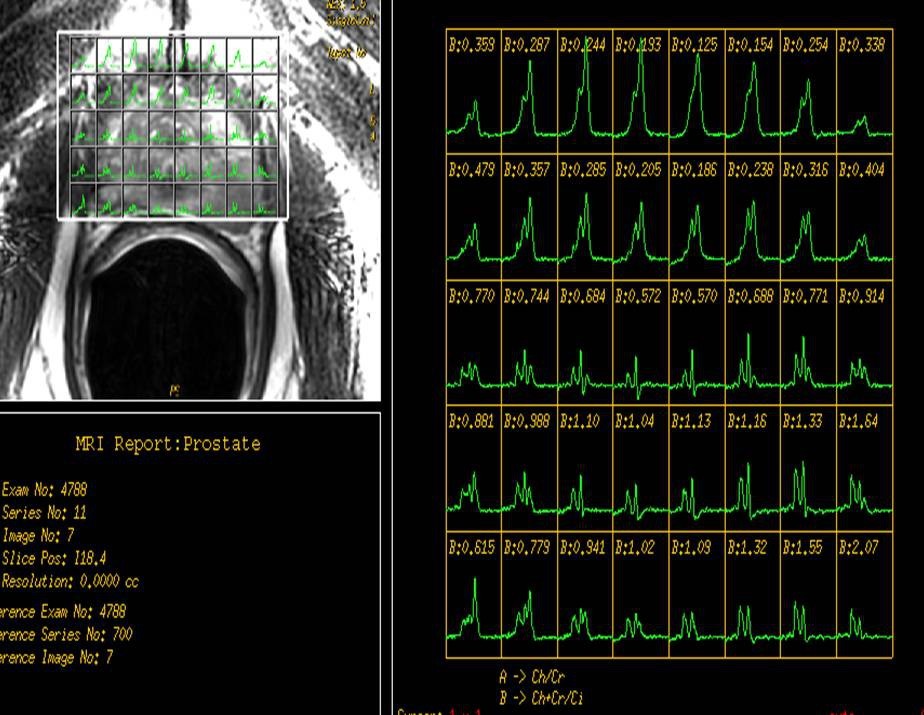
On a mission to find answers, Wentzels son-in-lawa Georgia radiologistfound Cincinnati-based radiologist Sadhna Verma, MD. She leads an innovative prostate imaging program based at UC Health University Hospital that utilizes both magnetic resonance and 3T spectroscopy imaging to more accurately diagnose prostate cancer before invasive measures are taken.
"MR imaging has shown to improve detection and accuracy of staging of prostate cancer in patients with prostate cancer, says Verma, a UC associate professor of radiology and UC Health radiologist. "Adding functional sequences gives us biochemical clues in addition to anatomic data to help us pinpoint cancers in the prostate gland that often go undetected otherwise.
Wentzel, a 69-year-old retired pastor from Michigan, began experiencing a rising PSA in 1998. Before arriving in Cincinnati, he had undergone eight prostate biopsies that resulted in the removal of 52 tissue samples all were negative for cancer.
"The biopsies were painful and got me nowhere. The 3T multi-parametric prostate MRI with MR spectroscopy scans at UC came back to show a mass in my prostate immediately. Following this, I had an MRI-guided biopsy that confirmed Gleason grade 7 prostate cancer, recalls Wentzel.
He traveled back home to Ann Arbor, Mich., to undergo robotic prostate cancer surgery closer to home in August 2012.
"I can finally focus on enjoying my retirement without worrying about that rising PSA. I exercise daily to keep my energy up and take the boat out any opportunity I get, he says.
About the Prostate Imaging Program
In partnership with UC Health, the UC Cancer Institute offers comprehensive evaluation of the prostate gland that provided both anatomic and biochemical information about the gland.
"Prostate cancer treatment is determined primarily by the stage of disease and whether cancer is confined within the prostate capsule or has extended beyond the prostate gland, explains Verma, who is part of the multidisciplinary genitourinary cancer team at the UC Cancer Institute. "Men have several choices when it comes to prostate cancer treatment. Accuracy of staging is critical for choosing the approach that is right for each individual.
MORE INFORMATION
UC Cancer Institute multidisciplinary prostate cancer team

Wayne Wentzel

Sadhna Verma, PhD
Tags
Related Stories
On-site training in Speech & Hearing Clinic sets UC’s programs apart
August 27, 2026
At the University of Cincinnati’s Speech & Hearing Clinic, Doctor of Audiology and Speech-Language Pathology graduate students gain real-world experience while providing free speech and hearing services to the community.
Funding expands UC research into weight gain side effects of bipolar medication
August 26, 2026
University of Cincinnati researchers have been approved for funding by the Patient-Centered Outcomes Research Institute (PCORI) to expand the implementation of healthy lifestyle interventions and metformin prescription to help manage weight gain in overweight or obese youth taking second-generation antipsychotic medications.
One in four NFL players had CTE at death
August 25, 2026

Forbes cites research on concussions and football helmets by the University of Cincinnati in a report that found one in four NFL players had brain damage at death.