Advanced Imaging Pinpoints Prostate Cancer Faster, More Accurately

It took Wayne Wentzel 14 years, multiple tissue biopsies and travel to four hospitals across multiple states to identify the underlying source of his rising prostate specific antigen (PSA) level. He finally found answers at the University of Cincinnati Cancer Institute.
PSA is calculated based by blood test and used to identify potential signs of prostate cancer. Other issues can contribute to rising PSAsuch as enlarged prostate and infectionbut the test is the medical communitys No. 1 tool for prostate cancer screening.
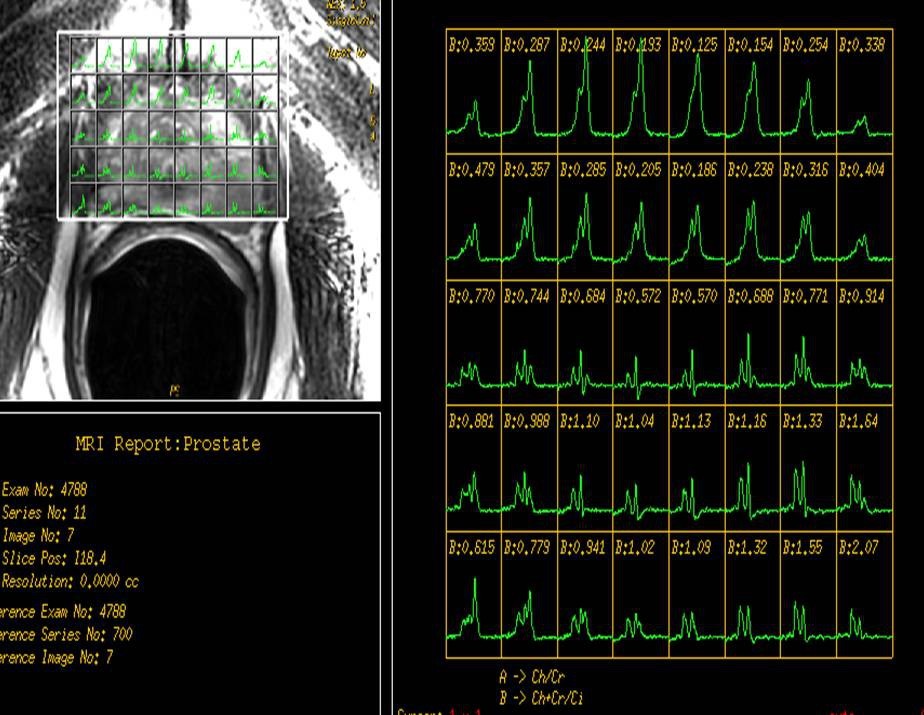
On a mission to find answers, Wentzels son-in-lawa Georgia radiologistfound Cincinnati-based radiologist Sadhna Verma, MD. She leads an innovative prostate imaging program based at UC Health University Hospital that utilizes both magnetic resonance and 3T spectroscopy imaging to more accurately diagnose prostate cancer before invasive measures are taken.
"MR imaging has shown to improve detection and accuracy of staging of prostate cancer in patients with prostate cancer, says Verma, a UC associate professor of radiology and UC Health radiologist. "Adding functional sequences gives us biochemical clues in addition to anatomic data to help us pinpoint cancers in the prostate gland that often go undetected otherwise.
Wentzel, a 69-year-old retired pastor from Michigan, began experiencing a rising PSA in 1998. Before arriving in Cincinnati, he had undergone eight prostate biopsies that resulted in the removal of 52 tissue samples all were negative for cancer.
"The biopsies were painful and got me nowhere. The 3T multi-parametric prostate MRI with MR spectroscopy scans at UC came back to show a mass in my prostate immediately. Following this, I had an MRI-guided biopsy that confirmed Gleason grade 7 prostate cancer, recalls Wentzel.
He traveled back home to Ann Arbor, Mich., to undergo robotic prostate cancer surgery closer to home in August 2012.
"I can finally focus on enjoying my retirement without worrying about that rising PSA. I exercise daily to keep my energy up and take the boat out any opportunity I get, he says.
About the Prostate Imaging Program
In partnership with UC Health, the UC Cancer Institute offers comprehensive evaluation of the prostate gland that provided both anatomic and biochemical information about the gland.
"Prostate cancer treatment is determined primarily by the stage of disease and whether cancer is confined within the prostate capsule or has extended beyond the prostate gland, explains Verma, who is part of the multidisciplinary genitourinary cancer team at the UC Cancer Institute. "Men have several choices when it comes to prostate cancer treatment. Accuracy of staging is critical for choosing the approach that is right for each individual.
MORE INFORMATION
UC Cancer Institute multidisciplinary prostate cancer team

Wayne Wentzel

Sadhna Verma, PhD
Tags
Related Stories
UC radiation oncologist speaks with Local 12 news about clinical trial for head and neck cancer treatment
August 10, 2026

Dr. Sara Medek, a UC radiation oncology professor, speaks with Local 12 news about a new clinical trial aimed at reducing radiation in certain areas while still treating cancer effectively but with fewer painful side effects.
Cancer Center director charts future based on collaboration, AI
August 10, 2026

David Gius, MD, PhD, was featured in a Cincinnati Business Courier article and The Cancer Letter’s “The Directors" podcast discussing his priorities and goals as he recently took the helm as director of the University of Cincinnati Cancer Center.
Bidirectional link between oral, kidney health calls for patient education, access
August 4, 2026

Despite growing awareness of the connection between oral health and chronic health conditions, patient awareness and access to dental care remain limited, according to University of Cincinnati experts who recently spoke with Healio | Nephrology News & Issues.