Kiesler Receives Honor From Center for Respite Care for Work With the Underserved

"Dr. Joe Kiesler is a name that means a lot to many people in the Greater Cincinnati region.
As a former UC medical resident, Kiesler joined on as a faculty member following his training to focus on community-oriented primary care, specifically how it pertains to underserved populations and the training of residents in this area.
Kiesler, associate professor in the department of family and community medicine, has been involved in the startup and maintenance of a number of community and internal organizations that provide care to the homeless and underserved and train residents and students to do so as well, including the horse track clinic, providing uninsured, migrant workers with needed medical care, Health Care for the Homeless and the Center for Respite Care.
Now, because of this work, the Center for Respite Care will honor Kiesler at its second annual Transformation Award Ceremony at 6 p.m. Thursday, Oct. 25.
Kiesler is being recognized "for making a significant difference in the underserved and homeless community.
Not only has he impacted the health and lives of the underserved in Cincinnati, but hes also made an impact on physicians like Steven Moore, MD.
Moore, a former UC College of Medicine student who is completing his emergency medicine residency at Henry Ford Hospital in Detroit, says Kieslers mentorship led him to select an urban hospital that cares for the underserved.
"He mentored a group of us who were involved in the Initiative on Poverty, Justice and Health at UC, and we collectively volunteered at the Center for Respite Care monthly from 2008 through 2012, he says, adding that he gained a lot of experience talking to patients and learning about their medical history.
Specifically, Moore made a special connection with Serbian refugee Ranko Tepsic, who after suffering persecution and torture in a Croatian detainment camp, escaped to the U.S. in 1999. Tepsic worked full time as a shipping clerk for over eight years, but then a serious leg injury and complications from diabetes led to the amputation of his lower left leg.
Unable to work, Ranko became homeless and was referred to the Center for Respite Care to recover.
"He needed a prosthesis but had no insurance, says Moore. "Dr. Kiesler had connections and provided a contact with Rick Rocco of Roccos Prosthetics who donated a prosthetic leg to Mr. Tepsic. Thats just one example of the kind of things Dr. Kiesler did for his patients.
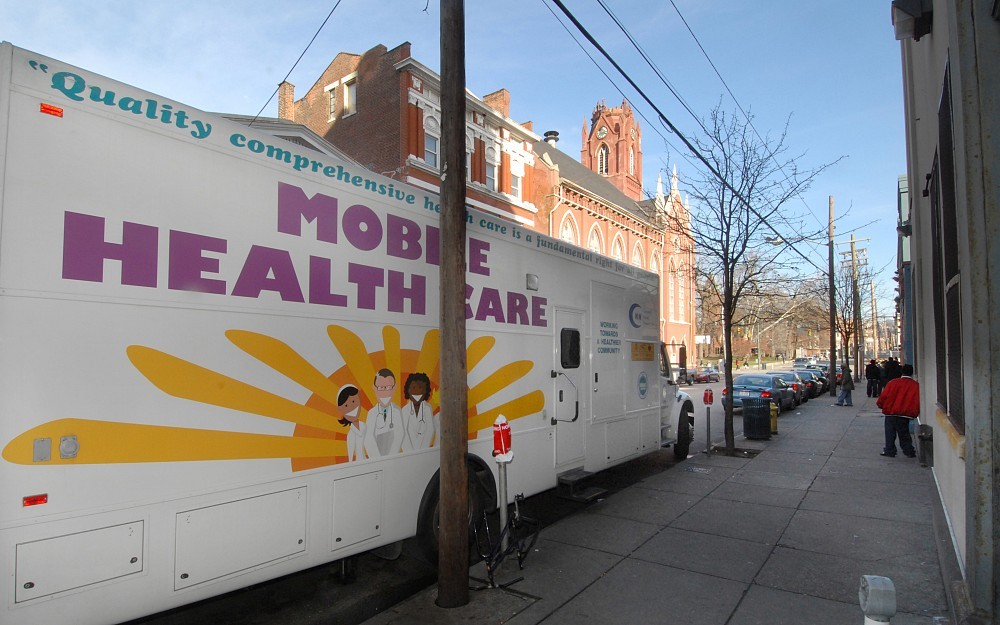
Moore says Kiesler took on extra volunteer shifts at the free clinics held within the drop-in homeless shelters if they were shorthanded, and Moore shadowed him during work on the homeless van and the racetrack clinics often.
"He really does some great things for the Cincinnati community and those people who dont have insurance and who have an injury or a chronic illness, he says. "Hes a really compassionate manand hes everywhere, trying to make a difference.
Moore adds that hes at Henry Ford partly because of Kieslers guidance.
"Just seeing how well he works patients, particularly underserved populations, really influenced me and the medical track I wanted to take, he says. "Dr. Kiesler is so modest, and youll never see him get frustrated or flustered. Hes a great teacher. I learned so much from him.
"He provided me with an alternative view of health care and helped me realize that its not many of these patients fault that they do not have health careits often circumstantial. He opened my eyes to this side of health care, and I hope to continue to do that for medical students and other trainees I come across, including finding some volunteer opportunities at the free clinics up here.
Related Stories
UC radiation oncologist speaks with Local 12 news about clinical trial for head and neck cancer treatment
August 10, 2026

Dr. Sara Medek, a UC radiation oncology professor, speaks with Local 12 news about a new clinical trial aimed at reducing radiation in certain areas while still treating cancer effectively but with fewer painful side effects.
Cancer Center director charts future based on collaboration, AI
August 10, 2026

David Gius, MD, PhD, was featured in a Cincinnati Business Courier article and The Cancer Letter’s “The Directors" podcast discussing his priorities and goals as he recently took the helm as director of the University of Cincinnati Cancer Center.
UC graduates cross finish line at commencement
August 7, 2026
The University of Cincinnati recognized 2,125 graduates in two ceremonies at summer commencement Friday on campus at Fifth Third Arena.