HIV Testing Program Receives Grant to Partner With Community Organizations, Increase Testing

CINCINNATIThe University of Cincinnati (UC) HIV Early Intervention Program (EIP) has received a new Ohio Department of Health grant to greatly expand its HIV testing program by partnering with 10 community-based nonprofits.
The new "EIP-Community Testing Network aims to link community organizations and social networks to perform 1,000 HIV tests focusing on African-American youth and MSM (men who have sex with men) of any race in Hamilton County.
The grant, for $140,000 for 15 months, will pay for UCs EIP to integrate counselor-based testing into 10 community-based organizations throughout the region.
The EIP program has signed eight community nonprofit organizations so far, including Lighthouse Youth Services, St. Josephs Orphanage, Talbert House, Drop Inn Center, Freestore Foodbank, Central Community Health Board, Our Daily Bread, and St. Vincent de Paul.
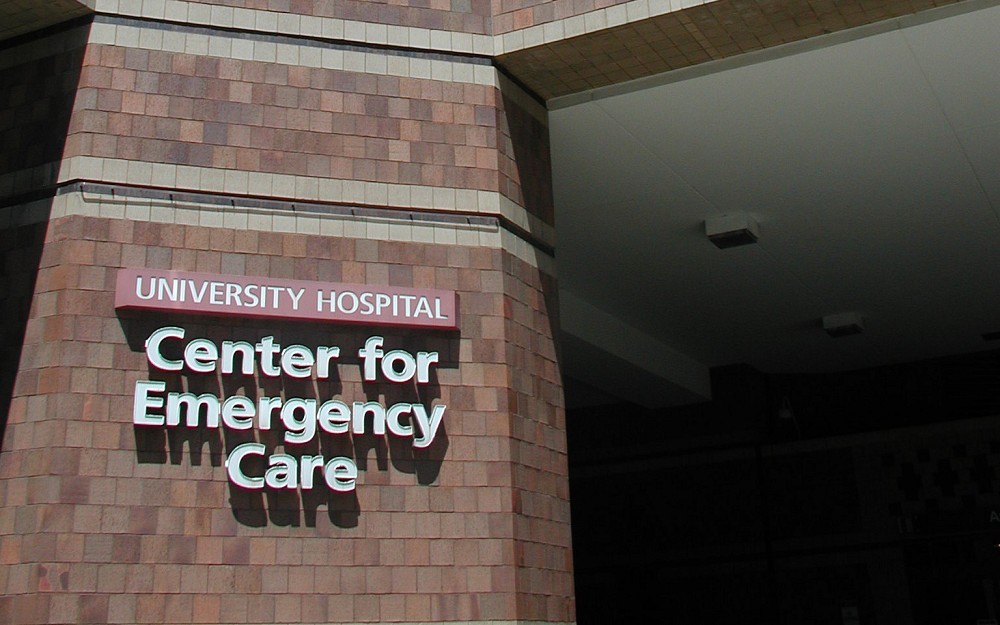
"These organizations serve various needs for Cincinnatis young African-American populationbehavioral health needs, substance abuse counseling, food shelters and social outlets, says Andrew Ruffner, director of the Early Intervention Program, based within UC Health University Hospitals Center for Emergency Care. "By partnering with them, we can reach patients who may not be seen in the emergency department and engage the staff of our community partners in HIV prevention to make referrals into the testing program. Focusing attention on these populations will ultimately have the largest impact on regional transmission rates over the long term.
Nationally, the Centers for Disease Control reports HIV infections among young, African-American MSM grew 48 percent from 2006 to 2009the only group to experience a statistically significant increase in new infections.
"There is a particular need in our community for the services offered through UCs EIPCommunity Testing Network, says Roland Kocsis, director of Lighthouse on Highland, a youth shelter and resource center that also performs street outreach for homeless young people. "It will help meet the needs of the high-risk young people who we see every day, including those who are experiencing sexual abuse, assault or exploitation, GLBT youth, and youth experiencing mental, behavioral or substance use difficulties. We feel this new collaborative will provide the type of outreach and support necessary to link these individuals to timely and high-quality care.
In addition to placing an Ohio Department of Health-certified EIP counselor at each network center, organization staff will be trained to refer patients to the EIP counselor for HIV counseling and testing services.
"Organizations have gone out into the community to provide HIV testing for years, says Ruffner. "The difference with this grant is that were training staff in these community organizations to engage in risk-reduction messaging to their clients and to refer them to testing when they are at a high risk for the disease.
The grant also includes a social network aspectMSM tested by an EIP network counselor have the option to participate in a peer referral program, utilizing their existing social networks to reach partners or peers who may not have been tested for HIV.
"One of the biggest difficulties in reaching out to young MSMs, is that they may not identify as gay, says Ruffner, "so theres not a central place or existing community where you can reach them.
The EIP-Community Testing Network program will be run using a database developed by University of Cincinnati Information Technology (UCIT) for tracking clients testing history, the relationship among testers and managing their linkage to care.
As part of the grant, the Central Community Health Board will assist with staff training at the testing sites, training organization staff on how to engage with clients and discuss HIV testing with risk reduction.
Local agency IV-CHARIS will assist with testing and counseling. The partner organizations also will form an advisory council to continuously renew the programs efforts and outcomes.
Tags
Related Stories
UC expert weighs in on current MASH treatment approaches
June 5, 2026

As MedCentral recently reported, pending broader pharmacologic approvals for metabolic dysfunction-associated steatohepatitis (MASH), lifestyle modifications remain the go-to intervention.
At least two weather patterns increase headaches, UC study suggests
June 4, 2026
University of Cincinnati physicians and collaborators identified two specific weather patterns that increase headache and migraine risk and found the preventive medication fremanezumab (Ajovy) can reduce weather‑associated headaches. The findings will be presented at the American Headache Society Annual Scientific Meeting in Orlando.
UC researcher secures $3.3M grant to study microplastics’ impact on heart
June 2, 2026
The National Institute of Environmental Health Sciences awarded a $3.3M grant to University of Cincinnati researcher Hong‑Sheng Wang, PhD, to study how microplastics and nanoplastics affect cardiovascular health.