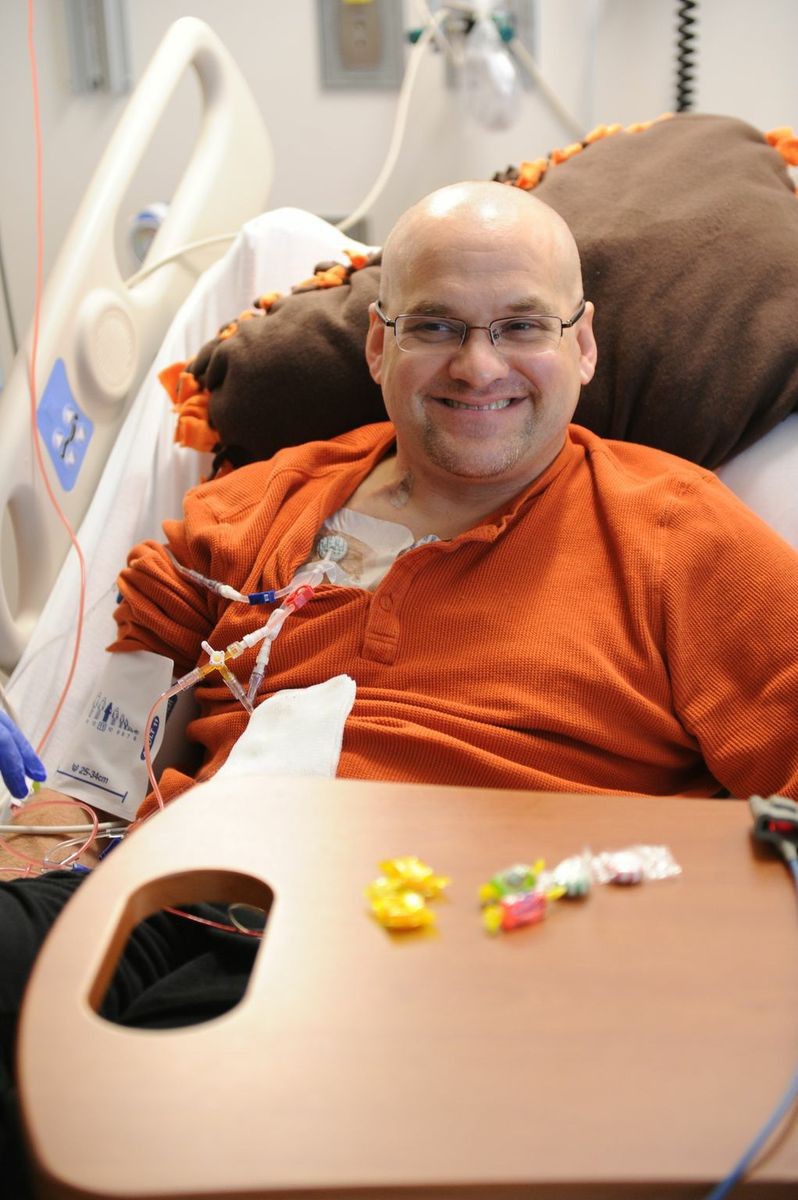
Myeloma Patient Sees Value in Personalized Care Approach

Eric Aronsons diagnosis of multiple myeloma started when he jumped off the Cedar Creek Bridge at Norris Lake on vacation.
"Some buddies and I decided to do the jump for fun to show our kids we were still young enough to do it, he smiles, recalling the memory.
Lingering post-jump spinal pain sent him to a local hospitals emergency room where imaging tests suggested his T12 vertebra was fractured. The test also showed a concerning lesion on his spine. He traveled back to Cincinnati for a biopsy where the true source of his pain was revealed: stage 1a multiple myeloma. The lesion on his spine had ruptured.
"After that, everything seemed to accelerate, says Aronson.
He wasnt satisfied with his first oncology consultation, saying: "There were no options presentedjust a five-minute conversation to say, This is what we are going to do. It felt too fast. I needed to feel connected to my treatment team and understand what I was facing, he recalls.
A friend with the Cincinnati chapter of the Leukemia Lymphoma Society connected Aronson to Frank Smith, MD, clinical director for the University of Cincinnati Cancer Institute and medical oncologist specializing in hematologic malignancies (i.e., blood cancers). Serendipitously, the UC Cancer Institute had just recruited a leading multiple myeloma clinician-scientistElias Anaissie, MDand a large portion of his sub-specialized team for a new hematologic malignancies treatment and research program.
"We spent an hour on the phone discussing Dr. Anaissies philosophy of care and multiple myeloma as a disease. I immediately felt connected to him. It felt like a health care partnershipone where I could trust my doctors but also have a say in my care, explains Aronson, 47, of Mason.
He and his family quickly agreed that the best myeloma care was right here in Cincinnati.
After a comprehensive pre-treatment evaluation and workup, Aronson was ready to begin treatment. He underwent 13 weeks of chemotherapy to prepare for the bone marrow transplant that would ultimately eradicate/control his cancer.
Bone marrow transplantalso known as a stem cell transplantreplaces damaged or destroyed bone marrow with healthy bone marrow stem cells. Bone marrow is the soft, fatty tissue inside the bones. Immature stem cells generated in bone marrow give rise to all of blood cells in the body. Multiple myeloma affects a specialized type of infection-fighting white blood cell, known as plasma.
Aronson had stem cells harvested through leukaphereisis at Hoxworth Blood Center, then underwent his transplant about a week later on Jan. 29, 2013, at University of Cincinnati Medical Center. He went homein remissionin mid February.
"I encourage anyone facing a cancer diagnosis to find an oncologist who specializes in your type of cancer to ensure you get the most up-to-date, personalized treatment options, says Aronson. "Im thankful exceptional myeloma care happened to be available in my hometown. Between the daily chemotherapy treatments and immune system recovery time from my transplant, I would have been away from my kids and wife for four months if Id had to travel.
To learn more about the UC Cancer Institute Hematologic Malignancies Program, visit uccancer.com/blood. For appointments, call 513-584-4BMT (4268) or 877-745-1BMT (1268).
Tags
Related Stories
UC radiation oncologist speaks with Local 12 news about clinical trial for head and neck cancer treatment
August 10, 2026

Dr. Sara Medek, a UC radiation oncology professor, speaks with Local 12 news about a new clinical trial aimed at reducing radiation in certain areas while still treating cancer effectively but with fewer painful side effects.
Cancer Center director charts future based on collaboration, AI
August 10, 2026

David Gius, MD, PhD, was featured in a Cincinnati Business Courier article and The Cancer Letter’s “The Directors" podcast discussing his priorities and goals as he recently took the helm as director of the University of Cincinnati Cancer Center.
Bidirectional link between oral, kidney health calls for patient education, access
August 4, 2026

Despite growing awareness of the connection between oral health and chronic health conditions, patient awareness and access to dental care remain limited, according to University of Cincinnati experts who recently spoke with Healio | Nephrology News & Issues.