HEALTH LINE: Pay Attention to Warning Signs of Facial Skin Cancer

CINCINNATIIn the past four decades, scientific reports have shown that melanoma is increasing at an alarming rate across the world.
More than 76,000 men and women were diagnosed with melanoma in the United States in 2012, according to the National Cancer Institute. An additional 2 million individuals were diagnosed with non-melanoma skin cancer.
May is National Melanoma Awareness month, and as we kick off the summer season University of Cincinnati (UC) Cancer Institute melanoma specialists say it is important to recognize the warning signs of skin cancer and seek evaluation.
"The head and face are the most frequently exposed areas of our bodies, so the vast majority of melanomas occur on the face. The scalp, neck and external ear are other areas that should be carefully watched, says Keith Casper, MD, a UC Health fellowship trained head and neck oncology surgeon (otolaryngologist) and assistant professor at the UC College of Medicine. "If you notice a mole or discoloration on your face that is concerning, dont delay seeking evaluation with a dermatologist.
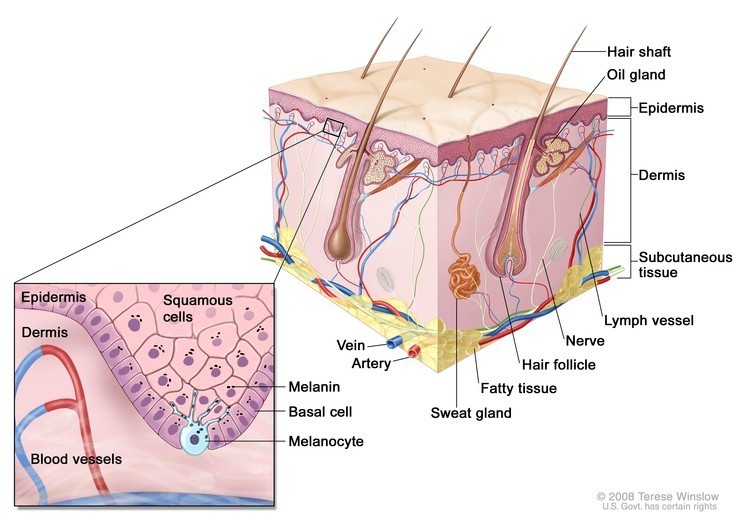
Melanoma occurs in the pigment-producing cells of the skin (melanocytes) found throughout the skin as well as in the mucous membranes that line various parts of the body, including the nostrils and mouth.
"The No. 1 thing a person can do to reduce their risk of skin cancer is to avoid chronic exposure to the ultraviolet radiationboth naturally occurring (from the sun) and artificial sources like tanning beds, says Adam Ingraffea, UC Health dermatologist and assistant professor at the UC College of Medicine. "Individuals should also apply a broad-spectrum sunscreen daily that protects from both UVA and UVB radiationparticularly people with fair complexions who are more prone to experience blistering sunburns.
Ingraffea adds that ceasing to use tobacco products and limiting alcohol consumption can also reduce your risk for many forms of cancer, as well as other conditions like stroke.
Use the first five letters of the alphabet to check for concerning skin changes on a monthly basis:
- Asymmetry: half the region does not match the other.
- Border irregularity: the edges are ragged, notched or blurred.
- Color variegation: non-uniform pigmentation with shades of tan, brown or black. White, red and blue discoloration should also be a red flag.
- Diameter: moles or discolorations 6 millimeters (about a quarter-inch) or larger and any new growths warrant evaluation.
- Evolving: changes in a mole or discoloration should be evaluated.
Appointments & Free Head and Neck Cancer Screenings
For appointments with UC Health Dermatology, call 513-475-7630. Appointments are available in Clifton, Northern Kentucky, Madisonville, West Chester and Western Hills. UC Health Otolaryngology (Head and Neck Surgery) can be reached at 513-475-8400. UC Health Otolaryngology (Head and Neck Surgery) is offering free head and neck cancer screenings on Thursday, June 20, 2013, from 8:30 a.m. to 4:30 p.m. Screenings are free and open to anyone, but appointments are required.

Example of melanoma with color differences.
Related Stories
Selecting noninvasive tests for liver disease diagnosis, monitoring
September 3, 2026

Noninvasive tests have emerged as valuable alternatives for diagnosing, staging and monitoring MASLD and MASH, according to a recent MedCentral report.
Why can it get so hot at times?
September 3, 2026

Cincinnati is experiencing more days of extreme heat this summer than in previous decades, due in large part to warmer global temperatures. But explanations for these higher temperatures also relate to regional factors, including the city's location in a river valley and large proportion of built environment.
UC invests in the next generation of graduate leaders through fellowships focused on mentorship and research
September 3, 2026
The Next Lives Here Presidential Fellowship supports the recruitment of top doctoral students through competitive funding, mentorship and professional development.