Noninvasive Biomarker Research Aims to Improve Treatment for Brain Tumors

Glioblastoma multiforme (GBM) remains one of the most challenging forms of malignant brain tumors. This fast-growing central nervous system tumor forms in the supportive tissue of the brain and spinal cord and results in a median patient survival of just 15 months.
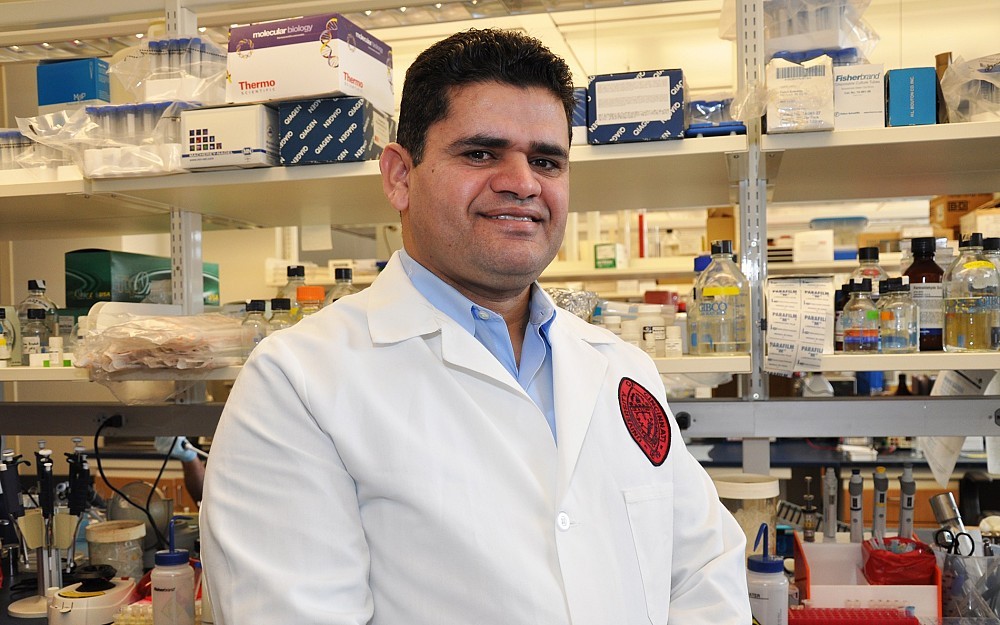
With a new T1 pilot grant from UCs Center for Clinical and Translational Science and Training (CCTST), El Mustapha Bahassi, PhD, hopes to give clinicians a new tool in managing the disease more effectively without invasive measures. CCTST is the academic home of the universitys institutional Clinical and Translational Science Award from the National Institutes of Health.
Bahassi is using whole genome sequencing to identify and then track specific tumor mutations (circulating mutant DNA) through the blood.
Whole genome sequencing is a laboratory process to determine the complete DNA sequence of a persons genome (i.e., complete hereditary makeup)at a single time. Genetic instructions from DNA fuel all biologic developments and functions in the body.
"Tumors release small fragments of DNA that carry the same genetic information we would get by doing a tissue biopsy in the brain. Gathering this information from the patient through blood samplesbefore, during and after treatmentcould tell us whether the patient is responding to treatment or likely to have a relapse through blood samples and avoid multiple, invasive brain tumor biopsies, says Bahassi, who is also a research assistant professor in the UC College of Medicine Department of Internal Medicine, Division of Hematology Oncology.
"Utilizing whole genome sequencing could help identify changes in the genomes of brain tumors that drive cancer progression and aid in the development of noninvasive biomarkers to help follow treatment effectiveness and predict tumor recurrence, adds Bahassi.
Basic Scientists and Clinicians Working Together
At the UC Brain Tumor Center, basic scientists and neurosurgeons are working together to tackle the problem in a pre-clinical study using human brain tumor tissue samples. The original study included 10 tumor samples and was funded by UC and small foundation grants from the Mayfield Education & Research Foundation, Shemenski Foundation and LCS/Sahlfeld Foundation
Additional funding from the CTSA has given Bahassi and Warnick resources to collect whole genome sequencing data on an additional 40 patients from the UC Brain Tumor Center to determine if the approach is feasible for a phase-1 clinical trial.
The UC Brain Tumor Center is one of nine centers of the UC Neuroscience Institute and one of five comprehensive disease-based centers of the UC Cancer Institute. Both institutes are partnerships of UC Health and the UC College of Medicine. Learn more about the UC Brain Tumor Center at ucbraintumorcenter.com.

Illustration of tumor DNA in the bloodstream, by Mayfield Clinic

Ronald Warnick, MD, of the UC Brain Tumor Center
Related Stories
UC radiation oncologist speaks with Local 12 news about clinical trial for head and neck cancer treatment
August 10, 2026

Dr. Sara Medek, a UC radiation oncology professor, speaks with Local 12 news about a new clinical trial aimed at reducing radiation in certain areas while still treating cancer effectively but with fewer painful side effects.
Cancer Center director charts future based on collaboration, AI
August 10, 2026

David Gius, MD, PhD, was featured in a Cincinnati Business Courier article and The Cancer Letter’s “The Directors" podcast discussing his priorities and goals as he recently took the helm as director of the University of Cincinnati Cancer Center.
UC graduates cross finish line at commencement
August 7, 2026
The University of Cincinnati recognized 2,125 graduates in two ceremonies at summer commencement Friday on campus at Fifth Third Arena.