Safety Pharmacology Graduate Degree Connects Students to Drug Development

Luke Umana, a soon-to-be graduate of UCs Master of Science program in Molecular, Cellular and Biochemical Pharmacology with emphasis on Safety Pharmacology, says that as an undergraduate, he didnt know much about the process of drug development or using research results to create approved therapies for patients.
"I have a strong interest in the field of medicine and how preclinical drug development plays an enormous role in giving us access to the drugs that help millions of people every day, he says. "I wanted to pursue a degree that set me up for an opportunity to play a role in this process.
After completing an undergraduate degree in chemistry from Indiana University, Umana decided to delve into safety pharmacologya program that is now in its second year at the UC College of Medicine and one of only a few in the country.
"Pharmacology is the branch of biology and medicine that studies the actions of drug molecules in the body and the actions of the body on drugs, says Mohammad Matlib, PhD, professor emeritus in the department of pharmacology and cell biophysics and director of the program. "A drug may also alter the molecular, cellular or biochemical functions of off-target organ systems or cause undesirable side effects by interaction with other drugs in the body.
Matlib says six students, including Umana, made up the first graduating class from the program this year; the hope is to double that number with the class that will begin the program in August.
"This one-year program teaches trainees to look for new drug targets, to design pre-clinical studies and analyze and interpret data, to select new lead therapeutic compounds and to study drug efficacy, potency, safety and pharmacokinetics through hands-on research, he says. "The safety pharmacology component of the training helps teach students to play a vital role in the discovery and development of new drugs.
A recent review of the program by an external advisory committee composed of safety pharmacology experts from academia, the U.S. Food and Drug Administration, contract research organizations and pharmaceutical companies characterized it as "extremely strong program.
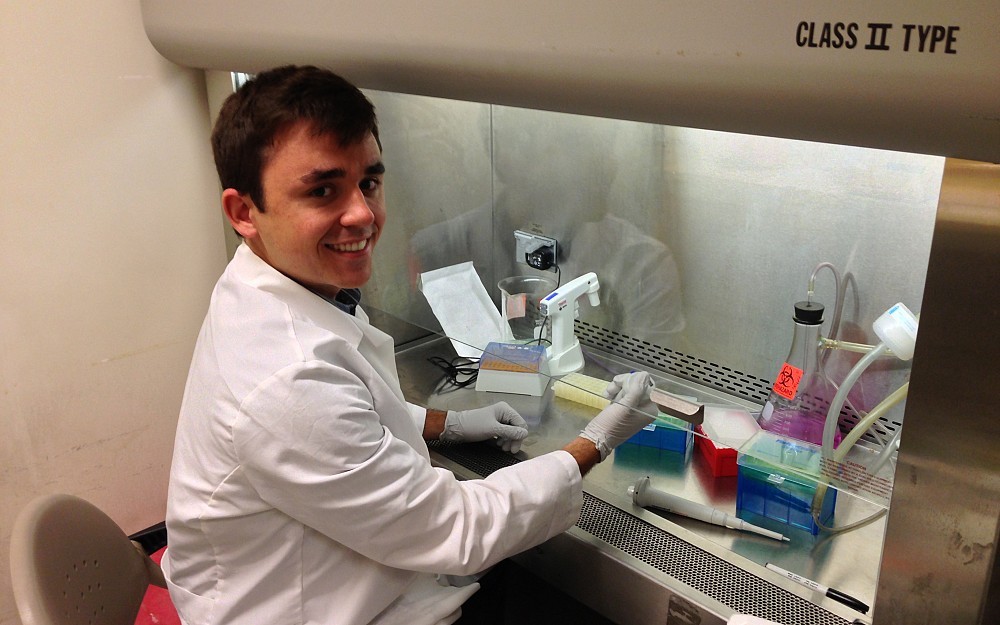
Umana is currently working in the laboratory of Frank McCormack, MD, professor in the division of pulmonary and critical care medicine.
"As part of the degree requirements, we must do lab rotations, and I rotated in Dr. McCormack's lab toward the end of the spring semester, he says. "Dr. McCormacks lab is on the cutting edge of pulmonary research, so I wanted to stay and work during the summer as well.
Umana says he is working on several projects that range from lung surfactant proteins to influenza to lymphangioleiomyomatosis (LAM), a rare lung disease in which abnormal, muscle-like cells begin to grow out of control, scarring the tissue.
"LAM patients are in dire need of a lung transplant, but the drug most effective in treating their LAM symptoms, sirolimus, is associated with wound healing complications. So, the patients and their physicians have a conundrum: either stop sirolimus treatment to remain eligible for lung transplant while experiencing the return of LAM symptoms, or remain on sirolimus which has detrimental side effects, he says.
"I am using animal models to study whether patients can remain on sirolimus up until the day of their transplant and have no risk of wound healing complications. Hopefully, this study will answer this clinical conundrum and improve the lives of these patients.
In addition to collaborations throughout the Academic Health Center, this program also interacts with the FDA and industry partners, including, Abbott Laboratories, Eli Lilly, Battelle Research Laboratory, WIL Research and Covance Laboratories, among others.
"The field of safety pharmacology is relatively new, so there is a need for scientists trained in this specific field, Umana says. "As part of the experimental methods course, we traveled to a couple of preclinical testing companies. I have spoken to many principal investigators at these companies, and they laud our efforts to create a degree that allows students to learn about the preclinical drug development world before starting careers in this field.
Matlib adds that these networking opportunities help students make important connections in industry for potential partnerships and career advancement.
"A worldwide demand for pharmacologists has been increasing, and graduates within this program are the future workforce in drug discovery and development research, he continues. "Specialization in safety pharmacology is a highly valued qualification in new hires.
Umana, who is looking forward to beginning the next chapter in his education as an
"I plan to take the knowledge and skills I learned from this program and better myself as a physician, he says. "Maybe in the future I can use the combination of my medical degree and knowledge of the preclinical drug development world to assist the process of bringing new medications to patients who need them.

2013 graduates and professors from Master of Science program in Molecular, Cellular and Biochemical Pharmacology with emphasis on Safety Pharmacology
Related Stories
UC radiation oncologist speaks with Local 12 news about clinical trial for head and neck cancer treatment
August 10, 2026

Dr. Sara Medek, a UC radiation oncology professor, speaks with Local 12 news about a new clinical trial aimed at reducing radiation in certain areas while still treating cancer effectively but with fewer painful side effects.
Cancer Center director charts future based on collaboration, AI
August 10, 2026

David Gius, MD, PhD, was featured in a Cincinnati Business Courier article and The Cancer Letter’s “The Directors" podcast discussing his priorities and goals as he recently took the helm as director of the University of Cincinnati Cancer Center.
UC graduates cross finish line at commencement
August 7, 2026
The University of Cincinnati recognized 2,125 graduates in two ceremonies at summer commencement Friday on campus at Fifth Third Arena.