Flash Freeze Therapy Being Used to Treat Precancerous and Cancerous Conditions

CincinnatiA multidisciplinary team of UC Health specialists is using a new technology to flash freeze tissue surfaces in the lungs and esophagus and treat patients with small tumors or dysplasia which could lead to cancer.
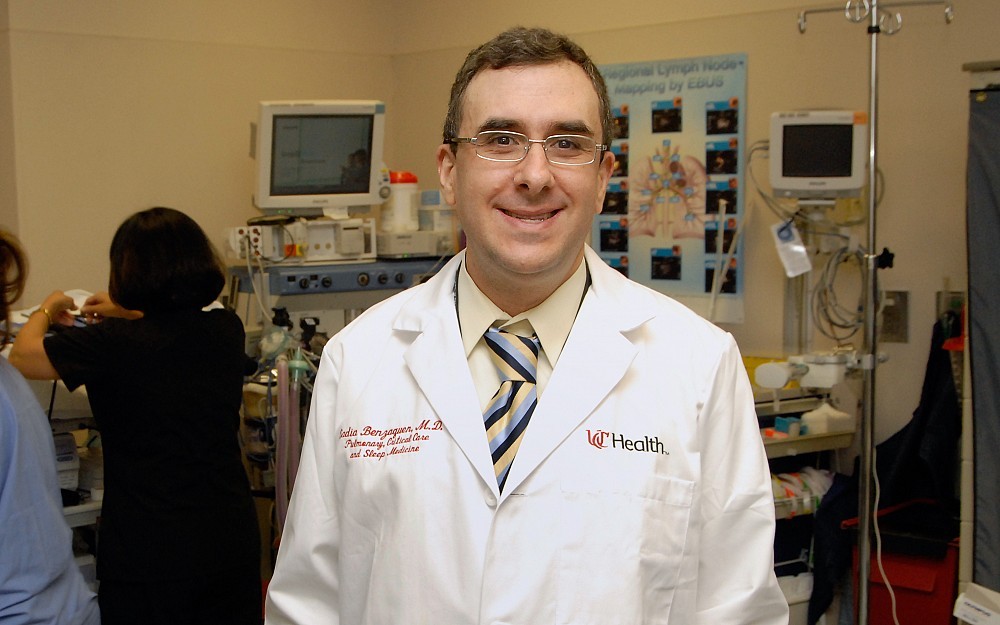
Sadia Benzaquen, MD, assistant professor in the division of pulmonary, critical care and sleep medicine at the University of Cincinnati College of Medicine and UC Health director of interventional pulmonology, and Valerie Williams, MD, assistant professor in the department of surgery at UC and a UC Health thoracic surgeonboth of which are members of the UC Cancer Institutes Comprehensive Lung Cancer Centerare using truFreeze (a cryotherapy technique) to freeze tissue in the lungs and esophagus that could be precancerous or cancerous.
"This sort of therapy is useful for patients who are not candidates for other conventional treatment modalities like surgery, chemotherapy or radiation therapy, Williams says.
Cryotherapy uses liquid nitrogen (-196° C) to freeze and eliminate tissue that could be harmful to the patient; the nitrogen is delivered via catheter. During this process, cells are selectively destroyed while the underlying tissue structure is preserved so that healthy tissue can re-grow.
Williams says the treatment is performed every six to eight weeks for patients with high-grade dysplasia or esophageal cancers which can develop in patients with Barretts esophagusa disorder in which the lining of the esophagus is damaged by stomach acid and changed to a lining similar to that of the stomach.
On average patients need two to three treatment sessions. This therapy helps replace the entire abnormal lining of the esophagus with normal esophageal lining.
Benzaquen is using this technology to remove cancerous tumors in the airway. These patients have severe underlying obstructive lung disease, and it is often difficult to lower the oxygen delivery needed for use of a laser. Benzaquen says this is another option for controlling bleeding and removal of tissue without the restriction of lowering oxygen flow.
"Most of our patients are so sick that it is really difficult to wean the oxygen to lower levels to be able to use the laser, argon plasma coagulation, which involves use of a jet of plasma directed through a probe, or cautery, he says.
"The addition of the cryotherapy technology at UC adds to the current endoscopic and surgical options we offer to provide the full spectrum of treatment options close to home for those with esophageal cancer and disease, Williams adds.
TruFreeze is made by CSA Medical. Both Williams and Benzaquen cite no conflicts of interest.
About UC Health
UC Health, the University of Cincinnatis affiliated health system, includes University of Cincinnati Medical Center, ranked one of the best hospitals in the region by U.S. News & World Report; West Chester Hospital, one of Cincinnatis newest hospitals and the recipient of the 2012 HealthGrades Outstanding Patient Experience Award, ranking it above 90 percent of hospitals nationally for patient satisfaction; Drake Center, Cincinnatis premier provider of long-term acute care; University of Cincinnati Physicians, Cincinnatis largest multi-specialty practice group with more than 700 board-certified clinicians and surgeons; Lindner Center of HOPE, the regions premier mental health center; and several institutes focusing on the areas of cancer, the neurosciences, cardiovascular and diabetes. To learn more, visit UCHealth.com.

Valerie Williams, MD, throacic surgeon
Related Stories
UC radiation oncologist speaks with Local 12 news about clinical trial for head and neck cancer treatment
August 10, 2026

Dr. Sara Medek, a UC radiation oncology professor, speaks with Local 12 news about a new clinical trial aimed at reducing radiation in certain areas while still treating cancer effectively but with fewer painful side effects.
Cancer Center director charts future based on collaboration, AI
August 10, 2026

David Gius, MD, PhD, was featured in a Cincinnati Business Courier article and The Cancer Letter’s “The Directors" podcast discussing his priorities and goals as he recently took the helm as director of the University of Cincinnati Cancer Center.
UC graduates cross finish line at commencement
August 7, 2026
The University of Cincinnati recognized 2,125 graduates in two ceremonies at summer commencement Friday on campus at Fifth Third Arena.