How Women Achieve Healthier Weight May Impact Long-Term Health of Offspring

CINCINNATINew research from the University of Cincinnati (UC) suggests that the healthy weight and glucose control women achieve through weight-loss surgery dont necessarily translate into health benefits for their future children.
An animal study featured in the Aug. 21, 2013, edition of the journal
Science Translational Medicine
suggests that treatment with vertical sleeve gastrectomy (VSG) weight loss surgery of a female rat prior to conception has no positive impact onand could even impact negativelythe metabolic health of her offspring.
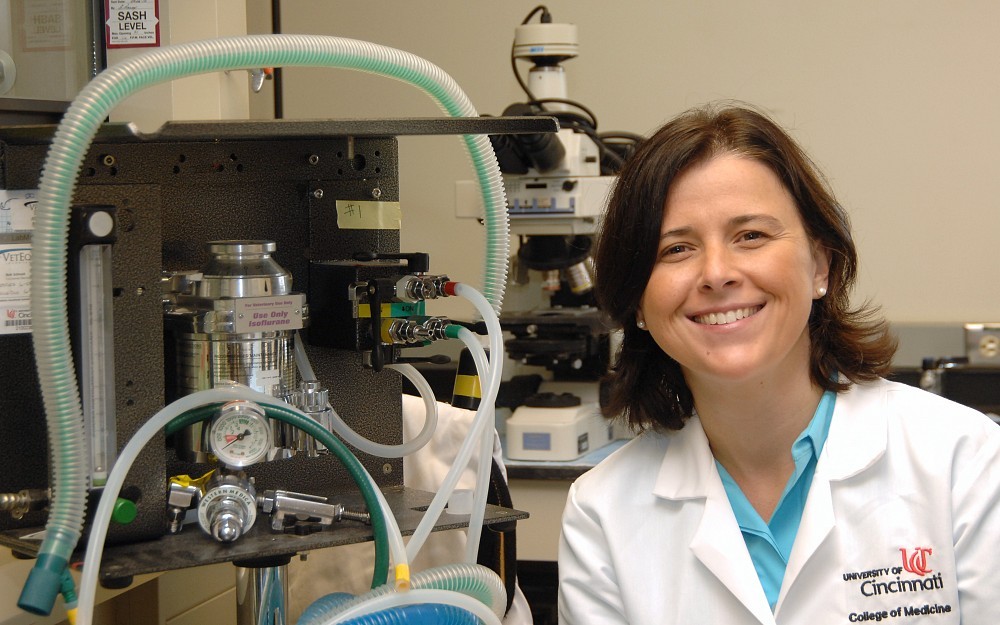
The study was led by Bernadette Grayson, PhD, postdoctoral fellow in the laboratory of Randy Seeley, PhD, UC professor and Donald C. Harrison Endowed Chair in Medicine and director of the Cincinnati Diabetes and Obesity Center.
"Maternal obesity and diabetes have long-term negative health consequences for offspring in both rodents and humans, says Grayson. "Bariatric surgical procedures like vertical sleeve gastrectomy are still the most effective way to achieve sustained weight loss and improvements in glucose levels.
Knowing this, Grayson, Seeley and team set out to determine if improving maternal obesity by treating with VSG pre-pregnancy could improve the metabolic health of the offspring.
Female rats were given high-fat diets to induce obesity and then some were treated with the VSG procedure. (During VSG, a portion of the stomach is removed to leave a much smaller "sleeve-like section.)The female rats that underwent VSG lost weight, had improved glucose control and even showed some improvements in reproductive health when compared with obese rats that did not have the same procedure. But metabolic health of the VSG rats offspring did not improve.
"On some measures the health of these offspring, in fact, got worse, Seeley says. "Their birth weights were lower when compared to rats whose mothers didnt receive the surgery. And when they were given access to a high-fat diet following puberty, offspring of VSG rats showed a greater propensity to gain body fat and develop glucose intolerance.
There are many causes for small-for-gestational age births, Seeley says.
"In the case of VSG, the hormonal changes induced by the surgery, which aid in weight loss, may be the very same culprits for the reduced growth. This is something we will be looking at in future research, he says.
"It may not be sufficient enough just to get mom healthier before she conceives; how she gets healthier seems to matter, says Seeley, adding that the diet the mom consumed during pregnancy in these studies also played a huge role. "The interaction between diet and the maternal environmentsthe uterus and placenta, for examplemay impact susceptibility to metabolic disease in offspring.
These findings, the authors say, could have implications for the clinical use of surgical weight loss procedures, but more work is needed before clear guidelines can be determined.
The next steps, say Grayson and Seeley, are to determine the direct cause of the effect on the offspring and find out if other types of surgical weight loss procedures have similar effects.
This work, they say, also has the potential to help in our understanding of how the maternal environment can increase or decrease the risk for obesity and diabetes in future generations.
Co-authors include Katarina Schneider and Stephen Woods, PhD, both of the University of Cincinnati.
The research was supported by grants from the National Institutes of Healths National Institute of Diabetes and Digestive and Kidney Diseases (DK56863, DK57900, DK082480, DK08248, DK017844 ), National Cancer Institute (570 U01CA141464) and National Institute of Mental Health (MH069860), as well as funding from Ethicon Endo-Surgery Inc.
Seeley has received research support from Ethicon Endo-Surgery, Novo Nordisk, Pfizer and Roche. He has served on scientific advisory boards for Ethicon Endo-Surgery and Novo Nordisk and is a paid speaker for Ethicon Endo-Surgery, Pfizer and Novo Nordisk.

Randy Seeley, PhD

Randy Seeley, PhD, was one of 29 scientists asked to present at the recently concluded 134th Nobel Symposium in Gothenburg, Sweden.

Obesity researcher Randy Seeley, PhD
Tags
Related Stories
UC radiation oncologist speaks with Local 12 news about clinical trial for head and neck cancer treatment
August 10, 2026

Dr. Sara Medek, a UC radiation oncology professor, speaks with Local 12 news about a new clinical trial aimed at reducing radiation in certain areas while still treating cancer effectively but with fewer painful side effects.
Cancer Center director charts future based on collaboration, AI
August 10, 2026

David Gius, MD, PhD, was featured in a Cincinnati Business Courier article and The Cancer Letter’s “The Directors" podcast discussing his priorities and goals as he recently took the helm as director of the University of Cincinnati Cancer Center.
Bidirectional link between oral, kidney health calls for patient education, access
August 4, 2026

Despite growing awareness of the connection between oral health and chronic health conditions, patient awareness and access to dental care remain limited, according to University of Cincinnati experts who recently spoke with Healio | Nephrology News & Issues.