HEALTH LINE: Experts Warn of 'Teacher's Voice' for Back to School

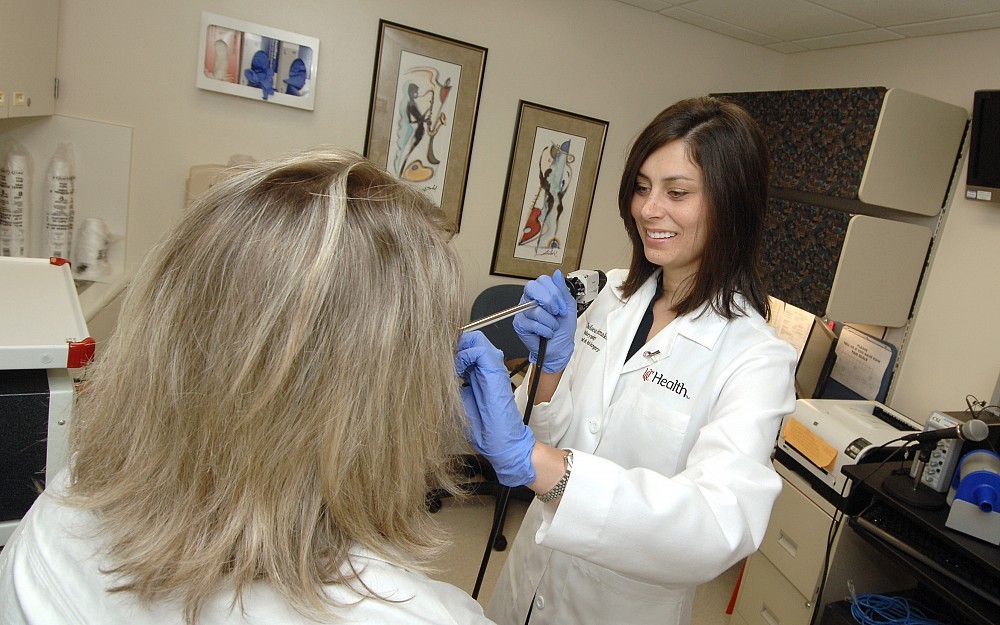
CINCINNATIChelsea Schmalenberg has a special interest in counseling teachers on their voice health. She spent four years teaching seventh- and eighth-grade math and language arts, both in Cincinnati and Toledo.
Now a UC Health speech-language pathologist, the condition she has dubbed "teachers voice is one she sees frequently.
"In a months time, we probably see five to six teachers who need speech therapy or even surgery to correct vocal problems, she says. "Usually their symptoms have been going on for months. They may start out experiencing hoarseness or vocal fatigue at the end of the day. Then, many get laryngitis around winter break, and then lose and regain their voice throughout the school year.
Schmalenberg says its understandable how teachers can experience vocal problems: not only are they talking for hours at a time, but they also have to be heard over a busy classroom.
"If they are not using their breath support to project their voice out over a classroom, theyre usually talking from their throat and overworking their voice, she says.
Such strain can cause lesions (or bumps on the vocal cords) like nodules, polyps or cysts. Acid reflux can also harm the larynx. In severe cases, teachers can hemorrhage, or bleed into their vocal cords.
Treatment includes voice therapy and vocal rest to reduce swelling and, for some patients, surgery to remove cysts or polyps. Speech pathologists like Schmalenberg can help teachers relearn healthy voice.
But prevention is key. To avoid these problems, Schmalenberg urges teachers to take care of their voice as any singer or professional speaker would.
That includes:
- Warming up: "Every morning either on the drive in or before students arrive, perform a few warm-up exercises, says Schmalenberg. "You can buzz your lips (like blowing a raspberry), make a buzzy woo sound through a straw or hum up and down scales.
- Take a vocal nap: "During your planning period, or any time during the day, rest your voice for 15-minute segments.
- Hydrate and support: "Drink plenty of water throughout the day and dont talk when youre out of breath. "
- Get some assistance: "If your classroom has microphones, use them. If youre trying to get students attention, dont yell. Use a bell or other type of noisemaker.
- Call your doctor: "If you experience hoarseness lasting for more than three weeks, see an otolaryngologist or voice specialist.
Tags
Related Stories
UC radiation oncologist speaks with Local 12 news about clinical trial for head and neck cancer treatment
August 10, 2026

Dr. Sara Medek, a UC radiation oncology professor, speaks with Local 12 news about a new clinical trial aimed at reducing radiation in certain areas while still treating cancer effectively but with fewer painful side effects.
Cancer Center director charts future based on collaboration, AI
August 10, 2026

David Gius, MD, PhD, was featured in a Cincinnati Business Courier article and The Cancer Letter’s “The Directors" podcast discussing his priorities and goals as he recently took the helm as director of the University of Cincinnati Cancer Center.
Bidirectional link between oral, kidney health calls for patient education, access
August 4, 2026

Despite growing awareness of the connection between oral health and chronic health conditions, patient awareness and access to dental care remain limited, according to University of Cincinnati experts who recently spoke with Healio | Nephrology News & Issues.