HEALTH LINE: New Techniques Help With Better Detection, Biopsy for Prostate Cancer

CINCINNATIProstate cancer is the second most common cancer in American men; about one in six will be diagnosed with prostate cancer during his lifetime.
September is Prostate Cancer Awareness Month, and men in the Tristate who suspect they may have prostate cancer or need to receive biopsies can have a more accurate diagnosis with quicker detection and intervention thanks to technologies only offered at UC Health.
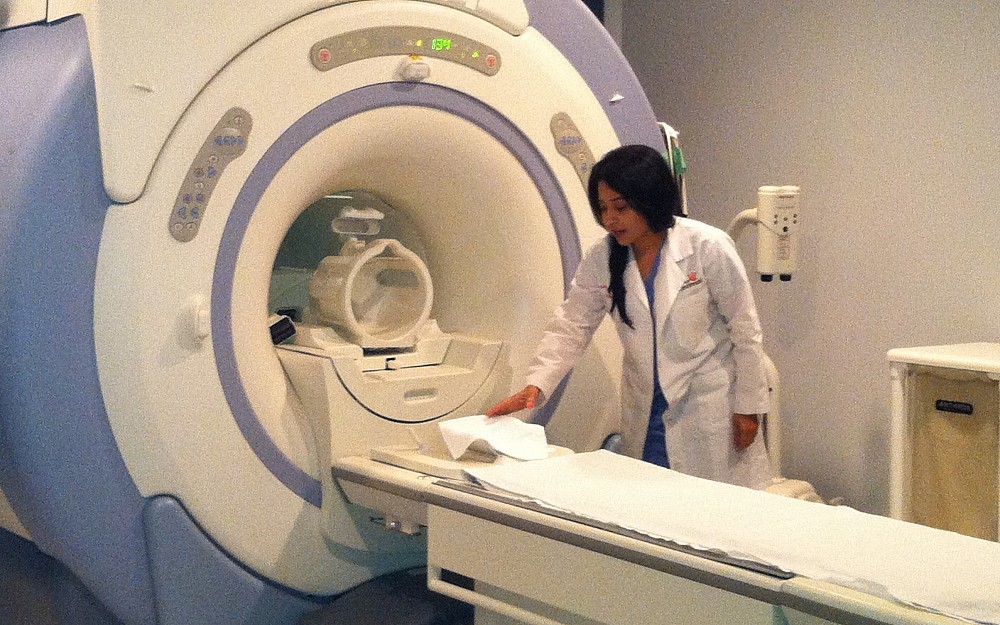
Sadhna Verma, MD, a member of the University of Cincinnati Cancer Institute, associate professor in the department of radiology at the UC College of Medicine and a UC Health radiologist, says the UC Health team is the only one in the Tristate area that offers multi-parametric magnetic resonance imaging (mp-MRI) scans for cancer detection and MRI as a guidance tool for prostate biopsies.
"We offer several pre-operative imaging techniques that can help us decide whether to remove or spare delicate vascular bundles that surround the prostate gland, she says, adding that magnetic resonance spectroscopic imaging (MRS) is used to detect normal and cancer-related chemical compounds in the prostate gland.
Additionally, experts agree that MR diffusion and MR perfusionspecifically imaging cancer cell "crowding and maps of blood flow, which increase in cancer cellsassist with detection and help physicians decide how to proceed.
Verma says that when a biopsy is needed, the suspicious findings on the mp-MRI can be targeted for direct MRI-guided biopsy or MRI-ultrasound fusion targeted biopsy.
The fusion-targeted biopsy involves coupling of MRI and ultrasound to visualize suspicious lesions in the prostate gland.
Verma led a clinical trial at UC prior to the FDA-approval of the MRI guided biopsy technology. Now, she along with UC Cancer Institute and UC Health urologists Krishnanath Gaitonde, MD, James Donovan, MD, and Nilesh Patil, MD, are trained to use this technology at UC Medical Center.
"Its a more efficient, effective way to biopsy for physicians and is much better for patients who previously had to undergo blind biopsy, which could involve them being stuck with a needle 12 or more times, Verma adds.
Thefusion-targeted biopsy technology works by using an electro-magnetic navigation system, similar to a GPS tracking device. The MRI and ultrasound images are aligned and overlaid on real-time ultrasound and targetswhich are identified and labeled high, medium or low suspicion for cancerare displayed on ultrasound, which is based on the MRI exam findings.
Using MRI-guided biopsy technology, areas of the prostate that may not be sampled by the standard procedure are accessible; the standard ultrasound biopsy procedure samples the back portions of the prostate gland, meaning tumors located in the very front of the gland can be missed.
"The technologies we use are allowing us to diagnose and begin treating patients for better outcomes, Verma says. "Were happy to offer these services to area patients with hopes of improving and saving lives; however, the first step is being aware of your risks. If you have a family history of this cancer or are experiencing any symptoms of prostate cancertrouble urinating, blood in your semen or urine or pain in the lower body or pelvisplease see your physician.

Sadhna Verma, MD
Related Stories
UC radiation oncologist speaks with Local 12 news about clinical trial for head and neck cancer treatment
August 10, 2026

Dr. Sara Medek, a UC radiation oncology professor, speaks with Local 12 news about a new clinical trial aimed at reducing radiation in certain areas while still treating cancer effectively but with fewer painful side effects.
Cancer Center director charts future based on collaboration, AI
August 10, 2026

David Gius, MD, PhD, was featured in a Cincinnati Business Courier article and The Cancer Letter’s “The Directors" podcast discussing his priorities and goals as he recently took the helm as director of the University of Cincinnati Cancer Center.
UC graduates cross finish line at commencement
August 7, 2026
The University of Cincinnati recognized 2,125 graduates in two ceremonies at summer commencement Friday on campus at Fifth Third Arena.