Study: Clinical Research Training Programs Enhance Productivity

CINCINNATIGraduate clinical research training programs are designed to help young physicians focus on research careers, with the goal of increasing the number of clinician-investigators. But are they really playing a role in increased research productivity?
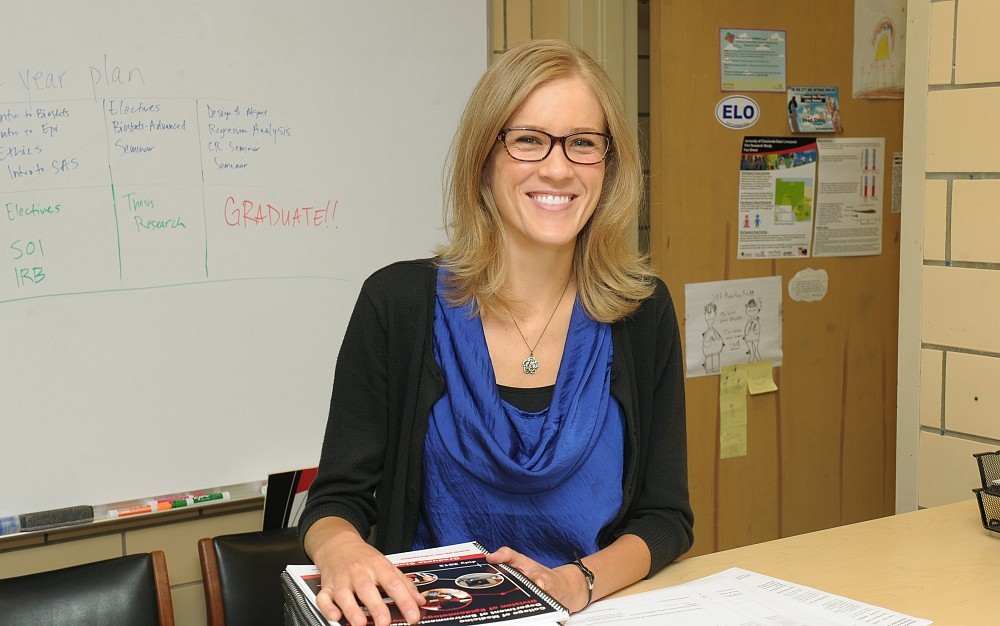
Thats what Jackie Knapke, EdM, academic program director for the Clinical and Translational Research Training Program in the UC Department of Environmental Health, set out to determine in a study focusing on pediatric fellows at Cincinnati Childrens Hospital Medical Center.
The study, "Publication Track Records as a Metric of Clinical Research Training Effectiveness, was published online Sept. 6 ahead of print in Clinical and Translational Science, the official journal of the Society for Clinical and Translational Science (SCTS). Knapke is the corresponding author.
"Few studies have quantitatively evaluated the success of physician-scientist training programs, says Knapke. "Some success indicators, such as financial success and promotions as a result of such programs, are difficult to measure. But we can measure publications through open access databases available online.
Knapke and her team set out to do just that, using a database of physicians who completed pediatrics fellowship programs at Cincinnati Childrens between 1995 and 2011. The study sample consisted of 296 participants: 54 who completed clinical research training at UC and 242 who did not. (UC has offered masters-level training in clinical research methods since the early 1990s, most recently through the environmental health departments MS in Clinical and Translational Research.)
Among graduates of the clinical research training program, 44 (81 percent) published at least one first-authored paper, compared with 149 (62 percent) of fellows who did not obtain the MS degree. The gap between graduates and non-graduates rose significantly in the three to four years following program completion.
Looking at total number of publications, the study determined that fellows who graduated from the training program were more productive, with a mean of 9.7 publications vs. 5.8 for non-graduates. Again, the gap was most significant three to four years after program completion.
"The three- to four-year lag can be explained by the typical career trajectory of a clinical investigator, says Knapke, pointing out that it can take several years to complete all the steps of the publication process including funding, institutional review board approval and the publication process itself.
Knapke and her team also found that overall, men were significantly more likely than women to publish. This "gender gap, Knapke says, can perhaps be explained by maternity leave, lack of high-quality female mentors and/or part-time employment among women. However, she notes, there is no significant difference in publication rates by gender among MS graduates.
"This suggests that completing the clinical research training program is particularly beneficial to women, essentially eliminating the gender gap in publication productivity that we see in the non-alumni group, she says, adding that further study is needed.
Knapke acknowledges several limitations in the study, most notably that it focuses on fellows at a single institution and therefore the results cannot be generalized. In addition, students who enroll in a clinical research training program are self-selecting and therefore presumably have a higher interest in research and publishing.
"Before generalizing these findings to other physician-scientist training programs, further evaluation is needed to assess consistency of program outcomes and effectiveness, Knapke says. "Other measures of success should also be evaluated, such as grant awards and leadership positions, as well as intrinsic rewards of a successful research career.
Authors in addition to Knapke were Joel Tsevat, MD, MPH, Paul Succop, PhD, Kpanda Djawe, PhD, Pierce Kuhnell and Erin Haynes, DrPH.
Funding support for the project came from the National Center for Research Resources and the National Institutes of Healths National Center for Advancing Translational Sciences, through Grant 8 UL1 TR000077-05. The authors have no disclosures.
Tags
Related Stories
UC study shows lack of awareness for lung cancer screenings across country
August 21, 2026
University of Cincinnati Cancer Center researchers have published a study in the American Journal of Surgery that found only 15% of eligible American adults have discussed lung cancer screening with their doctors.This research emphasizes the need to spread awareness and better educate the public about screening through low-dose computed tomography.
UC radiation oncologist speaks with Local 12 news about clinical trial for head and neck cancer treatment
August 10, 2026

Dr. Sara Medek, a UC radiation oncology professor, speaks with Local 12 news about a new clinical trial aimed at reducing radiation in certain areas while still treating cancer effectively but with fewer painful side effects.
Cancer Center director charts future based on collaboration, AI
August 10, 2026

David Gius, MD, PhD, was featured in a Cincinnati Business Courier article and The Cancer Letter’s “The Directors" podcast discussing his priorities and goals as he recently took the helm as director of the University of Cincinnati Cancer Center.