HEALTH LINE: Attitudes Toward Mental Illness Benefit From Discussion

CINCINNATIMental illnesses can affect anyone, they are not the result of personal weakness, and theyre treatable. Still, people with a mental illness are often told its "all in your head, with no recognition of the biological mechanisms underlying the diseases.
A prime example is bipolar disorder, which the National Alliance on Mental Illness (NAMI) defines as a chronic illness with recurring episodes of mania and depression that can last from one day to months. More than 10 million Americans have bipolar disorder, which affects men and women equally.
"Through extensive research, we now know that genetics and neurodevelopment are biological aspects that contribute to the onset of illnesses such as bipolar disorder, says Melissa DelBello, MD, a professor of psychiatry and behavioral neuroscience at the University of Cincinnati (UC) College of Medicine and member of the UC Mood Disorders Center team.
"Our goal, ultimately, is to figure out what combination of biological, environmental and genetic risk factors contribute to the onset of bipolar disorder.
The Mood Disorders Center , one of 13 centers or programs of the UC Neuroscience Institute, one of four institutes of the UC College of Medicine and UC Health, is sponsoring a new event, "Psych and the Cinema, with the goal of stimulating discussion about mental illness. It will combine the showing of a feature film with a discussion led by a representative of the Mood Disorders Center.
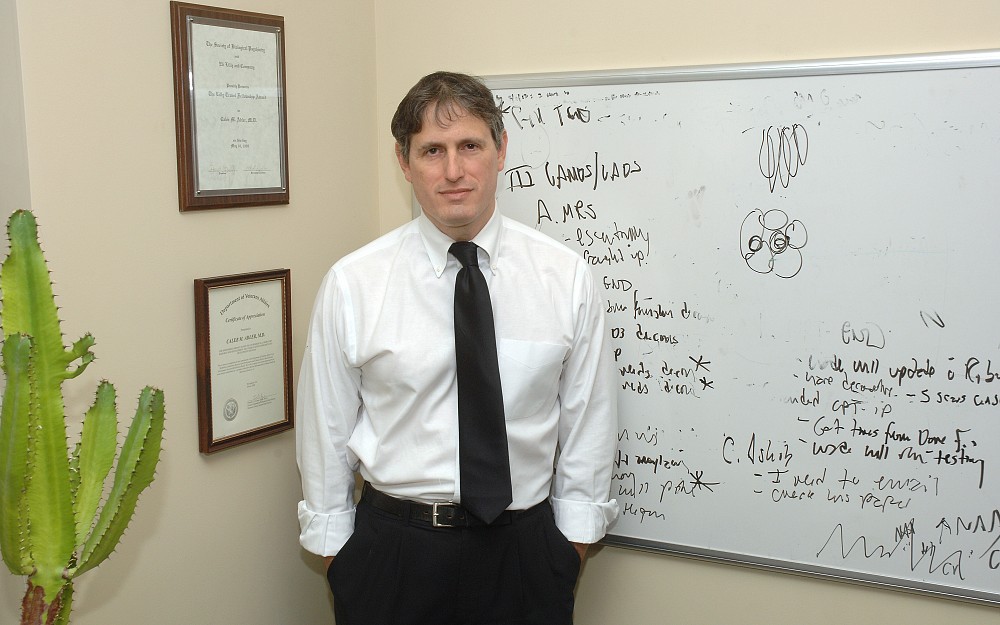
The first movie will be "Mr. Jones, starring Richard Gere as a man with bipolar disorder, at 7 p.m. Thursday, Nov. 14, in Medical Sciences Building Room 5051. Cal Adler, MD, a professor of psychiatry and behavioral neuroscience and member of the Mood Disorders Center team, will lead the discussion.
The showing is free and open to the public, with registration encouraged at http://mooddisorders.ucneuroscience.com/events/.
"I think theres a desire in the community to learn about mental health, and movies are among the media that most people are interested in, Adler says. "This is a way to use movies as a springboard to overall education about mood disorders and also to address peoples questions and talk about whats right with the movies and whats wrong with them.
In "Mr. Jones (1993), directed by Mike Figgis, Gere plays a man with bipolar disorder who is arrested after a manic incident and enters a psychiatric hospital. Lena Olin plays a psychiatrist at the hospital who has a sexual relationship with Geres character (definitely a "wrong, Adler notes).
Adler says he hopes to make the evening a regular event, with subsequent movies exploring other mood disorders and led by other Mood Disorders Center specialists.
"The point of doing this is to have fun while learning about mood disorders, he says.

Melissa DelBello, MD, Dr. Stanley and Mickey Kaplan Professor and Chair of Psychiatry and Behavioral Neuroscience.
Related Stories
UC radiation oncologist speaks with Local 12 news about clinical trial for head and neck cancer treatment
August 10, 2026

Dr. Sara Medek, a UC radiation oncology professor, speaks with Local 12 news about a new clinical trial aimed at reducing radiation in certain areas while still treating cancer effectively but with fewer painful side effects.
Cancer Center director charts future based on collaboration, AI
August 10, 2026

David Gius, MD, PhD, was featured in a Cincinnati Business Courier article and The Cancer Letter’s “The Directors" podcast discussing his priorities and goals as he recently took the helm as director of the University of Cincinnati Cancer Center.
UC graduates cross finish line at commencement
August 7, 2026
The University of Cincinnati recognized 2,125 graduates in two ceremonies at summer commencement Friday on campus at Fifth Third Arena.