UC Professor Advocated for New Law on HIV Positive Organ Donation

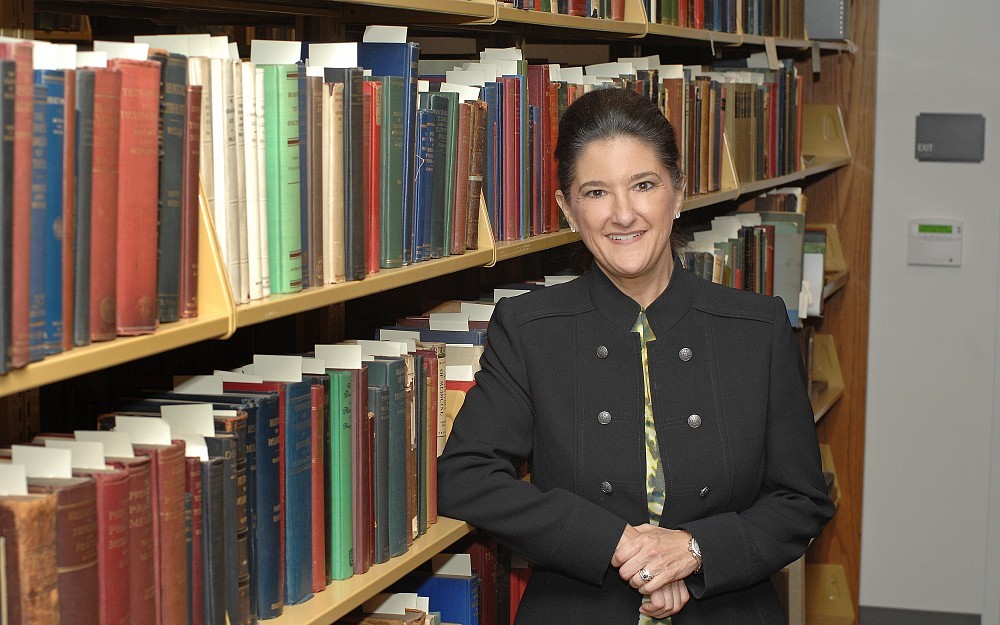
CINCINNATIUniversity of Cincinnati (UC) research professor of medicine Rita Alloway, PharmD, has spent years working to update a 20-year ban on HIV positive organ donationand her efforts, along with those of dozens of othersare being rewarded today with the signing of the HOPE Act into law by President Barack Obama.
The HOPE (HIV Organ Policy Equity) Act ends the federal ban on research into organ donations from HIV-positive donors to HIV-positive recipients, and paves the way for eventual transplantation of those organs to help HIV-positive recipients in need of a new liver, kidney, or potentially other organs.
Alloway, who calls todays signing "very rewarding, advocated for the act in her role as board and public policy committee member of the American Society of Transplantation, an international organization of transplant professionals. Alloway also directs UCs transplant clinical research program.
She says that allowing research into positive-to-positive donationsand creating safeguards and standards for such donationswill help to expand the pool of available organs for the more than 100,000 patients currently on the waiting list in the United States.
"The current rate limiting factor for patients awaiting transplant is the availability of a donor organ, she says. "Medically-sound efforts to increase the donor pool, such as the HOPE Act, will dramatically decrease wait times for HIV positive recipients, and thus provide more organs within the organ pool.
A study published in the American Journal of Transplantation estimated that allowing organ transplants from HIV-positive donors to HIV-positive recipients could increase the organ pool by 500 to 600 donors a year, saving hundreds of lives.
From 2003 to 2009, UC participated in a multicenter collaborative studying transplantation in HIV infected patients. The study, led locally by professors of medicine Prabir Roy-Chaudhury, MD, PhD, and Kenneth Sherman, MD, has led to many publications advancing this area of patient care.
"The need for increased donor has always been the Achilles heel for transplantation, says Alloway. "Specifically for the HIV transplant population, the advent of effective HIV treatments, and research proving HIV positive transplant patients have similar outcomes post-transplant, has allowed transplantation to be a viable option for these patients.
Additionally, the HOPE Act requires the national organ procurement and transplantation network (OPTN) to develop standards ensuring positive-to-positive transplantation does not impact the safety of the organ transplantation network. It also amends federal criminal law on HIV transmission to clarify that positive-to-positive donations are not barred.
The bipartisan legislation, sponsored by U.S. Sens. Barbara Boxer (D-Calif.) and Tom Coburn (R-Okla.) and 13 other senators, passed the U.S. Senate in June and was approved by the House of Representatives Tuesday, Nov. 12. The House bill was sponsored by Reps. Lois Capps (D-Calif.) and Andy Harris (R-Md.).
Tags
Related Stories
UC radiation oncologist speaks with Local 12 news about clinical trial for head and neck cancer treatment
August 10, 2026

Dr. Sara Medek, a UC radiation oncology professor, speaks with Local 12 news about a new clinical trial aimed at reducing radiation in certain areas while still treating cancer effectively but with fewer painful side effects.
Cancer Center director charts future based on collaboration, AI
August 10, 2026

David Gius, MD, PhD, was featured in a Cincinnati Business Courier article and The Cancer Letter’s “The Directors" podcast discussing his priorities and goals as he recently took the helm as director of the University of Cincinnati Cancer Center.
Bidirectional link between oral, kidney health calls for patient education, access
August 4, 2026

Despite growing awareness of the connection between oral health and chronic health conditions, patient awareness and access to dental care remain limited, according to University of Cincinnati experts who recently spoke with Healio | Nephrology News & Issues.