Regulation of Cancer-Causing Protein Could Lead to New Therapeutic Targets

CINCINNATIResearchers with the Cincinnati Cancer Center (CCC) and the University of Cincinnati Cancer Institute have discovered a new regulation for the cancer-causing protein KRas which may help with the development of targeted therapies for patients with a KRas mutation.
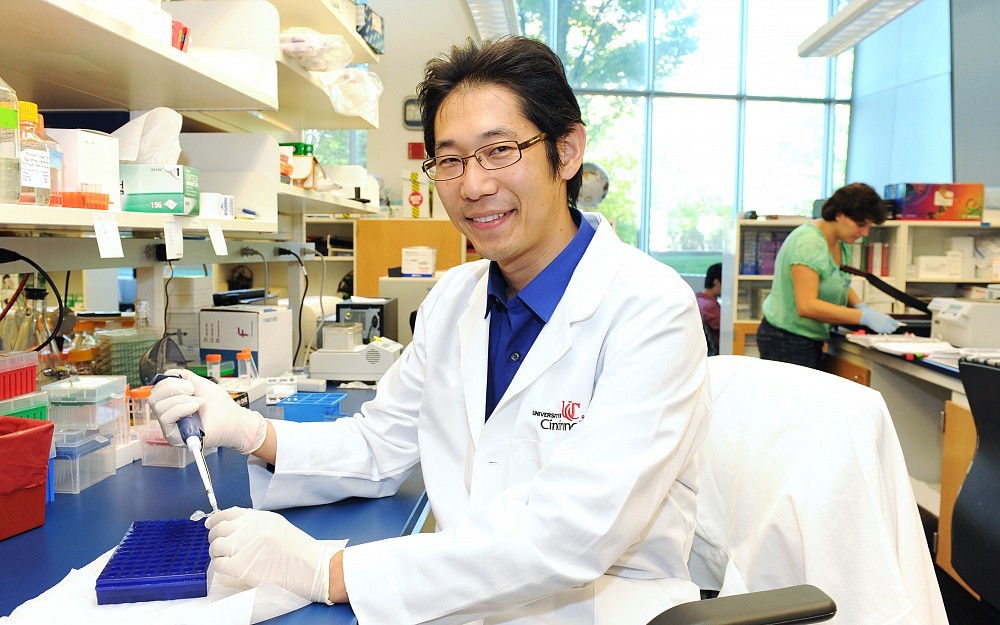
Atsuo Sasaki, PhD, a member of the CCC, the UC Cancer Institute and the UC Brain Tumor Center as well as an assistant professor in the division of hematology oncology within the department of internal medicine, is the principal investigator on the study, which is published in the Dec. 13, 2013, online edition of the Journal of Biological Chemistry.
He says pharmacologic targeting of KRas as a cancer therapy has been challenging.
"The mutation of a KRas gene is an essential step in the development of many cancers, Sasaki says. "In fact, the KRas mutation is present in more than 90 percent of patients with pancreatic cancer, and other research has shown that lung and colon cancers have prevalent mutations of this gene as well.
"Researchers in academia and industry have been trying to target KRas pharmaceutically for many years without significant success. In this study, we took a unique approach. We use a social amoeboida powerful model system to study Ras signaling and look at the KRas regulation.
To do this, researchers introduced the oncogenic KRas gene into the social amoeboid and compared its regulation to that of a normal KRas gene.
"We discovered that the cell has a system to recognize the oncogenic KRas and break it down, he says. "This clearance system led to ubiquitination on oncogenic KRaswhich means it is being chopped and trashed.
"With this knowledge, we could increase the clearance of mutated KRas from cancer cells; next steps include finding the gene or protein that starts this process. With this additional piece of the puzzle, were one step closer to finding a targeted therapy for various cancer types that harbor KRas mutations.
This research was funded by grants from the UC Department of Internal Medicine and the Brain Tumor Center, which is part of the UC Neuroscience Institute.
The University of Cincinnati, Cincinnati Childrens Hospital Medical Center and UC Health have created the Cincinnati Cancer Centera joint effort designed to leverage the strengths of all three organizations in order to provide the best possible cancer diagnostics, research, treatment, and care for individuals in the Tristate region and the nation. To learn more, visit cincinnaticancercenter.org.
Tags
Related Stories
UC radiation oncologist speaks with Local 12 news about clinical trial for head and neck cancer treatment
August 10, 2026

Dr. Sara Medek, a UC radiation oncology professor, speaks with Local 12 news about a new clinical trial aimed at reducing radiation in certain areas while still treating cancer effectively but with fewer painful side effects.
Cancer Center director charts future based on collaboration, AI
August 10, 2026

David Gius, MD, PhD, was featured in a Cincinnati Business Courier article and The Cancer Letter’s “The Directors" podcast discussing his priorities and goals as he recently took the helm as director of the University of Cincinnati Cancer Center.
Bidirectional link between oral, kidney health calls for patient education, access
August 4, 2026

Despite growing awareness of the connection between oral health and chronic health conditions, patient awareness and access to dental care remain limited, according to University of Cincinnati experts who recently spoke with Healio | Nephrology News & Issues.