HEALTH LINE: Single-Site Hysterectomy Procedure May Reduce Recuperation Time, Visible Scars

CINCINNATIHysterectomy, a surgery to remove the uterus, is done for a number of reasons, including cancer, irregular bleeding, fibroid tumors, prolapse (slippage) of the uterus and endometriosis.
However, like any surgery, the procedure can leave visible scars and can take a woman weeks to recuperate.
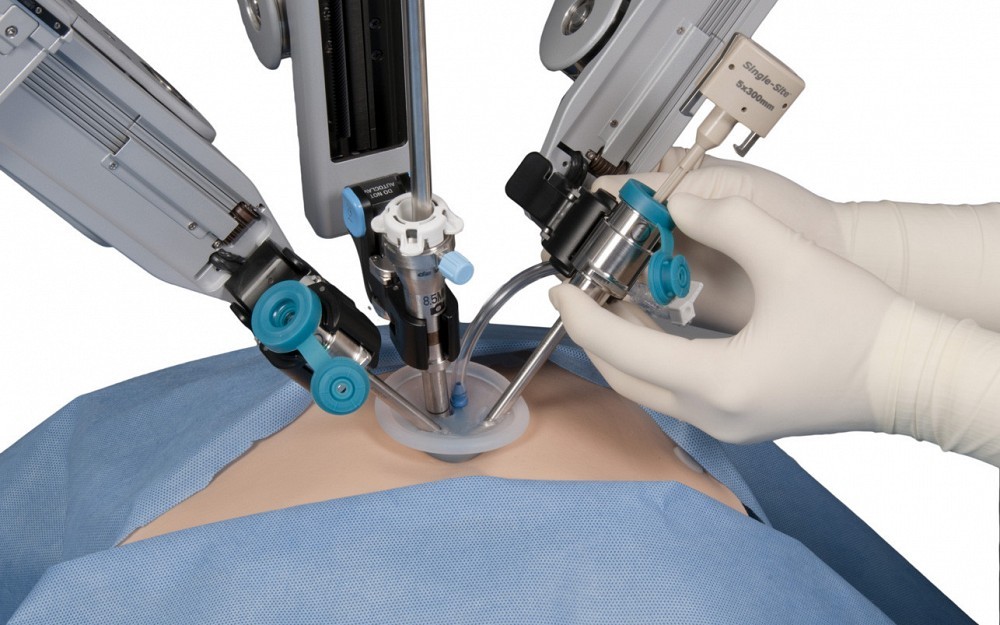
Now, gynecological oncologists at UC Medical Center are offering single-site robotic hysterectomy using the da Vinci Surgical System, reducing the surgical site to a single one inch incision.
UC Health is the only medical system in Cincinnati offering this procedure.
"This technique allows me to perform a hysterectomy through a single sitethe navel. Therefore, the patient can still wear a variety of clothing and swimwear after surgery without showing scars, says Eric Eisenhauer, MD, medical director of gynecologic oncology at UC Health, a member of the UC Cancer Institute and professor at the UC College of Medicine. "Pain is minimized, and most patients go home after a day in the hospital.
During the procedure, the surgeon sits at a console, viewing the pelvis through a 3D, high-definition scope and uses controls below the viewer to move the instrument arms and camera.
In real-time, the system translates the surgeons movements into more precise movements of the miniature instruments that are inserted through a port at the navel.
In addition to hysterectomies, the system may be used for single-site robotic gallbladder surgery as well as gastric bypass surgery; however, these services will not be offered until a later date.
"Our goal is to get women recovered from their surgery as soon as possible, he says. "Regardless of whether or not you may think you need this procedure, if you notice any changes in your menstruation or any severe cramping, please see your gynecologist or health care provider to catch any health issues in the earliest stages.
Related Stories
UC radiation oncologist speaks with Local 12 news about clinical trial for head and neck cancer treatment
August 10, 2026

Dr. Sara Medek, a UC radiation oncology professor, speaks with Local 12 news about a new clinical trial aimed at reducing radiation in certain areas while still treating cancer effectively but with fewer painful side effects.
Cancer Center director charts future based on collaboration, AI
August 10, 2026

David Gius, MD, PhD, was featured in a Cincinnati Business Courier article and The Cancer Letter’s “The Directors" podcast discussing his priorities and goals as he recently took the helm as director of the University of Cincinnati Cancer Center.
UC graduates cross finish line at commencement
August 7, 2026
The University of Cincinnati recognized 2,125 graduates in two ceremonies at summer commencement Friday on campus at Fifth Third Arena.