Molecular Protein-Targeting Therapies May Be Best Treatment for Certain Lung Cancer, Research Shows

CINCINNATIUniversity of Cincinnati Cancer Institute researchers have found that using therapies specifically targeting the molecular profile of non-small-cell lung cancer with the mutated cancer-causing protein KRas is the most effective treatment strategy for patients with the condition.
These findings are being presented via poster at the American Association for Cancer ResearchInternational Association for the Study of Lung Cancer Joint Conference on the Molecular Origins of Lung Cancer, Jan. 6-9, 2014, in San Diego.
Non-small-cell lung cancer is any type of lung cancer other than small-cell lung cancerthe most common type of lung cancer. Non-small-cell lung cancer with KRas mutation is non-druggable, and no successful targeted therapy currently exists to help patients with this form of lung cancer.
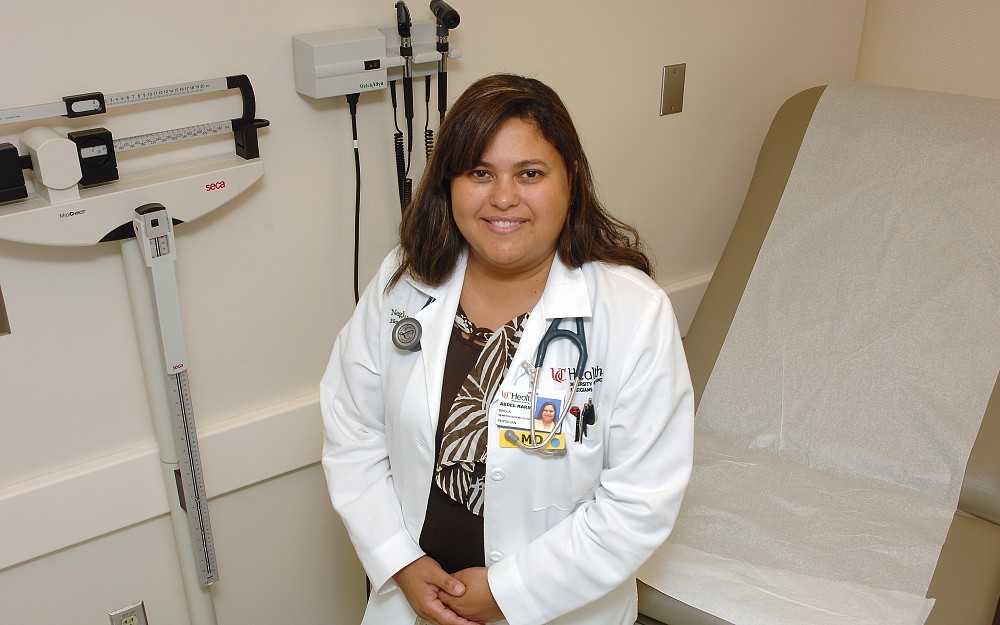
Nagla Karim, MD, PhD, a member of the institute, assistant professor in the division of hematology oncology at the UC College of Medicine, UC Health physician and principal investigator on this study, says researchers assessed the molecular profiling and sensitivity to the KRas mutant lung cancer in comparison with the wild type, or non-mutant, lung cancer.
"Recent studies suggest that patients with KRas-mutant non-small-cell lung cancer do not often benefit from standard systemic therapies and do not respond to epidermal growth factor receptor inhibitors, which are used to control the progression of cancer, she says.
"There is a need for therapies specifically developed for these patients, and molecular profiling has the potential to identify possible targets that might provide better treatment and innovative targeted therapy for KRas-mutated non-small-cell lung cancer.
The mutation of a KRas gene is an essential step in the development of many cancers, including non-small-cell lung cancer.
In the study, researchers purified RNA from banked tumor and normal lung tissue obtained from 20 patients with wild-type and 17 patients with mutant-type KRas non-small-lung cancer tumors which were being removed in stages I and II.
"We assessed the expression of four genes involved in cell synthesis and repair, and our results show that in mutant-type KRas tumors, the levels of expression of several of three of the genes (BRCA1, TS and SRC) were significantly increased in comparison to normal lung tissue, Karim says. "The expression of the same genes was significantly increased in wild-type KRas tumors relative to their expression in normal lung.
"Interestingly, SRC expression in mutant-type KRas tumors was decreased in comparison to wild-type KRas tumors. These findings suggest that greater expression of the gene ERCC1 in mutant KRas tumors might increase platinum-based chemotherapy resistance in this group of patients, whereas the greater expression of the BRCA1 in wild KRas tumors might suggest sensitivity to taxanes, which are chemotherapy agents.
She adds that this data also suggests that the combination of an approved SRC inhibitor with a TS inhibitor might improve the outcome of patients with wild-type KRas tumors.
"These results shed new light on potentially more effective treatment strategies for patients with various types of KRas-related non-small-cell lung cancer, she says. "We hope that these findings will lead to better therapies and improved outcomes for patients.
These studies are investigator-initiated and were funded by UCs internal medicine department.
Related Stories
UC radiation oncologist speaks with Local 12 news about clinical trial for head and neck cancer treatment
August 10, 2026

Dr. Sara Medek, a UC radiation oncology professor, speaks with Local 12 news about a new clinical trial aimed at reducing radiation in certain areas while still treating cancer effectively but with fewer painful side effects.
Cancer Center director charts future based on collaboration, AI
August 10, 2026

David Gius, MD, PhD, was featured in a Cincinnati Business Courier article and The Cancer Letter’s “The Directors" podcast discussing his priorities and goals as he recently took the helm as director of the University of Cincinnati Cancer Center.
UC graduates cross finish line at commencement
August 7, 2026
The University of Cincinnati recognized 2,125 graduates in two ceremonies at summer commencement Friday on campus at Fifth Third Arena.