Researchers Identify Key Molecular Components Linking Circadian Rhythms and Cell Division Cycles

CINCINNATIResearchers at the University of Cincinnati (UC) have identified key molecular components linking circadian rhythms and cell division cycles in Neurospora crassa, providing insights that could lead to improved disease treatments and drug delivery.
The researchers in the UC College of Medicine Department of Molecular and Cellular Physiology, led by Christian Hong, PhD, published their findings Monday, Jan. 13, online ahead of print in PNAS (Proceedings of the National Academy of Sciences).
"Our work has large implications for the general understanding of the connection between the cell cycle and the circadian clock, says Hong, an assistant professor in the molecular and cellular physiology department who collaborated with an international team of researchers on the project.
Funding for Hongs research was provided by a four-year, $3.7 million grant from the Defense Advanced Research Projects Agency (DARPA), an agency of the U.S. Department of Defense. He also received startup funds from UCs molecular and cellular physiology department.
The circadian rhythm, often referred to as the biological clock, is a cycle of biological activity based on a 24-hour period and generated by an internal clock synchronized to light-dark cycles and other external cues.
"Everything has a schedule, and we are interested in understanding these schedules at a molecular level, Hong says. "We also wanted to know the components that connect two different oscillators (the circadian clock and cell division, or mitosis).
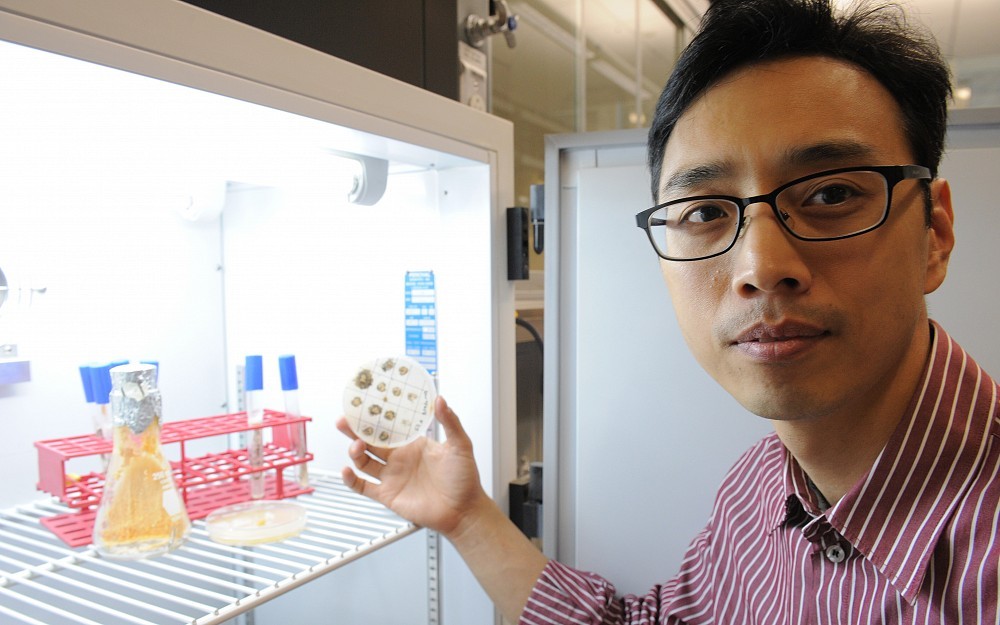
Using the filamentous (thread-like) fungi Neurospora crassa, the researchers investigated the coupling between the cell cycle and the circadian clock using mathematical modeling and experimentally validated model-driven predictions. They demonstrated a mechanism that is conserved (constant) in Neurospora as in mammals, which results in circadian clock-gated mitotic cycles.
"The cell divisions happened during a certain time of day, Hong says, "and they were molecularly regulated by the mechanisms of circadian rhythms.
The researchers showed that a conserved coupling between the circadian clock and the cell cycle exists via serine/threonine protein kinase-29 (STK-29), the Neurospora homolog (possessing similar DNA sequence) of mammalian WEE1 kinase.
Additionally, the researchers conducted phase-shift experiments in which they transferred Neurospora to constant darkness, then administered a 90-minute pulse of white fluorescent light at indicated time points in order to induce phase-shift.
"We were able to show that when we phase-shift the circadian clock, we also observe phase-shifting of the cell cycle components, Hong says.
By building on experimentally validated mathematical models from Neurospora, researchers will be able to make predictions in other Neurospora strains and mammalian cells.
As Hong puts it, "This discovery will serve as a stepping stone for further investigations to uncover conserved principles of coupled mechanisms between the cell cycle and circadian rhythms.
Related Stories
UC radiation oncologist speaks with Local 12 news about clinical trial for head and neck cancer treatment
August 10, 2026

Dr. Sara Medek, a UC radiation oncology professor, speaks with Local 12 news about a new clinical trial aimed at reducing radiation in certain areas while still treating cancer effectively but with fewer painful side effects.
Cancer Center director charts future based on collaboration, AI
August 10, 2026

David Gius, MD, PhD, was featured in a Cincinnati Business Courier article and The Cancer Letter’s “The Directors" podcast discussing his priorities and goals as he recently took the helm as director of the University of Cincinnati Cancer Center.
UC graduates cross finish line at commencement
August 7, 2026
The University of Cincinnati recognized 2,125 graduates in two ceremonies at summer commencement Friday on campus at Fifth Third Arena.