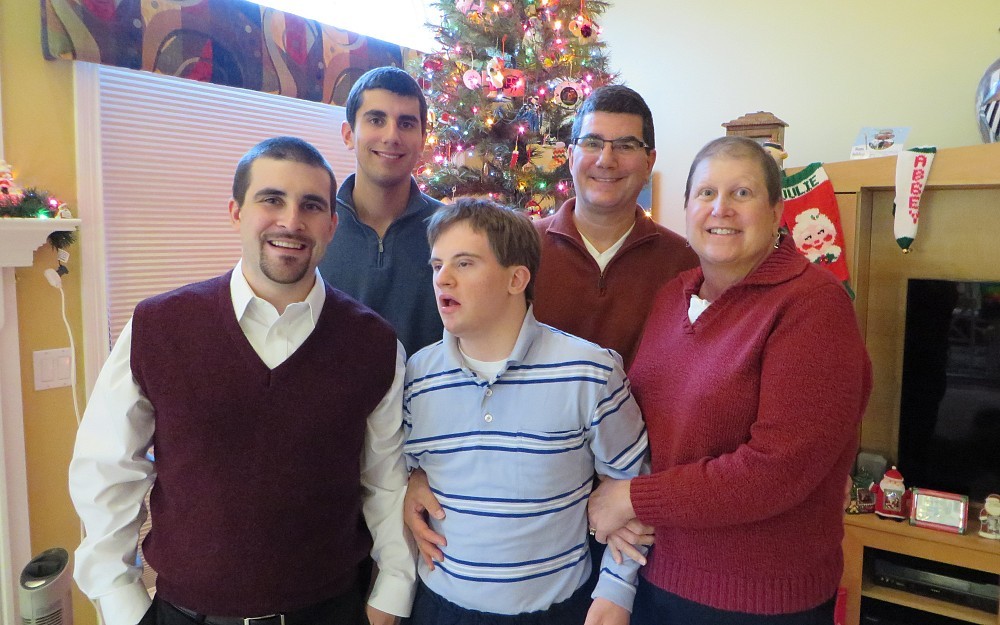
Patient Stays Positive Despite Cancer Diagnosis, Finds Therapy to Stabilize Condition

Julie Haubrock, 53, says life is too short not to enjoy the little things, especially after being diagnosed with breast cancer in 2001.
"You just have to stop to enjoy naturea pretty sunset or the color of the leaves, she says. "Life is what you make of it.
Haubrocks positivity comes from first overcoming stage-1 cancer after six months of chemotherapy and a mastectomy but then discovering seven years laterwhen she thought she was in the clearthat the cancer had returned and had spread to her bones and liver.
"I thought I received a death sentence, she says, adding that the cancer had changed since her first diagnosis, and the therapies that helped her before were not working. "It was stage-4 cancer, and I needed more aggressive treatment to keep it from spreading, but the therapies made me feel terrible, and it was difficult to function in my everyday life.
In 2007, Haubrock started seeing Elyse Lower, MD, director of the UC Cancer Institutes Comprehensive Breast Cancer Center and UC Health hematologist oncologist, and her worries were calmed as she began to feel better.
"Dr. Lower started me on a new chemotherapy agent last June, and it had just been approved by the Food and Drug Administration just months earlier, she says. "I call it a miracle drug. I felt like a person again.
"Luckily, today we have many good treatment options for metastatic breast cancer, and our goal is to provide the best quality of life for as long as possible, Lower says. "Newer targeted therapies have enabled us to see response rates almost double over the last two to three years. In addition, side effects for these newer targeted therapies are substantially less than with conventional chemotherapy.
"Chronic disease can be very devastating, but we know that learning how to manage it and incorporating it within a full and rich life can often be achieved today.
While the cancer is still there, Haubrock says it has been stabilized.
"Diabetes never goes awaypatients have to manage it. The same can be thought of my cancer; I take medicine to manage it, she says.
In the meantime, she continues to live life to the fullest. Her youngest son, Stephen, has grown up with her having cancer, and he is now studying nursing at UC. Her son Tim is getting married in August ("Ill have my hair back by then, she says), and her 21-year-old son, Danny, who has Down syndrome and autism, is also her shining light and one of her many reasons for living.
"Hes my world, she says. "I love him so much.
"Dr. Lower and the entire team within the Comprehensive Breast Cancer Center are fantastic. I couldnt ask for a better group of physicians to manage my care. Dr. Lower helped me regain my life by helping me find a drug that keeps me goingand smiling.

Elyse Lower, MD
Tags
Related Stories
UC expert weighs in on current MASH treatment approaches
June 5, 2026

As MedCentral recently reported, pending broader pharmacologic approvals for metabolic dysfunction-associated steatohepatitis (MASH), lifestyle modifications remain the go-to intervention.
At least two weather patterns increase headaches, UC study suggests
June 4, 2026
University of Cincinnati physicians and collaborators identified two specific weather patterns that increase headache and migraine risk and found the preventive medication fremanezumab (Ajovy) can reduce weather‑associated headaches. The findings will be presented at the American Headache Society Annual Scientific Meeting in Orlando.
UC researcher secures $3.3M grant to study microplastics’ impact on heart
June 2, 2026
The National Institute of Environmental Health Sciences awarded a $3.3M grant to University of Cincinnati researcher Hong‑Sheng Wang, PhD, to study how microplastics and nanoplastics affect cardiovascular health.