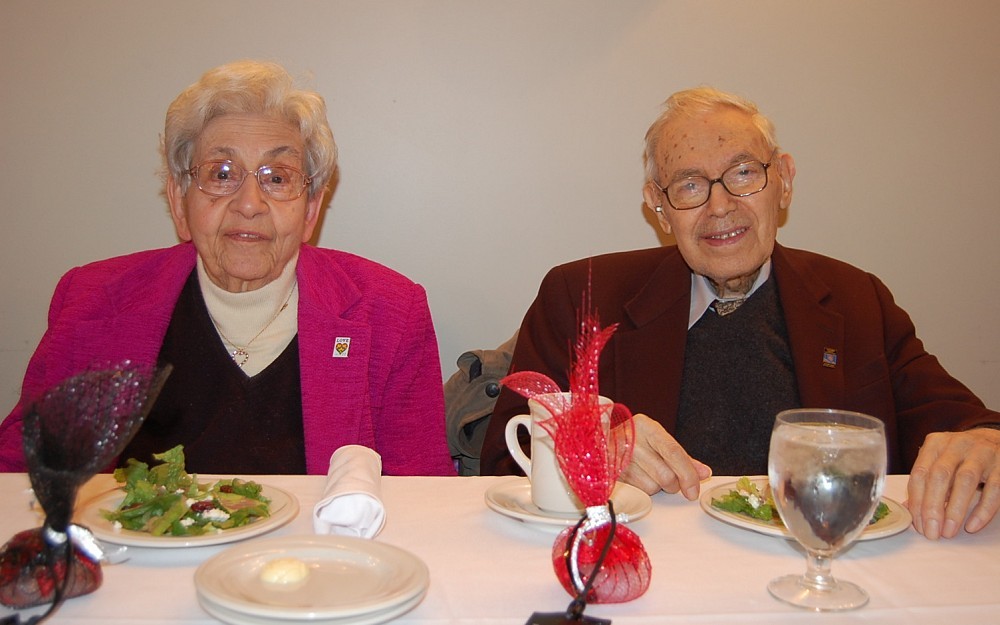
Cosmetic Science Professionals Honor UC Program's Founder

CINCINNATIThe University of Cincinnatis James L. Winkle College of Pharmacy was the first in the United States to have a graduate program that emphasized cosmetic science. Its also the only college in the U.S. to offer a PhD with an emphasis in the specialty, and in this millennium was the first to offer a distance-learning graduate degree program in cosmetic science.
These UC programs would not have been possible without the dedication of professor emeritus J. Leon Lichtin, who, now in his ninth decade, was recently honored by the Ohio Valley Society of Cosmetic Chemists (OVSCC) at a symposium held to support the Dr. J. Leon and Mrs. Beverly Lichtin Education Endowment in Cosmetic Science.
"His graduate program, both innovative and groundbreaking, was the template for others in the U.S. and elsewhere that have emulated UCs programs in the decades since, Winkle alumnus Stanley Milstein, PhD, remarked at the OVSCC event, which drew a strong representation from the cosmetic science industrymany of whom are UC alumsand raised nearly $10,000 toward the endowment.
It was in the 1950s, in collaboration with faculty from the UC College of Medicines department of dermatology, that Lichtin and colleagues introduced college of medicine and pharmacy students to the study of lotions, ointments and emulsions. Lichtin even wrote his own textbook and built upon UCs co-op education concept by arranging cosmetic science student "internship placements in industry, contract testing labs, trade associations, and government laboratory positions throughout the United States.
In the early 1970s he established the cosmetic science graduate program, with the first student graduating in 1974. Over 100 students have obtained graduate degrees in the time sincesome of whom obtained their degrees through distance learning, which was introduced in 2006 by professor emeritus Randall Wickett, PhD, who assumed responsibility for the program in 1991 upon Dr. Lichtins retirement.
Cosmetic Science is the interdisciplinary science of developing, formulating and producing cosmetics and personal care products. The curriculum includes courses in surface science, emulsions and colloids, biochemistry, molecular biology, clinical assessment, pharmacology and pharmaceutical chemistry.
Cosmetic science graduates are prepared for careers as cosmetic chemists, clinicians, cosmetic marketing representatives and product developers in industry, research and the public sector, including large and small pharmaceutical companies, cosmetic companies and their suppliers, government laboratories and the chemical industry.
Today, the College of Pharmacy remains one of only a handful of graduate programs with special emphasis on cosmetic science in the U.S. and around the world. Current student research topics range from development of microstructural models for transport in skin and hair to drug delivery to the nails.
The James L. Winkle College of Pharmacy is one of the oldest pharmacy colleges in the United States and is supported by an active research faculty. The college has a long legacy of innovation and will continue to be a pioneer in pharmaceutical and cosmetic science education.
Related Stories
UC radiation oncologist speaks with Local 12 news about clinical trial for head and neck cancer treatment
August 10, 2026

Dr. Sara Medek, a UC radiation oncology professor, speaks with Local 12 news about a new clinical trial aimed at reducing radiation in certain areas while still treating cancer effectively but with fewer painful side effects.
Cancer Center director charts future based on collaboration, AI
August 10, 2026

David Gius, MD, PhD, was featured in a Cincinnati Business Courier article and The Cancer Letter’s “The Directors" podcast discussing his priorities and goals as he recently took the helm as director of the University of Cincinnati Cancer Center.
UC graduates cross finish line at commencement
August 7, 2026
The University of Cincinnati recognized 2,125 graduates in two ceremonies at summer commencement Friday on campus at Fifth Third Arena.