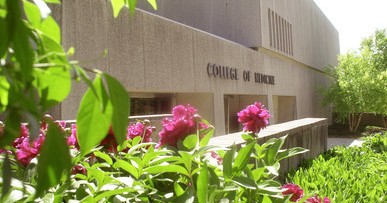
Work in Area of Passenger Elevators on Level 7 Begins Monday Night, Jan. 20

Work will begin Monday night, Jan. 20, 2014, in the area of the passenger elevators on Level 7 of the Medical Sciences Building (MSB). This work will involve removing ceiling tiles to provide access to duct work, conduits, lights and other equipment.
Work will take place nightly between 8 p.m. and 6 a.m., with a scheduled completion of 6 a.m. Friday, Jan. 24. An employee of the contractor, Messer Construction, will be available for any university personnel using the elevator during these hours to help them through the construction area.
To restrict dust in the area, a plastic barrier will be installed to maintain negative air containment. The work space will be cleaned and ready for normal use by 6 a.m. daily.
In the coming weeks, work will progress downward through Level 3. Notifications will be sent prior to work beginning on each level.
More Information
If you have questions about the MSB rehabilitation project, please call 513-558-2992 or emailmsbrehab@uc.edu. For more information, including archived updates, visit the MSB rehabilitation project website at www.med.uc.edu/MSBrehab.
Tags
Related Stories
UC expert weighs in on current MASH treatment approaches
June 5, 2026

As MedCentral recently reported, pending broader pharmacologic approvals for metabolic dysfunction-associated steatohepatitis (MASH), lifestyle modifications remain the go-to intervention.
At least two weather patterns increase headaches, UC study suggests
June 4, 2026
University of Cincinnati physicians and collaborators identified two specific weather patterns that increase headache and migraine risk and found the preventive medication fremanezumab (Ajovy) can reduce weather‑associated headaches. The findings will be presented at the American Headache Society Annual Scientific Meeting in Orlando.
UC researcher secures $3.3M grant to study microplastics’ impact on heart
June 2, 2026
The National Institute of Environmental Health Sciences awarded a $3.3M grant to University of Cincinnati researcher Hong‑Sheng Wang, PhD, to study how microplastics and nanoplastics affect cardiovascular health.