HEALTH LINE: Heart Disease Is a Serious Threat to Women

CINCINNATIHeart disease is the leading cause of death for both women and men, but this killer often doesnt get the attention thats needed when discussing womens health issues, cardiovascular experts at the University of Cincinnati (UC) say.
"There has been this myth that heart disease is not a threat to women, and that thought process is even embedded in the minds of physicians, says Umara Raza, MD, UC Health cardiologist and assistant professor in the UC College of Medicine.
Because February is American Heart Month, Raza says, its an ideal time to discuss heart disease and its effects on women. It is the cause of one out of every three deaths annually among women and is a greater threat than breast cancer.
In the past, heart disease and women were discussed in the context of women serving as caregivers to the men in their lives affected by heart disease, Raza says.
Even the American Heart Association (AHA) put out a pamphlet in the 1960s named "The Way to a Mans Heart, which focused on women as caregivers and subsequently shaped thinking even among physicians, Raza says. Also, many initial clinical studies focused on men and ignored heart diseases effects on women.
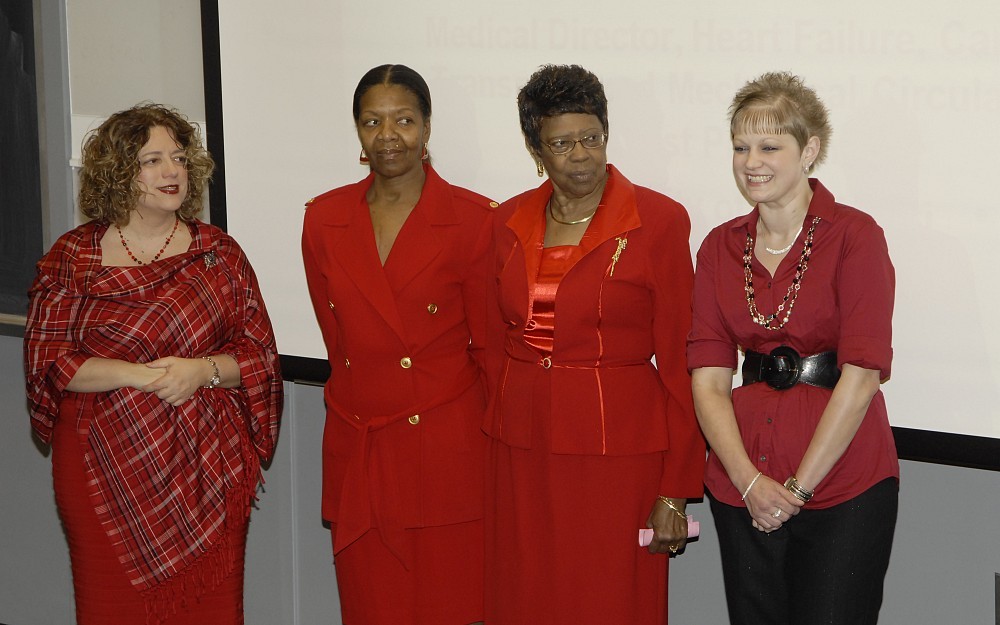
Cardiologist Stephanie Dunlap, DO, medical director of the UC Health Heart Failure and Cardiac Program and associate professor in the UC College of Medicine, says awareness of heart disease among women is improving with the Go Red for Women campaign created by the American Heart Association.
"There has been a huge amount of publicity about breast cancer in women, which is a good thing, Dunlap says. "Now we have the National Football League, the most macho of guys, wearing pink in October. But what disease has the highest frequency in women? The answer is heart disease.
Advocates for womens health have to be more aggressive in getting the word out, both cardiologists say.
Dunlap says women still remain underrepresented in clinical trials. "Its difficult to get them to enroll and no one knows the real reason why, if it is one reason or multiple reasons, she says.
Raza says surveys done by the AHA show that black women particularly arent getting the message about the threat of heart disease. The mortality rate from heart disease for black women is similar to that of white men.
Women tend to show symptoms of heart disease after menopause, and on average their symptoms are present about a decade later than mens, Dunlap says. The sexes also present different symptoms when there is a lack of blood supply to the heart, she explains.
Men tend to get chest discomfort that feels heavy with pressure, like an elephant sitting on their chest, Dunlap says. The pain in men may radiate to their left arm or neck and they may sweat, have shortness of breath and palpitations.
Women tend to present with palpitations, shortness of breath and chest pain described as sharp or knife like, Dunlap says.
"We are seeing an increase in heart disease in younger woman who were previously thought to be protected from heart disease, Raza says. "The main reason for that is the obesity paradox. Obesity clusters a lot of risk factors with it.
"Prevention is better than curing, Raza says. "So how can we prevent heart disease? Dont focus on the absence of risk factors. Its great if you dont smoke and its great if you dont have a family history of heart disease, but focus on the presence of ideal cardiovascular health.
Cardiovascular experts offer the following tips for preventing health disease:
Stop smoking or dont start.
Get 30 minutes of exercise daily. It can be broken into 10- or 15-minute segments. You dont have to go to a gym. Walking is good, and taking gradual steps such as climbing stairs instead of the elevator is a good start.
Try to lose weight. An ideal amount of weight loss is half a pound to one pound per week. Remember, those excess pounds occurred over years.
Control your total cholesterol, which should be less than 200.
Reduce your blood pressure below 140/90.
Eat more high-fiber plant products. Try a diet rich in fruits, vegetables and fish.
Related Stories
UC radiation oncologist speaks with Local 12 news about clinical trial for head and neck cancer treatment
August 10, 2026

Dr. Sara Medek, a UC radiation oncology professor, speaks with Local 12 news about a new clinical trial aimed at reducing radiation in certain areas while still treating cancer effectively but with fewer painful side effects.
Cancer Center director charts future based on collaboration, AI
August 10, 2026

David Gius, MD, PhD, was featured in a Cincinnati Business Courier article and The Cancer Letter’s “The Directors" podcast discussing his priorities and goals as he recently took the helm as director of the University of Cincinnati Cancer Center.
UC graduates cross finish line at commencement
August 7, 2026
The University of Cincinnati recognized 2,125 graduates in two ceremonies at summer commencement Friday on campus at Fifth Third Arena.