UC Awarded Nearly $2 Million to Study Bariatric Surgery and Cancer

CINCINNATIWith a grant of about $2 million from the National Institutes of Health (NIH), a University of Cincinnati (UC) professor will study the impact of bariatric (weight loss) surgery on cancer rates in severely obese adults.
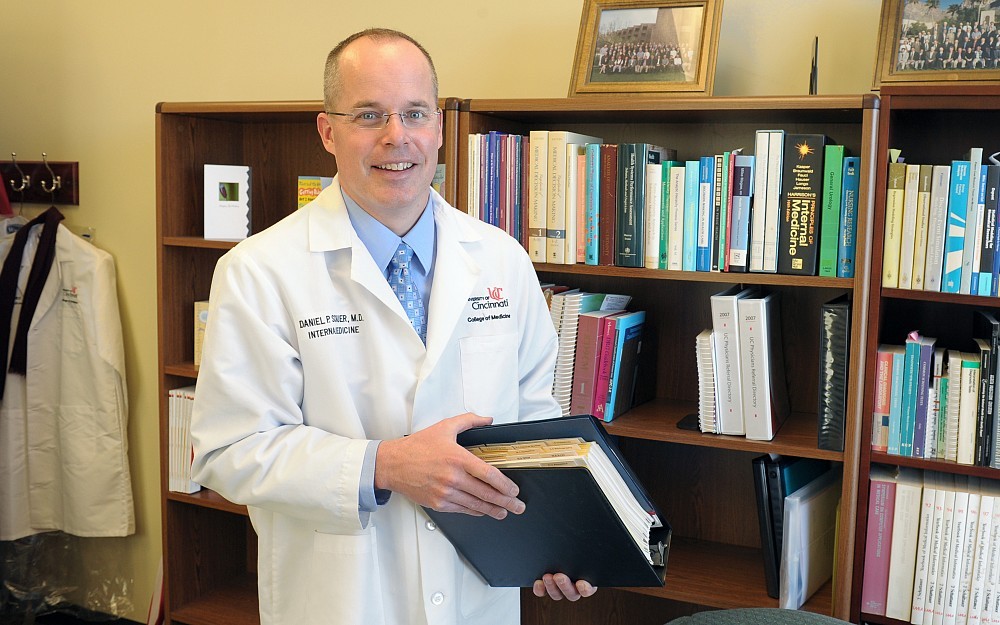
Daniel Schauer, MD, assistant professor in the UC College of Medicine, is the studys lead investigator and will oversee a team of researchers at UC and five other sites tasked with reviewing the health outcomes of more than half a million patients.
"Obesity is a growing problem in the United States, and research has established that obesity is strongly associated with cancer, says Schauer. "What we would like to look at is, Does intentional weight loss reduce your risk of cancer in severely obese patients? In this study, the method of intentional weight loss is bariatric surgery.
The team of researchers will examine the rate of cancer for 35,000 patients who had weight-loss surgery from 2005 to 2012 and compare it with a comparable group of 500,000 patients who did not have the weight-loss surgery, says Schauer, also a UC Health physician and member of both the UC Cancer Institute and the Center for Clinical Effectiveness.
The data will be provided by the HMO Research Network which includes Group Health Cooperative, Kaiser Permanente Southern California, Kaiser Permanente Northern California, Kaiser Permanente Colorado and Kaiser Permanente Northwest.
"We will be aggregating data from all of these sites in the first year, and building complex models to identify the relationship between weight loss and cancer risk in the second year, says Schauer. "We expect to have initial results early next year.
About 15 million adults in the United States suffer from severe obesity, which is defined as having a body mass index (BMI) of greater than 35 kg/m2, says Schauer. Obesity is responsible for approximately 85,000 new cases of cancer in men and women each year, he explains.
"Obesity is considered a well-established risk factor for several types of cancer, says Schauer. "However, clinical trials to specifically examine whether intentional weight loss reduces cancer risk have not been done and data from observational studies is sparse. We are going to look at all types of cancer initially, and then we will break it down by the obesity associated cancers with the most common being post-menopausal breast cancer in women.
Schauer says the study will also determine whether weight loss surgery alone can reduce the risk of cancer or whether that risk is primarily affected by the amount of weight lost by a patient. "One of the conclusions we hope to draw that has not been addressed is if bariatric surgerys effect differs based on patient characteristics including gender, race or ethnicity, Schauer adds.
Bariatric surgery reduces stomach size and limits caloric intake in patients. Gastric bypass surgery is the most common form of bariatric surgery. During the procedure, the stomach is made smaller by creating a pouch at the top of the organ by using surgical staples. The smaller stomach is connected directly to the middle portion of the small intestine, bypassing the rest of the stomach and the upper portion of the small intestine.
NIH funding supporting this work comes from the National Cancer Institute under award number R01CA175346.
Related Stories
UC radiation oncologist speaks with Local 12 news about clinical trial for head and neck cancer treatment
August 10, 2026

Dr. Sara Medek, a UC radiation oncology professor, speaks with Local 12 news about a new clinical trial aimed at reducing radiation in certain areas while still treating cancer effectively but with fewer painful side effects.
Cancer Center director charts future based on collaboration, AI
August 10, 2026

David Gius, MD, PhD, was featured in a Cincinnati Business Courier article and The Cancer Letter’s “The Directors" podcast discussing his priorities and goals as he recently took the helm as director of the University of Cincinnati Cancer Center.
UC graduates cross finish line at commencement
August 7, 2026
The University of Cincinnati recognized 2,125 graduates in two ceremonies at summer commencement Friday on campus at Fifth Third Arena.