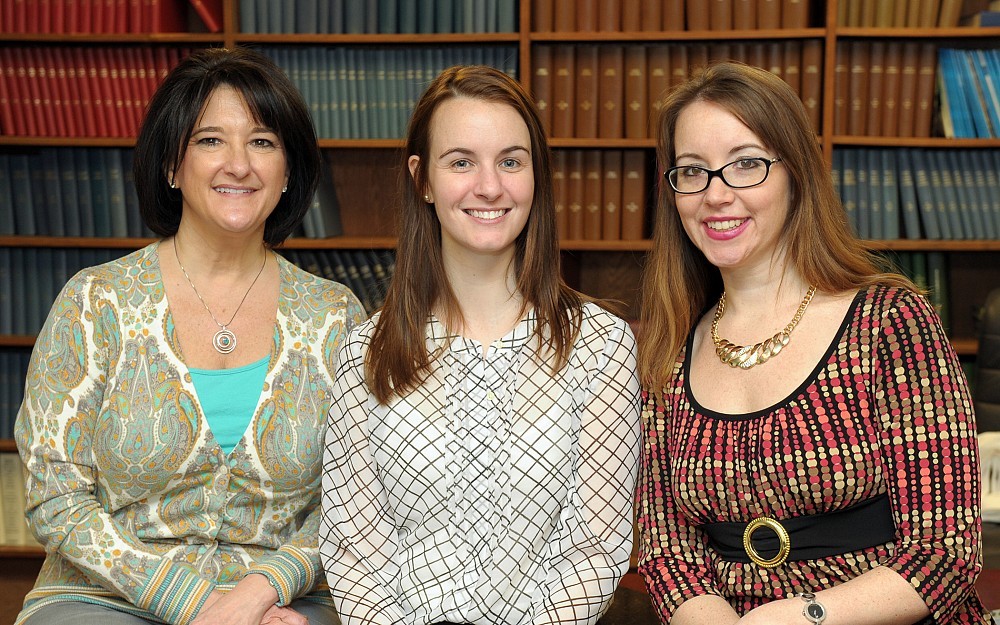
Focus on Research with Nicole Ejaz, PharmD

Nicole Ejaz, PharmD, is a new faculty member in the division of transplantation in the department of surgery and an alumna of the UC James L. Winkle College of Pharmacy.
After graduating in 2009, she completed the first year of her general pharmacy residency at UC Health and a second year under Rita Alloway, PharmD, who directs UCs Transplant Clinical Research Program.
After finishing a transplant pharmacy fellowship with Alloway, Ejaz started as a research assistant professor in the division of transplantation in the fall of 2012.
Recently, she was first author on the study, "Randomized controlled pilot study of B cell-targeted induction therapy in HLA sensitized kidney transplant recipients, published in the American Journal of Transplantation and highlighted as a "trending article by the American Society of Transplantation.
What led you to specialize in transplant pharmacy after graduation?
"When you go through pharmacy school, you have a lot of different rotationssome of them set and some elective. Residency is completely optional, but you get a really well-rounded experience from it.
"One of my rotations as a student was with Dr. Adele Rike-Shields, one of our transplant pharmacists in the division. Her love and passion for transplantation really inspired me, as well as seeing her work and interact with the transplant patients.
"I had additional rotations during my PGY1 residency at UC Health with internal medicine, the renal team, the transplant team and so forth. I already had an interest in transplant, but after my transplant rotation at UC, I really loved it and decided to pursue it.
How did you get involved with this publication?
"Dr. (E. Steve) Woodle had already received funding for the study, and enrollment initiated during my second year of residency and fellowship. During that time, I had a role consenting and enrolling patients into the trial and then following them clinically to ensure that each step of the protocol was being followed correctly.
"When I became a faculty member, I was able to increase my role in the studynot only following the patients clinically, but then analyzing the study results and formulating the main manuscript as well.
"It was rewarding to see it from start to finish. Its something you dont always get to do during your training, but I was pretty fortunate to have the opportunity to do this with our project.
What was the study focused on?
"In previous research, weve used bortezomib as part of our desensitization regimens to try to lower antibody levels in patients awaiting kidney transplant. Weve also used bortezomib in patients who received a kidney transplant and then experienced antibody-mediated rejection.
"But in this study, we wanted to use bortezomib and/or rituximab as part of the induction regimen in HLA sensitized patients at the time of transplant, to see if it would enhance results without increasing toxicity. Its a completely different way we have used bortezomib than in the past.
"Using B-cell targeted agents for induction therapy in highly sensitized transplant recipients isnt very common and there arent a lot of trials out thereso its a fairly newly studied area.
"Since this was a pilot safety study, it was not powered to show a difference among the study arms as it relates to efficacy, but rather to evaluate the safety and toxicity profile of these agents in combination and reveal an efficacy signal to pursue in further studies with a larger sample size.
Our outcomes, such as rejection, patient survival and graft survival, were also acceptable for highly sensitized patients. I would love to add more patients to this study and explore it further to see if we would then find differences in the treatment arms.
What other research are you involved with in the department?
"I also work with the Israel Penn International Transplant Tumor Registry (IPITTR), housed here at UC. Using data from the registrys consults, were looking at patients with pre-existing renal cell carcinoma (RCC) to see if theres an increased risk of RCC recurrence following transplantation.
"Additionally, I help write our investigator-initiated proposals studying B-cell targeted agents for desensitization in highly sensitized transplant candidates. Weve seen great results using these agents for desensitization so far, so were expanding what weve done with bortezomib and adding more agents to our regimens in hopes of seeing even better results.
Tags
Related Stories
UC radiation oncologist speaks with Local 12 news about clinical trial for head and neck cancer treatment
August 10, 2026

Dr. Sara Medek, a UC radiation oncology professor, speaks with Local 12 news about a new clinical trial aimed at reducing radiation in certain areas while still treating cancer effectively but with fewer painful side effects.
Cancer Center director charts future based on collaboration, AI
August 10, 2026

David Gius, MD, PhD, was featured in a Cincinnati Business Courier article and The Cancer Letter’s “The Directors" podcast discussing his priorities and goals as he recently took the helm as director of the University of Cincinnati Cancer Center.
Bidirectional link between oral, kidney health calls for patient education, access
August 4, 2026

Despite growing awareness of the connection between oral health and chronic health conditions, patient awareness and access to dental care remain limited, according to University of Cincinnati experts who recently spoke with Healio | Nephrology News & Issues.