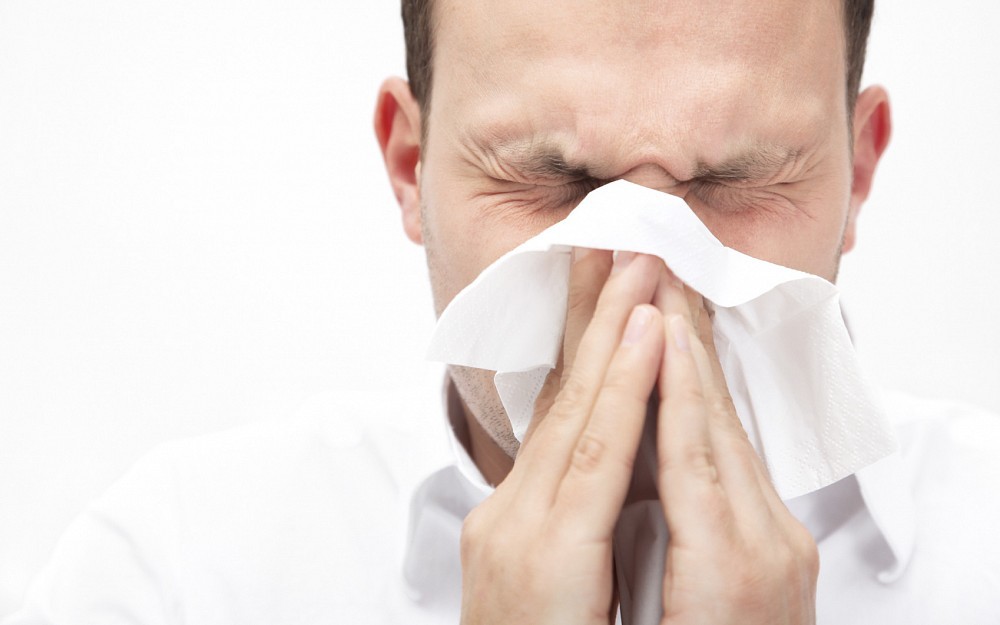
Health Line: Spring Is Here, But So Are Allergies

CINCINNATISpring has finally arrived in Cincinnati, but soon to follow will be the coughing, sneezing and wheezing that comes with allergies, hay fever and asthmathree warm weather killjoys most could do without.
"Tree allergy season begins late March and goes through late May or early June, says Jonathan Bernstein, MD, an expert in allergies and asthma and a professor in University of Cincinnati College of Medicine. "Individuals sensitized to tree pollen aeroallergens will experience itching of the eyes, ears, nose, throat, runny nose, post nasal drainage, nasal congestion and often headaches and sinus pressure or pain.
Approximately 70 million Americans suffer from allergic rhinitis (allergies or hay fever), with about half affected by seasonal allergies, says Bernstein, director of clinical research in the division of immunology, allergy and rheumatology at UC and a physician at UC Health.
Patients with allergic rhinitis are at a three-fold increase in risk of developing asthma, says Bernstein. Often patients with seasonal allergic rhinitis complain of chest tightness or wheezing during the pollen season.
So what can you do?
Cincinnati is just beginning to enjoy warm weather, but for allergy and hay fever sufferers keeping the windows closed at home and running the air conditioner when possible could help reduce some symptoms, says Bernstein.
"Treatment with nasal sprays such as nasal corticosteroids and nasal antihistamines can help reduce inflammation in the nasal airways if used on a regular basis, says Bernstein. Often these treatments can be used alone to control symptoms, but sometimes it might be necessary to use an oral low-sedating antihistamine (such as fexofenadine, cetirizine or loratadine) with or without eye drop medication.
"There are now many non-sedating or low-sedating antihistamines over-the-counter and recently a nasal corticosteroid was cleared by the FDA for over-the-counter sale, says Bernstein, referring to the allergy nasal spray triamcinolone acetonide (Nasacort AQ).
"All these medications should be used under the supervision of a physician, he says. "Long-term treatment includes allergen immunotherapy (allergy shots) in properly selected patients which can induce tolerance to aeroallergens.
Tree allergy season wont last forever and as it ends in late May, grass season will begin and continue until mid-July. Individuals who battle Ragweed allergies wont have to deal with the seasonal sniffles until mid-August, but will have relief when the first frost arrives, says Bernstein.

Jonathan Bernstein, MD, is a leading researcher in asthma and allergies.
Related Stories
UC radiation oncologist speaks with Local 12 news about clinical trial for head and neck cancer treatment
August 10, 2026

Dr. Sara Medek, a UC radiation oncology professor, speaks with Local 12 news about a new clinical trial aimed at reducing radiation in certain areas while still treating cancer effectively but with fewer painful side effects.
Cancer Center director charts future based on collaboration, AI
August 10, 2026

David Gius, MD, PhD, was featured in a Cincinnati Business Courier article and The Cancer Letter’s “The Directors" podcast discussing his priorities and goals as he recently took the helm as director of the University of Cincinnati Cancer Center.
UC graduates cross finish line at commencement
August 7, 2026
The University of Cincinnati recognized 2,125 graduates in two ceremonies at summer commencement Friday on campus at Fifth Third Arena.