Students Create Medical Spanish and Latino Health Elective

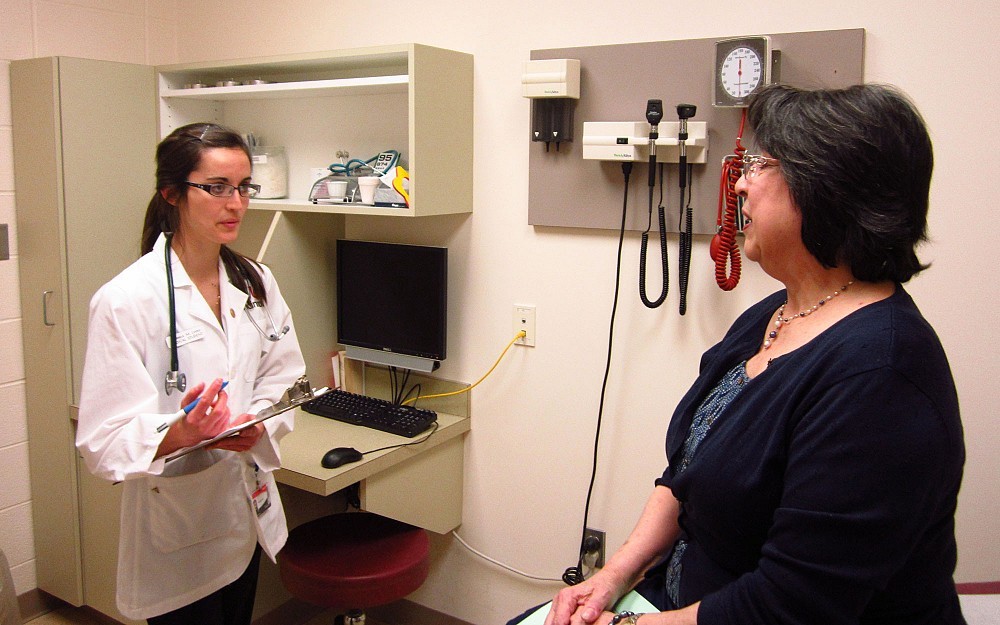
To serve a growing community need and meet increasing student interest, two students at the UC College of Medicine have created an elective in medical Spanish and Latino health.
Third-year students Alex Cortez and Aynara Chavez Wulsin worked with assistant professor of family medicine Christine ODea, MD, to develop the course. This is the colleges first three-year longitudinal elective, which will span the first three years of medical school.
As part of the UC chapter of the Latino Medical Student Association, Cortez helped to create the Spanish Standard Patient Encounter program for medical students last spring to provide more opportunities to students to practice their medical Spanish.
"As we began to connect with medical students, he says, "we found that there were many students interested in Latino health and medical Spanish but who did not feel comfortable engaging in activities because of their lack of medical Spanish. As a student with even limited Spanish proficiency, there are situations where you are called upon to interpret. We felt that it was imperative to ensure that those who are using their Spanish had the necessary skills and competency to provide appropriate care.
Chavez Wulsin, who came to the U.S. with a full scholarship from Mexico City when she was 16 years old, started volunteering as a Spanish interpreter at the Good Samaritan Free Clinic through her primary care clerkship.
"I began volunteering on the weekends and soon realized there was a tremendous need that I couldnt sustain by myself. It was then that I began thinking of the possibility for a medical Spanish curriculum, she says. "It has been almost two years from the first draft till today. With the support of Dr. ODea, Dr. (Andrew) Filak and Dr. (Thomas) Boat, we are thrilled to see our medical Spanish program begin to train medical students to work in Latino and Hispanic communities.
Starting this spring, the elective will be offered to a maximum of 12 students each year. The curriculum is designed to prepare trainees to provide culturally competent care to Latino patients.
Chavez-Wulsin said she specifically designed it as a longitudinal experience, integrated with the regular medical school curriculum.
Over three years, students in the elective will receive training in medical Spanish, didactics in topics related to care of Latino patients and complete service learning at community agencies involved with Latino patients.
"Latinos are now the largest minority in the country, and there is a great need for providers who are prepared to work with this population, says ODea. "We need physicians who can not only communicate in Spanish with their patients but also understand the cultural and social factors that influence the health of Latino patients.
The medical training in Spanish encompasses a 40-hour online course as well as a four-week intensive medical Spanish course taught each July by Ligia Gómez, an assistant professor educator of romance languages at UC.
The summer intensive course is also open to residents with an interest in improving their medical Spanish skills.
Related Stories
UC radiation oncologist speaks with Local 12 news about clinical trial for head and neck cancer treatment
August 10, 2026

Dr. Sara Medek, a UC radiation oncology professor, speaks with Local 12 news about a new clinical trial aimed at reducing radiation in certain areas while still treating cancer effectively but with fewer painful side effects.
Cancer Center director charts future based on collaboration, AI
August 10, 2026

David Gius, MD, PhD, was featured in a Cincinnati Business Courier article and The Cancer Letter’s “The Directors" podcast discussing his priorities and goals as he recently took the helm as director of the University of Cincinnati Cancer Center.
UC graduates cross finish line at commencement
August 7, 2026
The University of Cincinnati recognized 2,125 graduates in two ceremonies at summer commencement Friday on campus at Fifth Third Arena.