Researchers Examine Role of Sortilin in Liver Cancer

During a membership event April 29, the Cincinnati Cancer Center awarded over $200,000 in pilot grants to members and basic scientists who are collaborating to find out more about various cancers with hopes of generating more data and additional funding.
Three teams received Affinity Group Awards to encourage multidisciplinary research efforts and link CCC programs.
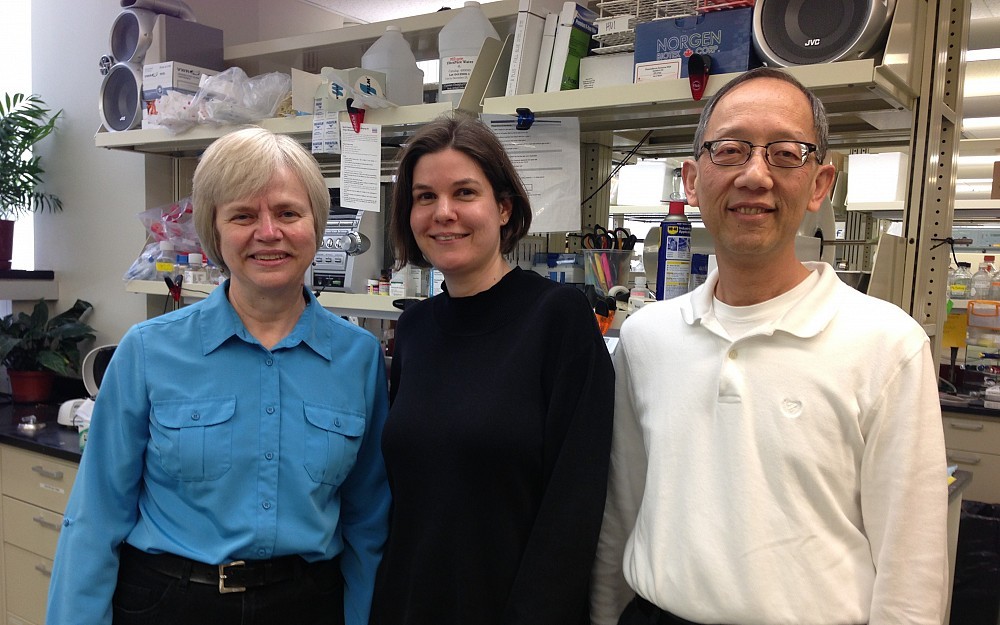
CCC members David Hui, PhD, professor in the department of pathology and laboratory medicine, Anja Jaeschke, PhD, assistant professor in the department of pathology and laboratory medicine, and Carol Mercer, PhD, assistant research professor in the department of internal medicine, division of hematology oncology, who are also all members of the UC Cancer Institute, have been putting their heads together for years to collaborate on projects looking at the effect of obesity on cancer development.
Now, the $60,000 affinity grant will allow them to begin a new project studying the role of the protein sortilin as an alternative LDL-receptor in liver cancer (hepatocellular carcinoma).
"Sortilin is thought to be an alternative LDL cholesterol-receptorLDL is the bad cholesterol often linked with cardiovascular diseases, diabetes and obesity, says Hui. "We think sortilin might assist in helping plasma LDL and other cholesterol-rich lipoproteins enter the system which might be responsible for the increased absorption of these cholesterol-rich lipoproteins into the liver that increases cell production and cancer growth.
"Cholesterol has been shown to influence the progression of breast and colorectal cancers so sortilin might have a broader effect than just liver cancer.
He says that statin treatment, which is often prescribed for high cholesterol, correlates with reduced risk of liver cancer, but the mechanism that is causing this result is unclear.
"A significant portion of patients do not benefit from statin treatment because of intolerance or resistance, so a better understanding of the mechanism regulating the pathogenesis of this cancer is needed to develop alternative treatment strategies, Hui continues.
Its the combined expertise of the threeHui studies the link between cardiovascular disease, diabetes and obesity with cholesterol metabolism; Jaeschke primarily studies fatty liver disease and its connection to cancer; and Mercer has a clinical background in hematology oncology and studies cell signaling pathways important for growth and proliferationthat makes this project a promising step in finding new therapies for liver cancer.
"This project fits in perfectly with the centers cancer and metabolism initiative, which is a major research strength at UC, Hui says.
"This is truly translational science, says Mercer, who adds that in addition to animal models, they will be using banked human cancer tissue to conduct this research. "Obesity is a major problem in western society, and this project is very relevant for the public health problems we are currently facing.
"With the challenge of finding funding to support research like this, these pilot grants are needed now more than ever before, and we are grateful to have been selected.
The University of Cincinnati, Cincinnati Childrens Hospital Medical Center and UC Health have created the Cincinnati Cancer Centera joint effort designed to leverage the strengths of all three organizations in order to provide the best possible cancer diagnostics, research, treatment, and care for individuals in the Tristate region and the nation. To learn more, visit cincinnaticancercenter.org.
Tags
Related Stories
UC radiation oncologist speaks with Local 12 news about clinical trial for head and neck cancer treatment
August 10, 2026

Dr. Sara Medek, a UC radiation oncology professor, speaks with Local 12 news about a new clinical trial aimed at reducing radiation in certain areas while still treating cancer effectively but with fewer painful side effects.
Cancer Center director charts future based on collaboration, AI
August 10, 2026

David Gius, MD, PhD, was featured in a Cincinnati Business Courier article and The Cancer Letter’s “The Directors" podcast discussing his priorities and goals as he recently took the helm as director of the University of Cincinnati Cancer Center.
Bidirectional link between oral, kidney health calls for patient education, access
August 4, 2026

Despite growing awareness of the connection between oral health and chronic health conditions, patient awareness and access to dental care remain limited, according to University of Cincinnati experts who recently spoke with Healio | Nephrology News & Issues.