Birth Spacing: Timing Matters In Efforts to Avoid Preterm Births

CINCINNATIA new Ohio study demonstrates that women who have shorter birth spacing between the last delivery and their next conception have shorter pregnancy lengths, which puts mother and child at a greater risk for preterm birth.
The study also shows that African-American women have shorter intervals of birth spacing and higher preterm births overall.
The findings were published in 'BJOG: An International Journal of Obstetrics and Gynaecology' on June 4, 2014. The journal is available online at http://www.bjog.org.
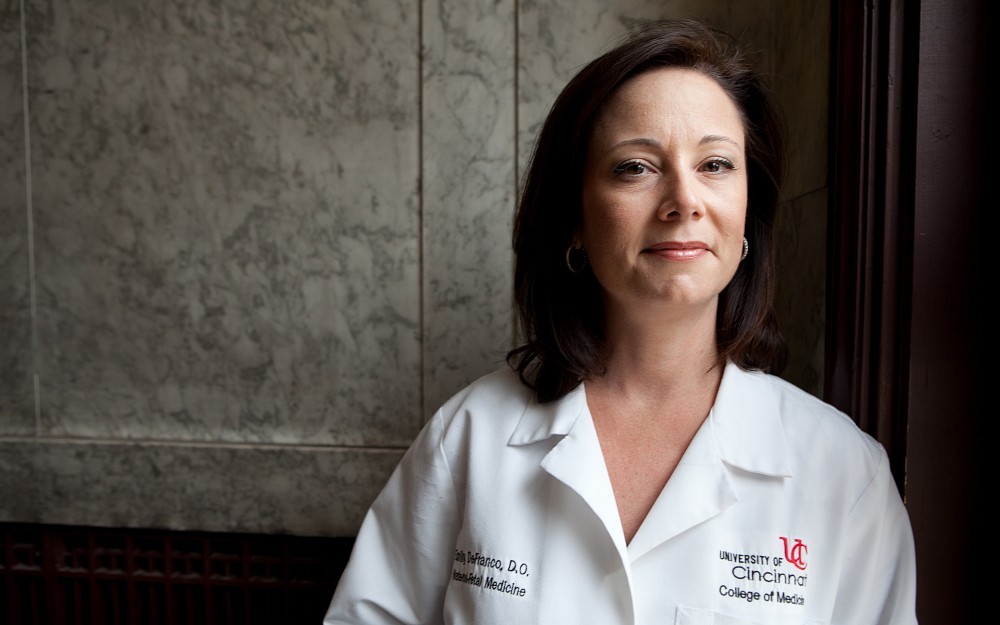
"We need to place a particular focus on waiting at least 18 months before becoming pregnant again in order to minimize the potential risk for preterm births for all women, says study co-author and maternal-fetal medicine specialist Emily DeFranco, DO, an assistant professor in the department of obstetrics and gynecology at the University of Cincinnati College of Medicine.
The study, conducted by DeFranco and colleagues at the Center for Prevention of Preterm Birth within Cincinnati Children's Hospital Medical Centers Perinatal Institute, studied outcomes of 454,716 live births from women with two or more pregnancies over a six-year period.
The researchers, using birth records from the Ohio Department of Health, compared the pregnancy lengths of three groups of women: those who had waited 18 months from delivery to conception (the optimal time for birth spacing identified from other studies), women with spacing of 12 to 18 months from delivery to conception and those with under 12 months from delivery to conception.
The study results, according to DeFranco, show that mothers with shorter times between birth and subsequent conception were more likely to give birth prior to 39 weeks (53.3 percent compared to 37.5 percent with the optimal 18 months of birth spacing). To define it further, all women with birth spacing of less than 12 months were twice as likely to have a preterm birthunder 37 weeksas those who waited the optimal 18 months.
While African-American mothers had the shortest lengths of birth spacing, they still had higher number of preterm births regardless of timing.
DeFranco, who has studied birth spacing for over 5 years, says: "Any woman is at risk for having a premature baby. Eleven percent of all births are preterm and most do not have an identifiable risk factor, but those who conceive prior to 18 months after delivery increase their chances of having a premature baby.
Due to the increased risk of premature birth and other perinatal complications with inadequate birth spacing, the U.S. Department of Health and Human Services Office of Disease Prevention and Health Promotion Healthy People 2020 objectives, call for a 10 percent reduction in the frequency of pregnancies that occur within 18 months of a previous birth.
The study was supported by Cincinnati Childrens Perinatal Institute and the March of Dimes Prematurity Research Center Ohio Collaborative.
Two additional UC faculty and Cincinnati Childrens physicians collaborated on the study: professor Louis Muglia, MD,PhD, who is the co-director of the Perinatal Institute, and Shelley Ehrlich,MD, assistant professor in the division of biostatistics and epidemiology.
Related Stories
On-site training in Speech & Hearing Clinic sets UC’s programs apart
August 27, 2026
At the University of Cincinnati’s Speech & Hearing Clinic, Doctor of Audiology and Speech-Language Pathology graduate students gain real-world experience while providing free speech and hearing services to the community.
Designing with cancer patients' needs in focus
August 27, 2026
Kristina Shin is designing garments that prioritize the comfort, function and confidence of breast cancer patients, addressing a need often overlooked by traditional fashion.
UC, NKU renew longstanding partnership supporting Army ROTC cadets
August 26, 2026
The University of Cincinnati Army ROTC and Northern Kentucky University (NKU) have renewed a longstanding partnership that supports students preparing to become Army officers and leaders in their communities. The universities formalized the renewed agreement during a signing event Aug. 11 at NKU.