UC Professor to Take Her Passion for Health, Education to Tanzania

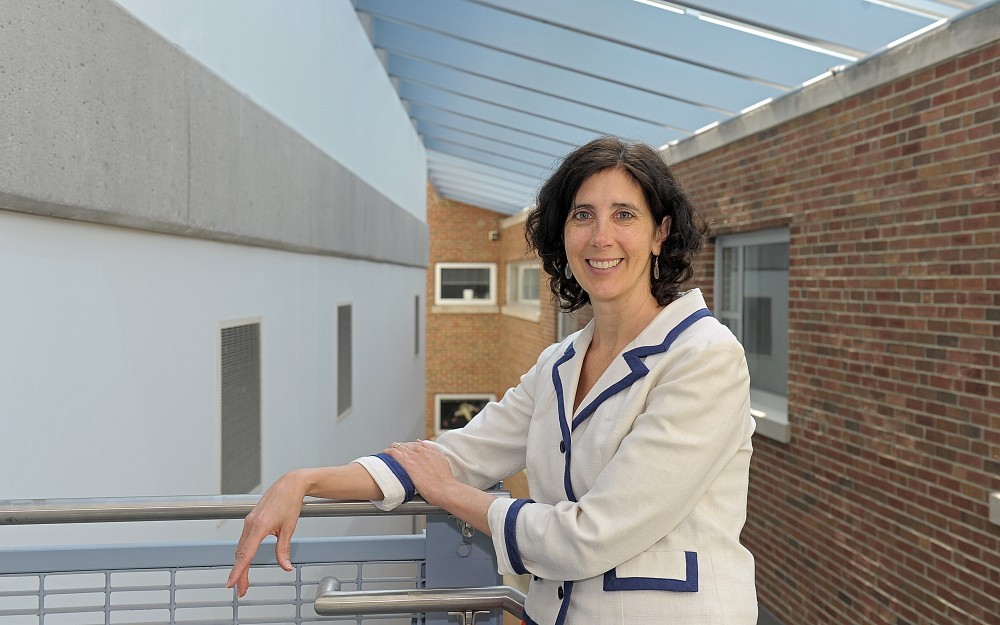
This summer, adjunct assistant professor of social work Kate York, PhD, RN, will be traveling far away from the College of Allied Health Sciences to expand her teaching expertise and reachin the East African country of Tanzania.
York will spend a year teaching community health nursing and public health courses at the Hubert Kairuki Memorial University in Dar es Salaam, Tanzania. She was selected after applying to the
Global Health Service Partnership
, a joint effort among Seed Global Health (formerly Global Health Service Corps), the Peace Corps and the President's Emergency Plan for AIDS Relief (PEPFAR).
The program provides medical and nurse educators to universities in Tanzania, Malawi and Uganda to help strengthen health systems by educating the next generation of providers in those communities.
For York, it means a year spent in a familiar and rewarding place. This will be her fifth time in Tanzania; she first traveled to the country in 2011 as part of her
for her doctorate in nursing.
After three months on a study concerning medication delivery for the infectious disease onchocerciasis (or river blindness), York presented her recommendations to the Tanzanian Ministry of Health, which incorporated her findings into its strategic plan.
Now, on the faculty in the
, she teaches courses in the Masters in Health Administration program and practices clinically at the Health Care Connection. She still plans to teach her online MHA courses in the next year, in addition to her classes and community work with Tanzania baccalaureate nursing students and masters public health students.
"Im really looking forward to itI just love being in Tanzania, she says. "Working with Seed Global Health is a fantastic way to not only get international experience teaching, but also to meet the needs of the health care workers and the shortage they are facing in Tanzania.
York says she identifies strongly with the programs community-directed purpose: to "lead from behind in training health care providers.
"The goal is to give future nurse leaders a voice, to let them know they have a voice so they can band together and create change, she says. "Im not going there in order to change things to the way we in the U.S. do them, but to adapt my knowledge to best facilitate learning for students. What works in the U.S. is not going to work for Tanzaniathe resources are different and the cultural background is different.
York says the country is facing the challenges of infectious disease and a strained infrastructure (daily power outages are common) while simultaneously seeing a rise in Western-style metabolic disease.
"Soda is cheaper than bottled water there, she says, "and theres a lot of marketing for Western food and products.
For future health care providers, theres also the challenge of changing their learning style for higher education. York says most Tanzanian children learn by rote memorization, and must quickly adopt critical thinking skills when they arrive at university.
Along with a Tanzanian counterpart, she plans to incorporate sessions on critical thinking into her lessons when classes start in October.
This summer, shell spend the first few weeks in the country in orientation and extensive language training.
"I know Ill be doing both classroom teaching and be out in the community with students, she says. "I hope to be a part of planning a new master's level nursing curriculum. Im really looking forward to both the challenges of education and the community work thereits very exciting for me.
Related Stories
UC radiation oncologist speaks with Local 12 news about clinical trial for head and neck cancer treatment
August 10, 2026

Dr. Sara Medek, a UC radiation oncology professor, speaks with Local 12 news about a new clinical trial aimed at reducing radiation in certain areas while still treating cancer effectively but with fewer painful side effects.
Cancer Center director charts future based on collaboration, AI
August 10, 2026

David Gius, MD, PhD, was featured in a Cincinnati Business Courier article and The Cancer Letter’s “The Directors" podcast discussing his priorities and goals as he recently took the helm as director of the University of Cincinnati Cancer Center.
UC graduates cross finish line at commencement
August 7, 2026
The University of Cincinnati recognized 2,125 graduates in two ceremonies at summer commencement Friday on campus at Fifth Third Arena.