GIVEHOPE, BSI Grant Funds Research Examining Target for Pancreatic Cancer

Pancreatic cancer is the fourth-leading cause of cancer-associated death, and pancreatic ductal adenocarcinoma (PDAC), the most common type of pancreatic cancer that involves the tumor building a protective barrier around itself which makes it harder to treat, accounts for over 80 percent of all forms of pancreatic cancer.
Now, thanks to research funded by the GIVEHOPE Pancreatic Cancer Research and Awareness Fund and BSI Engineering, Cincinnati Cancer Center and UC Cancer Institute scientists hope to make it easier for patients and their doctors to beat this disease.
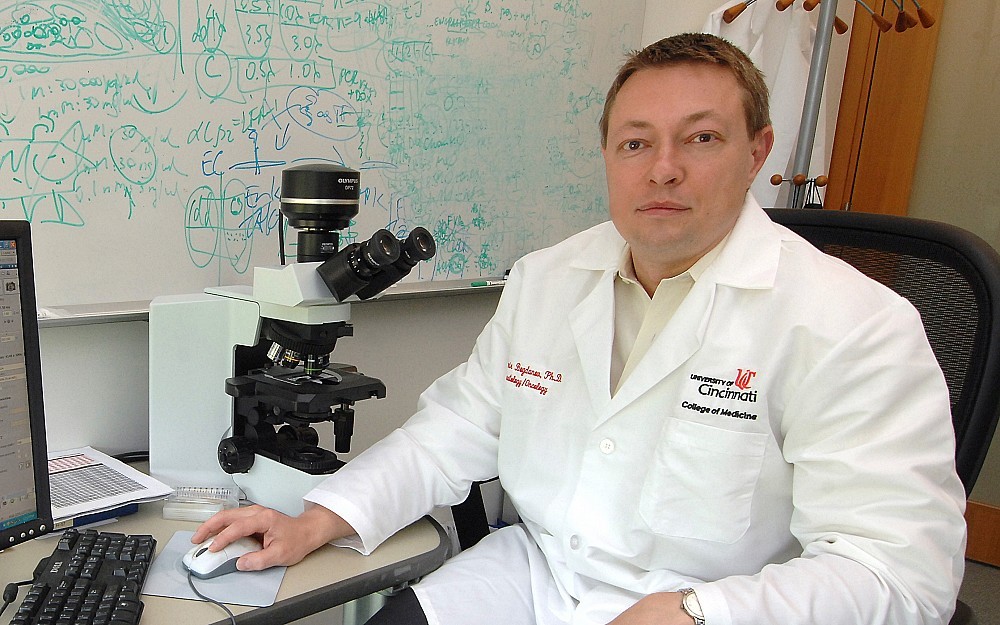
A $50,000 grant was awarded to a team led by Vladimir Bogdanov, PhD, assistant professor and director of the Hemostasis Research Program within the division of hematology oncology at the UC College of Medicine, to conduct research specifically focused on using a novel form of Tissue Factor as a diagnostic and possibly a therapeutic target for pancreatic cancer patients.
"Alternatively-spliced Tissue Factortermed asTFis a protein that promotes formation of functional vascular networks, and tumor cells hijack this mechanism to fuel their growth and spread, says Bogdanov, who is also a member of the CCC and UC Cancer Institute. "While the expression of this form of Tissue Factor has been detected in several PDAC cell lines, and increased asTF activity can promote primary tumor growth, the role of asTF in the metastatic spread of PDAC has only been recently discovered.
"Using this funding, we hope to study the effects of asTF on the genes that are involved in metastatic progression, with hopes of using our findings to create novel diagnostic tools and therapeutic targets.
Bogdanov stresses that this grant, which is his second award from GIVEHOPE and BSIthe first was given in 2012is necessary to continue his lab work in this area and hopefully gain even more federal funding in the future.
"GIVEHOPEs first, smaller grant was instrumental for my lab in securing a larger, two-year exploratory grant from the National Cancer Institute. When researchers are between grants, the work must continue somehow, he says. "These types of grants make it possible. They can even be our lifelines, sometimes.
"I am incredibly grateful to GIVEHOPE and BSI because their grant will help my lab continue its research that will hopefully lead to the discovery of more effective diagnostic and therapeutic approaches to fight PDAC.
Related Stories
UC radiation oncologist speaks with Local 12 news about clinical trial for head and neck cancer treatment
August 10, 2026

Dr. Sara Medek, a UC radiation oncology professor, speaks with Local 12 news about a new clinical trial aimed at reducing radiation in certain areas while still treating cancer effectively but with fewer painful side effects.
Cancer Center director charts future based on collaboration, AI
August 10, 2026

David Gius, MD, PhD, was featured in a Cincinnati Business Courier article and The Cancer Letter’s “The Directors" podcast discussing his priorities and goals as he recently took the helm as director of the University of Cincinnati Cancer Center.
UC graduates cross finish line at commencement
August 7, 2026
The University of Cincinnati recognized 2,125 graduates in two ceremonies at summer commencement Friday on campus at Fifth Third Arena.