Faculty Forum Boosts Communication, Collaboration

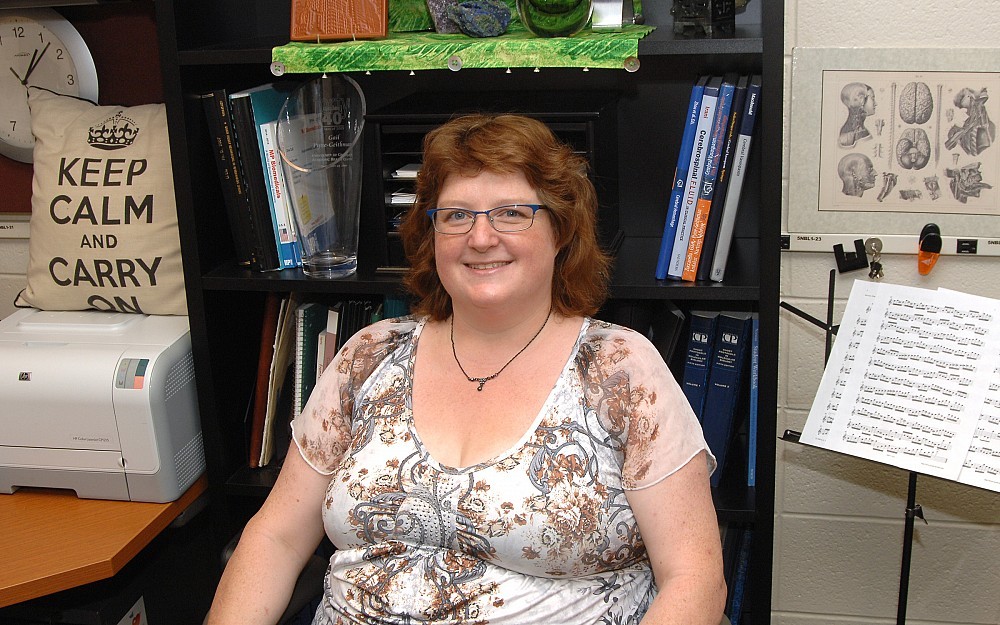
Where can College of Medicine faculty members go to interact with college leadership, get their questions answered and have their concerns heard? Gail Pyne-Geithman, DPhil, has an answer for that: the colleges monthly Faculty Forum meetings.
Pyne-Geithman, a research associate professor in the UC Department of Neurosurgery, was recently elected as the 2014-16 faculty chair for the College of Medicine. In voting conducted electronically, she succeeds W. John Kitzmiller, MD, chief of the division of plastic and reconstructive surgery, effective Aug. 1. (The office alternates between clinical and basic science faculty.)
"The College of Medicine Faculty Forum is to the College of Medicine what the Faculty Senate is to UC, says Pyne-Geithman. "Our role is to bring faculty concerns to the attention of, and provide recommendations to, College of Medicine leadership based on faculty feedback.
Pyne-Geithman says she is eager to rejuvenate monthly meetings of the Faculty Forum, which are held on the last Tuesday of every month from 9 to 10 a.m. in Room 2351 of the Medical Sciences Building.
The Aug. 26 meeting, the first of Pyne-Geithmans term, will feature Melanie Cushion, PhD, senior associate dean for research at the College of Medicine, leading a discussion on the reorganization of the basic sciences departments. In addition, nominations will be sought for a chair-elect to serve 2016-18.
"Well try to have a speaker at every meeting, Pyne-Geithman says. "We want them to be more of a discussion than a canned speech.
Pyne-Geithman, who has performed research in both basic and clinical departments, says she is committed to bringing clinicians and scientists together in cooperative research efforts. In addition, she strongly supports productive interdisciplinary collaboration and teaching across the UC campuses.
"College of Medicine leadership depends heavily on faculty feedback and input; they are very open to Faculty Forum recommendations, she says, adding that Alex Lentsch, PhD, senior associate dean for faculty affairs, or a representative will attend each meeting.
Says Lentsch: "When I think of the Faculty Forum, I think of one wordengagement. We have so many tough issues facing us as a college and so many bright minds within it that we must engage one anotherfaculty to faculty and faculty to administratorin order to make the best decisions on how we as a college will move forward.
Pyne-Geithman has asked each department to nominate two representatives to the Faculty Forum, at least one of whom should be attending each meeting.
"Their role is to meet with the department chair and bring information to the forum, and more importantly to solicit concerns, input and feedback from their departmental colleagues so that everyone is represented when recommendations are made to College of Medicine leadership.
Pyne-Geithman stresses that any College of Medicine faculty member, regardless of American Association of University Professors representation, can attend Faculty Forum meetings.
"As an involved member of the College of Medicine faculty, you can feel included in major decisions and contribute your experience and expertise to your colleagues, she says.
Related Stories
UC radiation oncologist speaks with Local 12 news about clinical trial for head and neck cancer treatment
August 10, 2026

Dr. Sara Medek, a UC radiation oncology professor, speaks with Local 12 news about a new clinical trial aimed at reducing radiation in certain areas while still treating cancer effectively but with fewer painful side effects.
Cancer Center director charts future based on collaboration, AI
August 10, 2026

David Gius, MD, PhD, was featured in a Cincinnati Business Courier article and The Cancer Letter’s “The Directors" podcast discussing his priorities and goals as he recently took the helm as director of the University of Cincinnati Cancer Center.
UC graduates cross finish line at commencement
August 7, 2026
The University of Cincinnati recognized 2,125 graduates in two ceremonies at summer commencement Friday on campus at Fifth Third Arena.